Where the MoD’s record £34.1bn UK industry spend is going


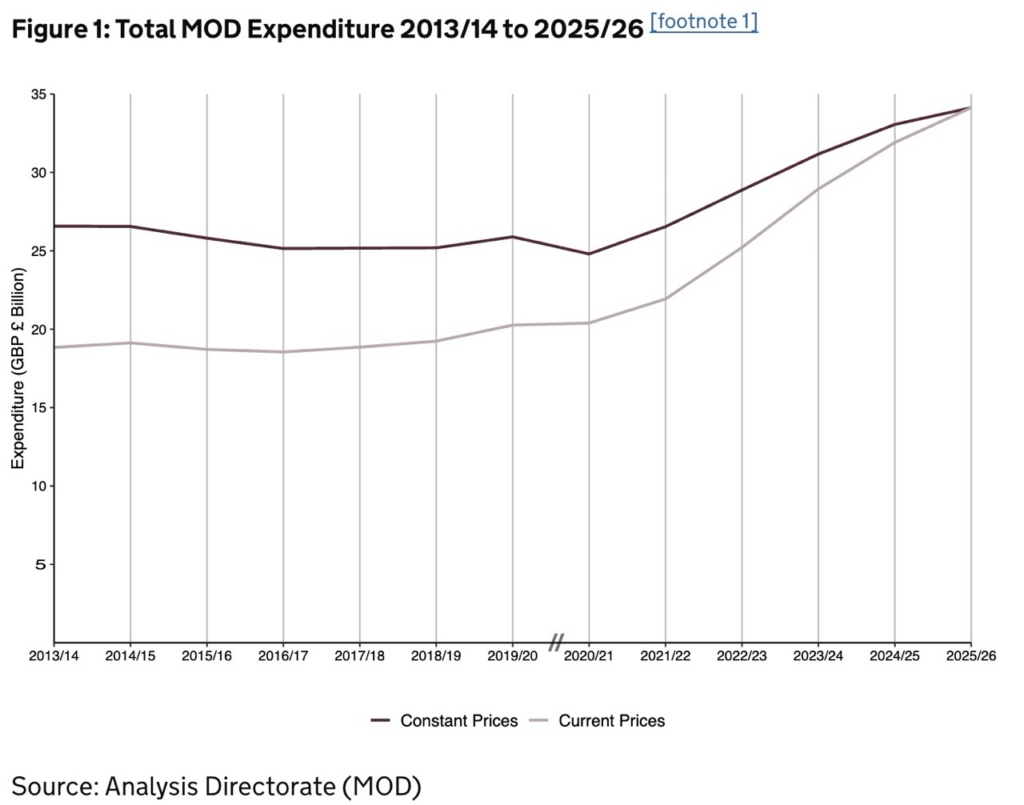
The Ministry of Defence spent a record £34.1 billion directly with UK industry in 2025/26, with equipment and its support accounting for more than three-fifths of the total.
The latest MoD regional expenditure statistics show UK industry spending grew by 3.2% in real terms compared with 2024/25. That was a £1.1 billion increase after adjusting for inflation—the highest level recorded since the current statistical series began in 2013/14.
However, the figures also show that the proportion going directly to small and medium-sized enterprises did not increase. SMEs received £1.3 billion—just 4% of direct MoD expenditure with UK industry—the same share as the previous year.
The MoD figures reveal how the UK’s growing defence budget is feeding into the domestic industrial base.
£20.9bn goes on equipment and support
Equipment and equipment support accounted for £20.9 billion, or 61% of the MoD’s expenditure with UK industry.
Of that, £11.4 billion was classified as equipment expenditure, equivalent to one-third of UK industry spending. The category includes capital spending on military and dual-use equipment as well as associated research and development.
A further £9.5 billion went to equipment support.
The remaining £13.3 billion, or 39%, was classified as non-equipment expenditure. This includes infrastructure, construction, facilities management, utilities and insurance.
The figures show defence expenditure extends beyond companies manufacturing aircraft, ships, armoured vehicles and weapons.
South East receives the most defence spending
Geographically, the biggest sums are concentrated in established centres of the UK defence industry.
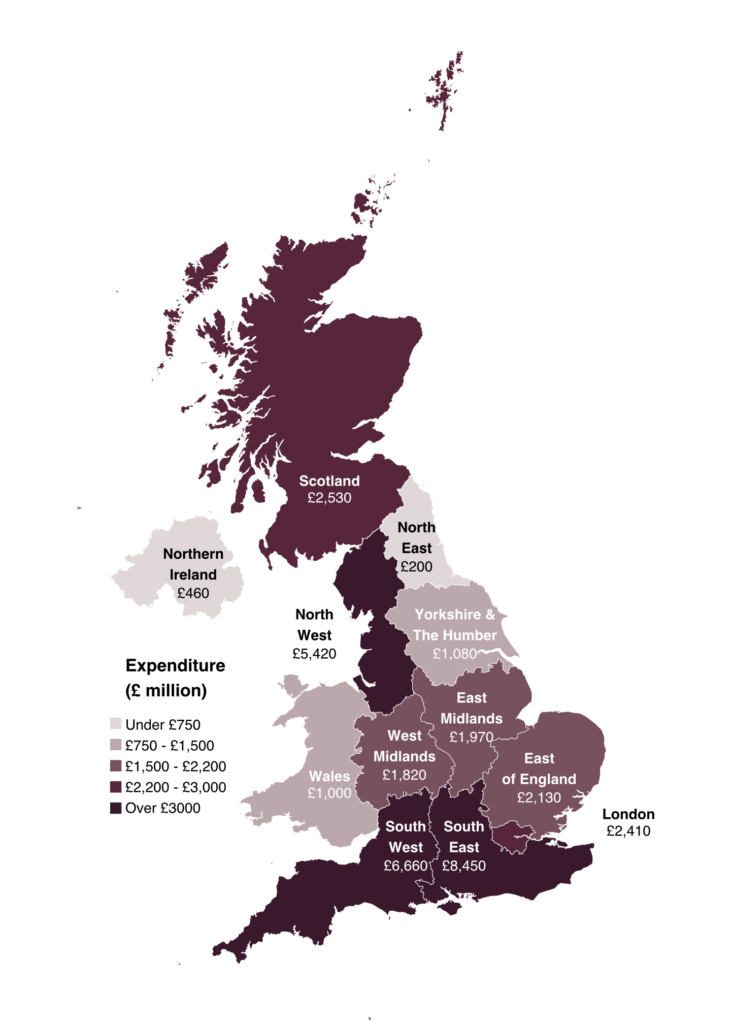
The South East received £8.45 billion in 2025/26, making it the largest region by total expenditure. The South West followed at £6.66 billion, with the North West receiving £5.42 billion.
MoD expenditure averaged £490 for every person in the UK, up from £480 in real terms the previous year.
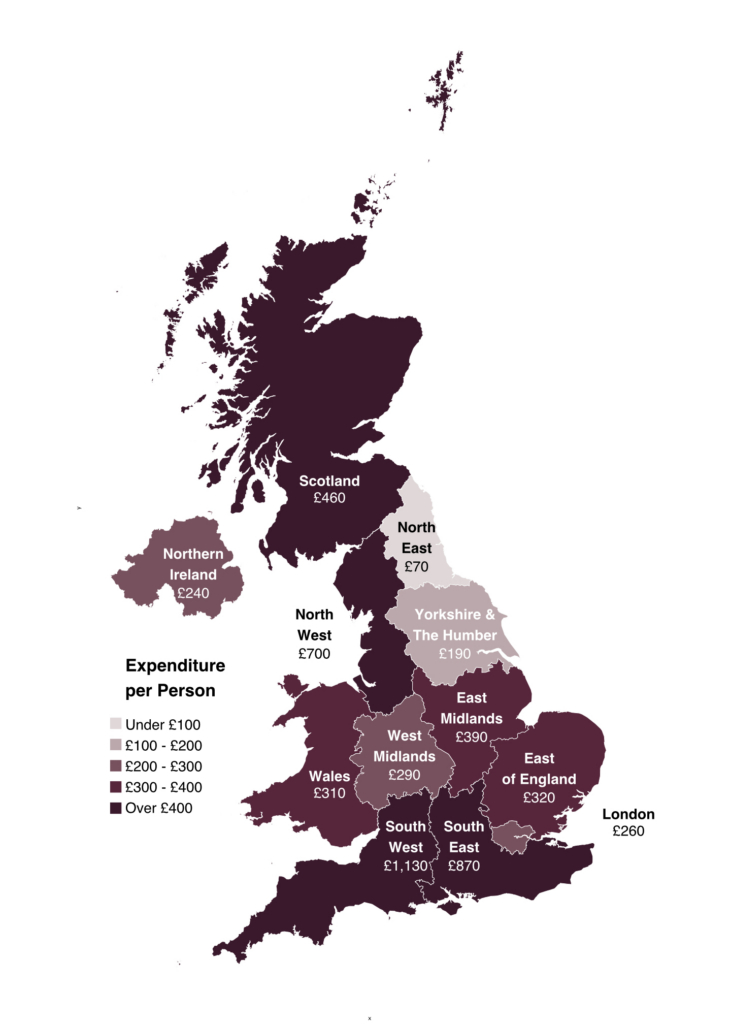
The South West recorded the highest spending per person at £1,130, followed by the South East at £870 and the North West at £700.
Northern Ireland records a 63% increase
Northern Ireland saw the largest percentage increase of any UK region. Spending reached £464 million, up 63% in real terms and the highest recorded for Northern Ireland since the current series began.
However, the MoD cautions that this does not necessarily represent a comparable surge in new defence activity. It attributes the increase to reallocating location data associated with contracts for the three Fleet Solid Support ships being built for the Royal Fleet Auxiliary under the Navantia programme.
The East of England recorded the second-largest percentage increase at 24.7%, followed by the East Midlands at 21%.
Not every region benefited from the overall increase. Spending fell by 3% in the South West, 12% in Wales and 20% in London in real terms.
The MoD attributes the Welsh reduction partly to around £79 million less paid during the year under a long-term BAE Systems munitions contract.
The sharp London decline largely reflects improved allocation of spending to the locations where contracted work is actually performed, rather than recording expenditure against companies’ London headquarters.
Weapons and ammunition spending rises 18%
The statistics also reveal where demand is increasing within the defence industrial base.
Technical, financial and other business services remained the MoD’s largest industry group, accounting for 31% of UK industry expenditure. It has held the top position every year since the current series began.
Shipbuilding and repair was the second-largest industry group.
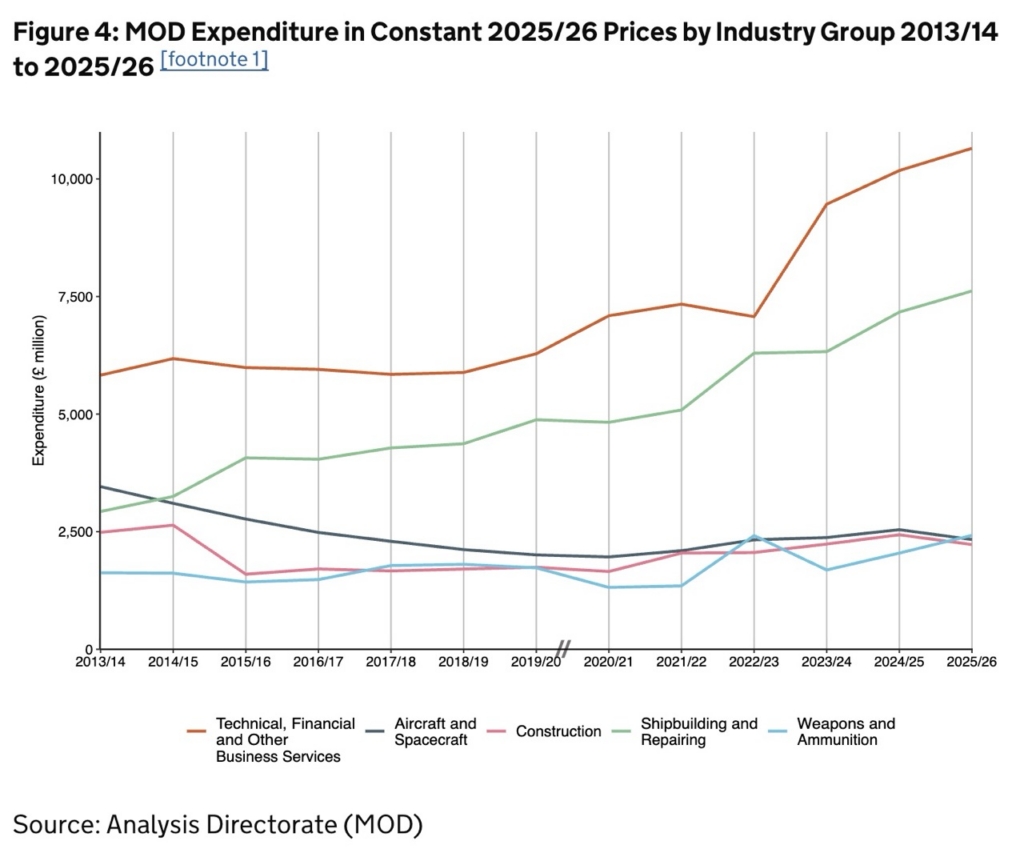
Weapons and ammunition recorded the fastest growth, increasing 18% in real terms to £2.4 billion. The category includes weapons, ammunition and military fighting vehicles.
The MoD linked part of the increase to higher spending on armoured vehicles. Payments associated with Boxer increased by £77 million, while Ajax payments increased by £21 million.
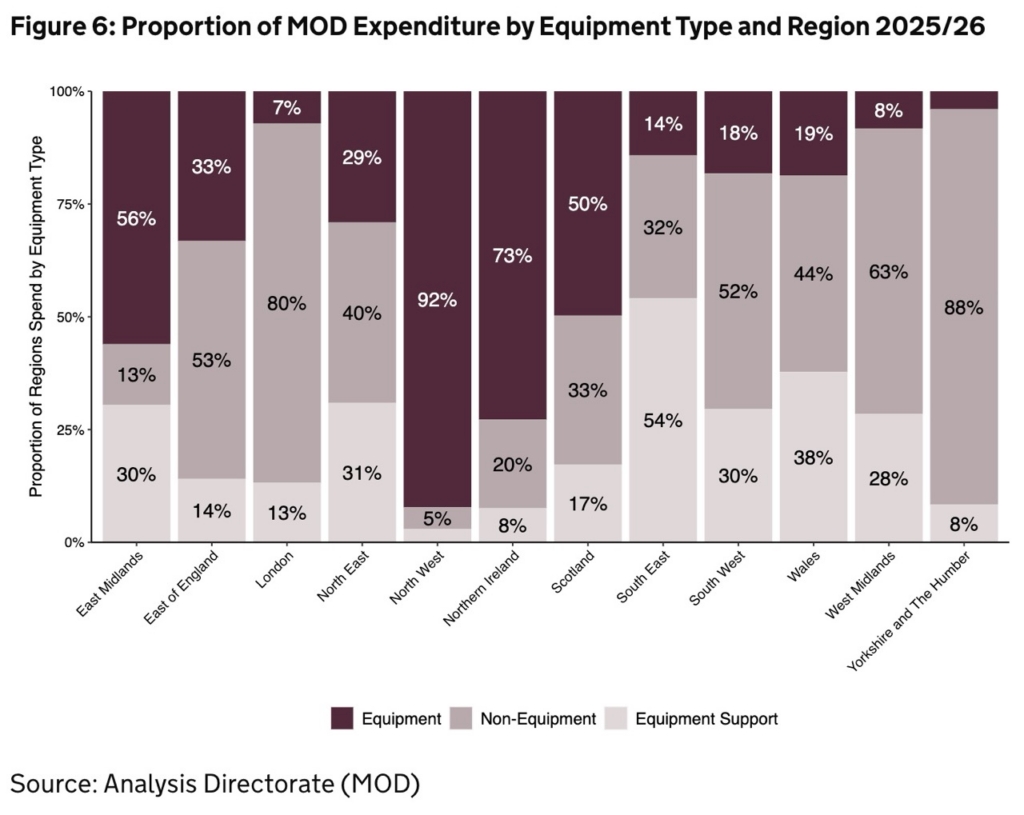
Technical, financial and other business services recorded the largest increase in cash terms, rising £473 million. The MoD said this reflected increased spending across a range of management and logistics contracts rather than one large programme.
SMEs still account for only 4% of direct spending
The government highlights that direct spending with SMEs increased by £100 million to £1.3 billion. SMEs accounted for 4% of direct MoD expenditure with UK industry in 2025/26—the same proportion as the previous year.
Smaller suppliers received more money as overall defence expenditure grew, but their share of direct MoD spending did not increase.
There are also striking regional differences.
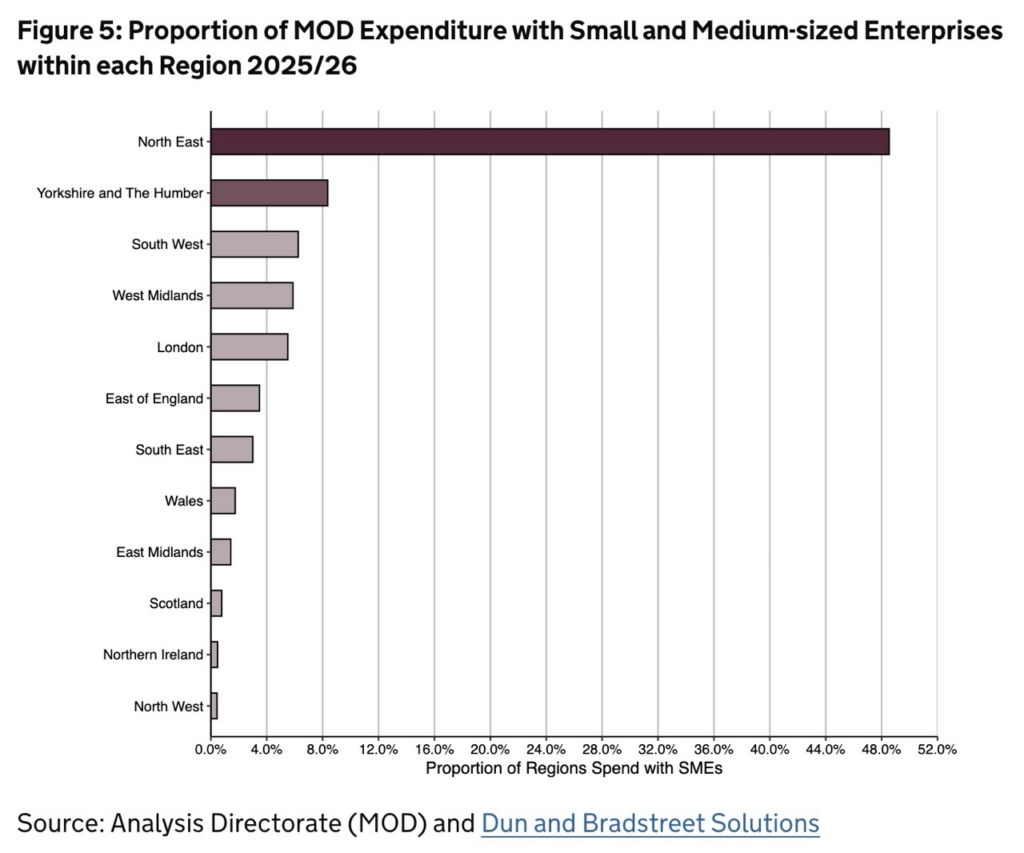
In the North East, SMEs accounted for 48.5% of the region’s direct MoD expenditure, by far the highest proportion in Britain. Yorkshire and the Humber followed at 8.4%, with the South West at 6.2%.
Direct spending does not capture the full value of defence work reaching smaller companies. Many SMEs supply larger prime contractors rather than contracting directly with the MoD. The department’s SME Action Plan estimates defence spending around £5 billion with SMEs annually, with roughly three-quarters flowing indirectly through supply chains.
The government has committed to increasing spending with SMEs by an additional £2.5 billion by summer 2028.
The latest figures therefore establish an important baseline for measuring that ambition: while direct SME spending has risen in pounds, smaller businesses have yet to increase their share of the MoD’s rapidly growing direct expenditure.
Most MoD industry spending stays in the UK
Looking more broadly at the MoD’s global industrial expenditure, the department spent £40.4 billion in 2025/26.
That included £38.2 billion paid directly to UK and overseas industry, £744 million through US Foreign Military Sales agreements and £1.54 billion paid directly to foreign governments.
After tracing where work funded through those arrangements ultimately took place, the MoD estimates 85% of its global industry expenditure was attributable to work in the UK and 15% overseas.
For direct payments to industry alone, the UK share was even higher at 89%.
The figures reveal the scale of defence’s contribution to UK industry. They also show the challenge behind the government’s push to spread that investment further through the supply chain. While the pot is growing, SMEs’ share of direct MoD spending remains unchanged.
Sign up for our newsletter and get our latest content in your inbox.
Similar Reads