

UK and Germany launch industrial tech corridor to strengthen manufacturing and defence supply chains


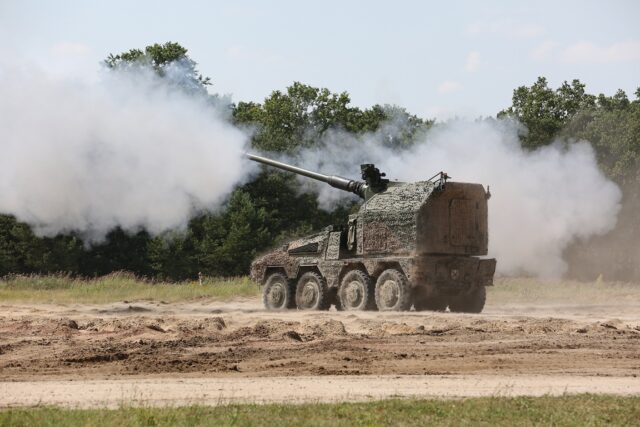
The UK and Germany have launched a new Industrial Tech Corridor to bring technology companies closer to major manufacturers, with defence, aerospace and advanced manufacturing among the sectors expected to benefit from stronger industrial cooperation.
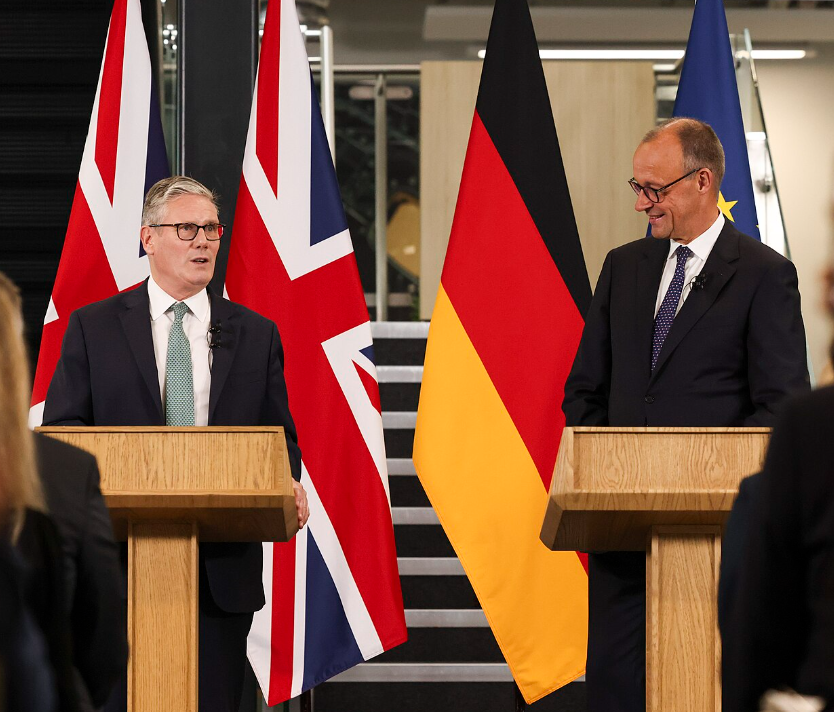
The agreement was announced on Thursday (8 October) during Prime Minister Andy Burnham’s visit to Berlin for talks with German Chancellor Friedrich Merz. It will help businesses in both countries establish partnerships, attract investment and bring new technologies, including artificial intelligence, into industrial production.
The initiative is being supported by major German companies including Bosch, Siemens, Allianz and RWE. It forms part of the Kensington Treaty framework for closer UK-German cooperation on defence, security, technology and economic growth.
The two governments have also announced a joint €20 million (£17 million) funding programme for quantum research, covering areas including quantum computing and sensing technologies.
The Industrial Tech Corridor will connect growing technology companies with established manufacturers and investors, helping them find customers, develop new products and expand into each other’s markets.
Ministers put industrial cooperation at centre of agreement
UK Business, Innovation, Science and Trade Secretary Jonathan Reynolds said the agreements would create opportunities for British companies to work more closely with German industry.
“Today’s agreements are great news for British tech, businesses, and workers. They mean more jobs, more investment, and more innovations that will change lives,” Reynolds said.
He added that the two countries already worked closely in artificial intelligence and quantum technologies, but the latest agreements would provide a stronger basis for cooperation between businesses and researchers.
Germany’s Federal Minister for Digital Transformation and Government Modernisation, Dr Karsten Wildberger, said the corridor would also help technology companies expand internationally.
“Together with the UK, we’re building an ideal launchpad for AI companies to scale internationally,” Wildberger said. “The UK-German Tech Corridor will accelerate scale-ups to enter Europe’s most advanced AI ecosystems. This partnership represents an important step to strengthening our digital sovereignty.”
The corridor builds on the existing UK-Germany Strategic Science and Technology Partnership and is intended to help companies move new technologies from research and development into commercial use.
For Britain, the agreement also provides another route for smaller technology businesses to work with Germany’s established industrial groups, particularly in manufacturing, engineering and critical technologies.
Defence and aerospace manufacturing opportunities
One of the British companies joining the corridor is Isembard, which develops AI-powered manufacturing technology and operates a factory network.
The company wants to establish partnerships with German manufacturers at a time when European defence, aerospace and energy businesses are seeking greater production capacity.

Alexander Fitzgerald, Isembard’s founder and chief executive, said closer cooperation could help address pressure on Europe’s industrial supply chains.
“Manufacturing is the foundation of Europe’s security and prosperity, and the UK and Germany have more to gain than anyone from rebuilding our manufacturing capacity together,” Fitzgerald said. “German engineering sets the global standard for precision, while demand for components across defence, aerospace, and energy is outpacing what Europe’s factories can deliver.”
Isembard intends to use the corridor to introduce its manufacturing technology and factory network to German industrial partners.
The company sees AI-powered production as a way to increase manufacturing capacity and strengthen Europe’s ability to produce strategically important components.
Fitzgerald said Isembard wanted to bring its technology to German partners and help build sovereign industrial capacity across Europe.
The initiative does not include a separately announced defence manufacturing contract or production investment. However, Isembard’s participation gives the corridor a direct connection to the defence and aerospace supply chains identified by the company.
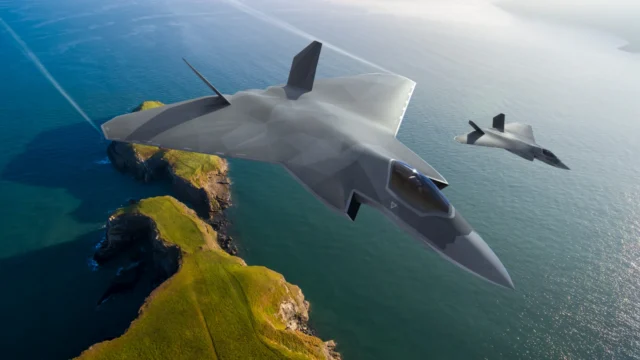
The Kensington Treaty also provides a wider framework for industrial cooperation. It commits Britain and Germany to strengthening their aerospace industries and expanding bilateral aerospace research, alongside cooperation on critical technologies and supply-chain resilience.

Bosch, one of the major German companies backing the corridor, said the initiative could help technology developers establish closer relationships with manufacturers.
“By connecting innovative scale-ups with leading industrial companies, the Corridor can help bring new technologies into real-world applications more quickly and effectively,” said Dr Tanja Rueckert, member of the board of management and chief digital officer at Robert Bosch.
€20 million for joint quantum research
Alongside the industrial agreement, Britain and Germany will share a €20 million funding pot to accelerate joint quantum research.
The programme will support projects in areas including quantum computing, financial services and quantum sensing.
The UK contribution will come from the Office for Quantum’s budget through Innovate UK.
The announcement follows Britain’s commitment earlier this year to develop large-scale quantum computers domestically by the early 2030s.
The UK government estimates that quantum technologies could contribute more than £200 billion to the British economy and support around 100,000 jobs by 2045.
The funding is intended to help researchers and businesses in both countries develop new applications for quantum technologies while strengthening cooperation between their research and industrial sectors.
Reynolds said the partnership would combine the strengths of British and German innovators, allowing businesses in both countries to benefit from closer cooperation over the coming years.
British and German companies announce expansion plans
Several businesses have outlined expansion plans alongside the launch of the corridor.
Munich-based robotics research company MicroAGI intends to expand its operations in London, creating 180 new, highly paid jobs.
The company specialises in physical AI, bringing artificial intelligence and robotics into industrial environments.
MicroAGI chief executive Bercan Kilic said the corridor would help businesses combine industrial experience with advances in AI and robotics.
“By bringing advances in AI and robotics into industrial operations, we can ensure they become more productive and globally competitive,” he said.
UK-based AI software company Quantexa is also committing to establish a dedicated sovereign unit in Germany to support the deployment of its technology in both countries.
Meanwhile, UK-headquartered AI infrastructure company Nscale sees the agreement as an opportunity to develop relationships with German industrial businesses.
“German industry needs secure AI compute to meet its growing demands,” said Philippe Sachs, Nscale’s president for Europe, the Middle East and Africa.
The partnership also covers energy technologies, with German fusion company Proxima Fusion planning to expand its operations at Culham in Oxfordshire.
The company says its workforce at Culham could quadruple by 2028.
“Proxima Fusion is developing Europe’s first commercial fusion power plant, with British engineering playing a key role,” said co-founder and chief executive Francesco Sciortino.
He said Culham’s engineering expertise was central to the company’s plans to expand its UK operations.
Building on existing UK-German cooperation
The Industrial Tech Corridor follows a separate £2.4 million joint research funding call launched by Britain and Germany in September.
That programme supports collaborative research and development in clean energy, life sciences and engineering biology, with research teams from both countries able to seek grants of up to £350,000.
The latest initiative has a broader industrial focus, bringing together companies developing AI and other advanced technologies with manufacturers seeking to adopt them.
It also comes as UK and Germany deepen cooperation under the Kensington Treaty, which was signed in 2025 and formally ratified on 8 October.
Sign up for our newsletter and get our latest content in your inbox.
Similar Reads




Sign up for our newsletter. Select all sectors relevant to you.
Related