How the UK came to dominate the global ejection seat market

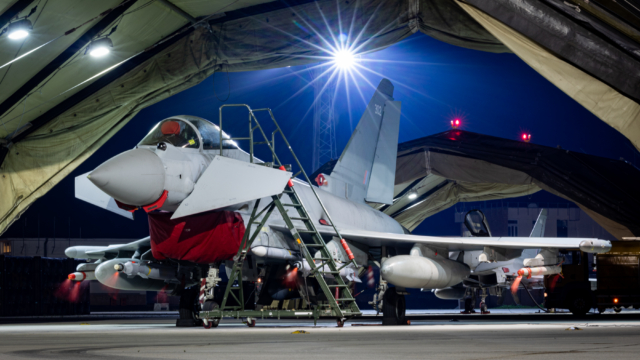
From the American F-35 to the French Rafale and South Korean KF-21, many of the world’s most advanced fighter aircraft depend on British-designed technology to keep their pilots alive.
Yet despite the proliferation of new combat aircraft programmes around the world, the market for ejection seats remains remarkably concentrated. Outside Russia and China, just two manufacturers – the UK’s Martin-Baker and US-based Collins Aerospace – dominate the supply of these safety-critical systems.
High development costs, stringent qualification requirements and decades-long aircraft service lives have created significant barriers to new entrants. For governments and aircraft manufacturers, that concentration raises important questions about competition, security of supply and export controls.
A global market dominated by four manufacturers
Martin-Baker ejection seats are found in the majority of Western-designed fighter aircraft types, as well as many military trainers and combat aircraft developed elsewhere.
The company claims to have a 54% share of the global ejection seat market. In 2025, Global Market Insights estimated Martin-Baker’s market share at 45%, while a separate study by Emergen Research put it at 56%.
While estimates vary, reflecting differences in how the market is measured, Martin-Baker’s position has long been recognised by independent observers.
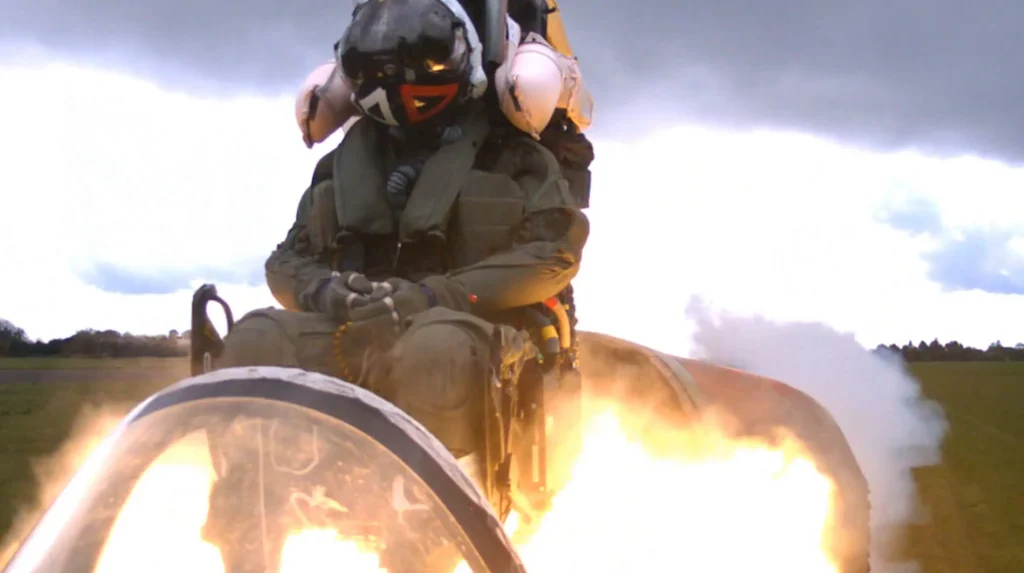
In 2010, the US Department of Commerce identified Martin-Baker as the world’s strongest competitor in the sector by economic measures. At that point, the US estimated it had a 75% market share outside former communist countries.
The balance of the global market may have changed considerably since then, particularly given the expansion of China’s military aircraft manufacturing capabilities.
Russian ejection seats are predominantly built by NPP Zvezda, while China’s are provided by Aerospace Life-support Industries (ALI). Collins Aerospace and Martin-Baker dominate Western production, although aircraft still in service also feature seats developed by other manufacturers, such as the Weber Aircraft seats installed in the B-52.
| Ejection seat manufacturer | Selected modern aircraft and programmes | Selected legacy aircraft still in service |
|---|---|---|
| Martin-Baker (UK) | F-35, Rafale, Eurofighter Typhoon, Gripen E, KF-21, F/A-18E/F, JF-17, Tejas, KAAN, M-345, PC-21 | F-4, F-5, Mirage 2000, Tornado, Harrier |
| Collins Aerospace (US) | F-15EX, T-7A | F-15, F-16, F-22, B-1, B-2 |
| Aerospace Life-support Industries (China) | J-10C, J-16, J-20 | J-11, J-15 |
| NPP Zvezda (Russia) | Su-30SM2, Su-34, Su-35S, Su-57 | MiG-29, Su-25, Su-27, earlier Su-30 variants |
Selected aircraft and programmes associated with each manufacturer; seat configurations may vary by aircraft variant and operator.
In 2025, Martin-Baker delivered 440 seats to 12 global prime contractors across 14 aircraft types. According to the company, more than 91,500 seats have been delivered throughout its history, with over 16,500 currently in service.
These figures illustrate the scale of the UK’s established industrial position and the challenge facing any potential new entrant.
How the UK established its early lead in ejector seats
Martin-Baker’s dominance is due in large part to its early technological lead, which put it in a position that subsequent competitors have found difficult to challenge. The company benefited from the UK’s early adoption of its ejection seats and the rapid expansion of military jet aviation.
Martin-Baker started out as an aircraft manufacturer in 1934. After test pilot and co-founder Valentine Baker was killed in 1942, his business partner James Martin increasingly focused on finding a way for pilots to escape their damaged aircraft.
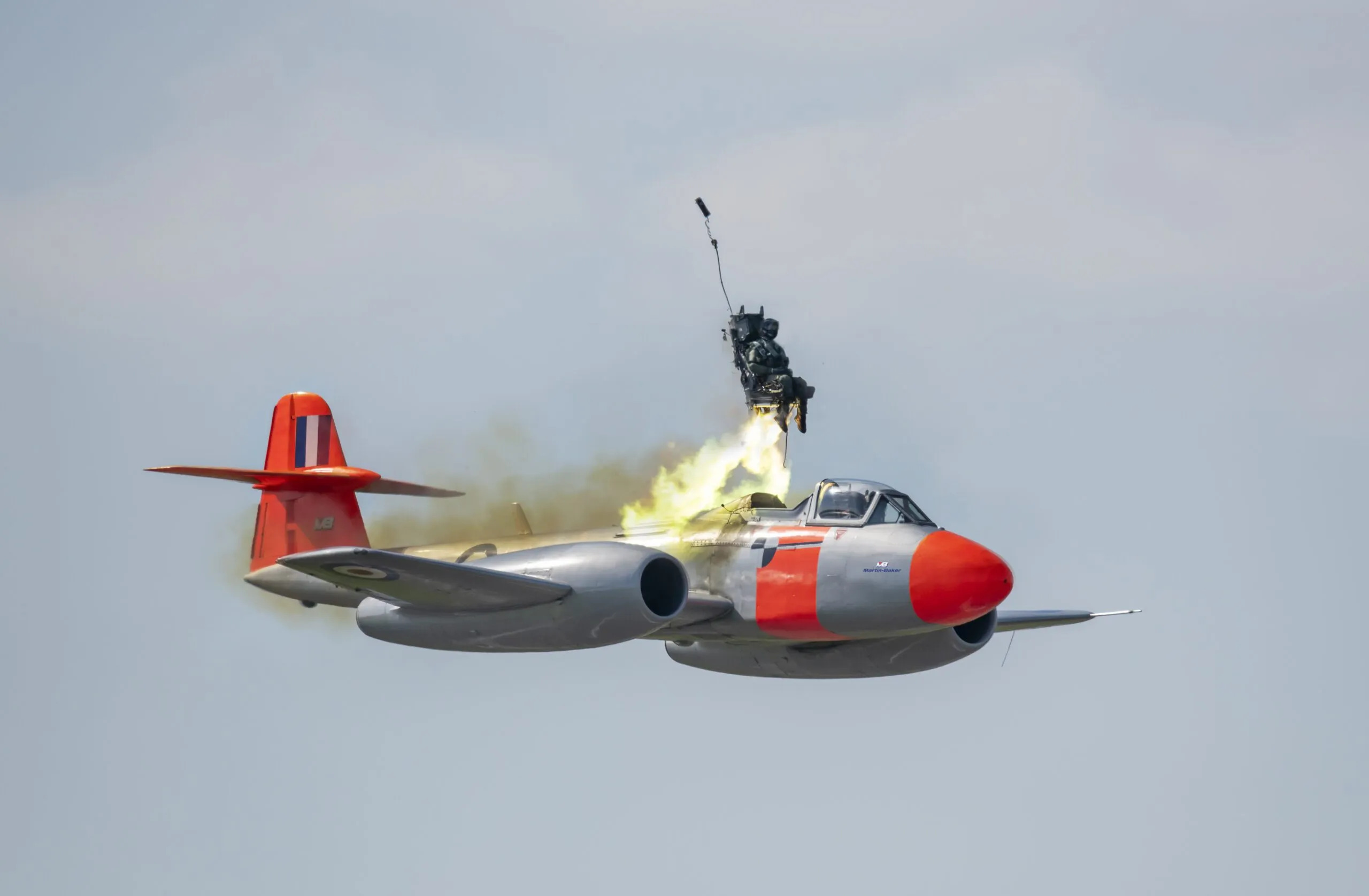
The company conducted its first successful in-flight test ejection in July 1946 using a modified Gloster Meteor, the UK’s first operational jet fighter.
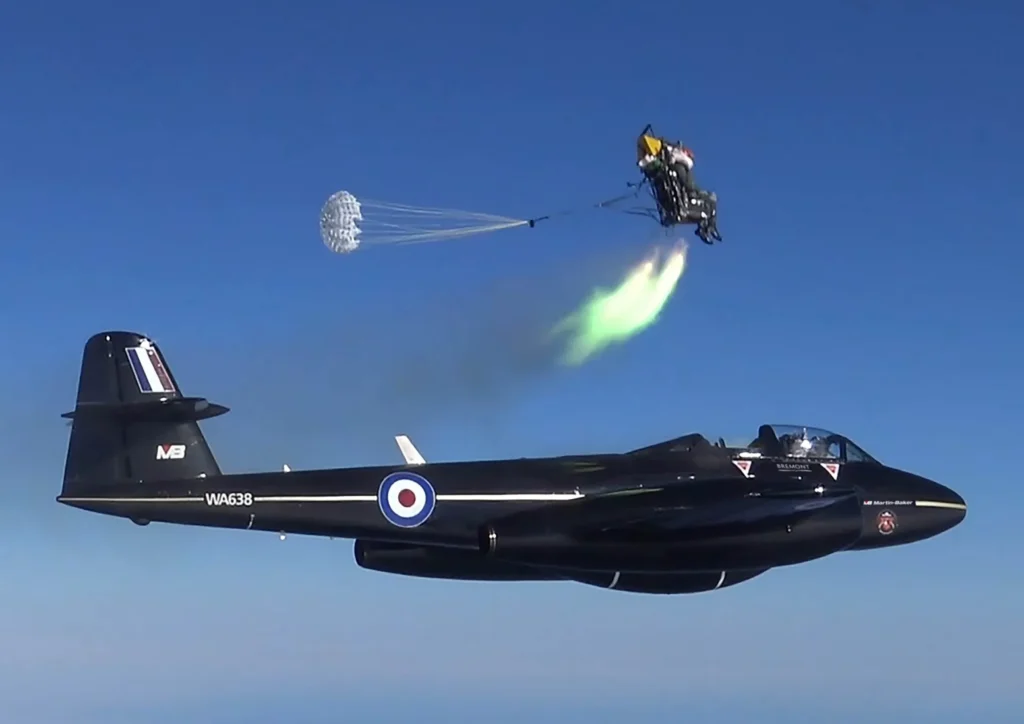
In 1947, the UK decided to standardise Martin-Baker ejection seats across new service jet aircraft, providing the manufacturer with an established domestic customer base from which to develop its technology.
This helped create a virtuous feedback loop. Continued investment, operational experience and new aircraft programmes allowed the company to develop increasingly sophisticated escape systems, strengthening its competitive position internationally.
Another breakthrough came with the development of its Mk 2 seat, which addressed issues associated with manually operated parachute deployment.
However, the UK’s early adoption of Martin-Baker technology was arguably as significant as its engineering achievements. The decision gave the company a foundation from which to expand internationally at a time when many countries were establishing their own jet-powered air forces.
Why the ejection seat market is so difficult to compete in
Unlike many aircraft components, ejection seats require extensive testing and qualification across an aircraft’s flight envelope. Manufacturers must demonstrate that their systems can safely accommodate pilots of different weights and heights, while accounting for the aerodynamic characteristics of individual aircraft.
The high costs associated with development, integration and qualification create significant barriers to entry. Once a manufacturer has secured a contract, the long operational life of modern combat aircraft can generate decades of demand for maintenance, replacement components and upgrades.
Martin-Baker’s use of two Gloster Meteor jet fighters as active ejection seat test aircraft illustrates the specialist infrastructure that supports the industry.
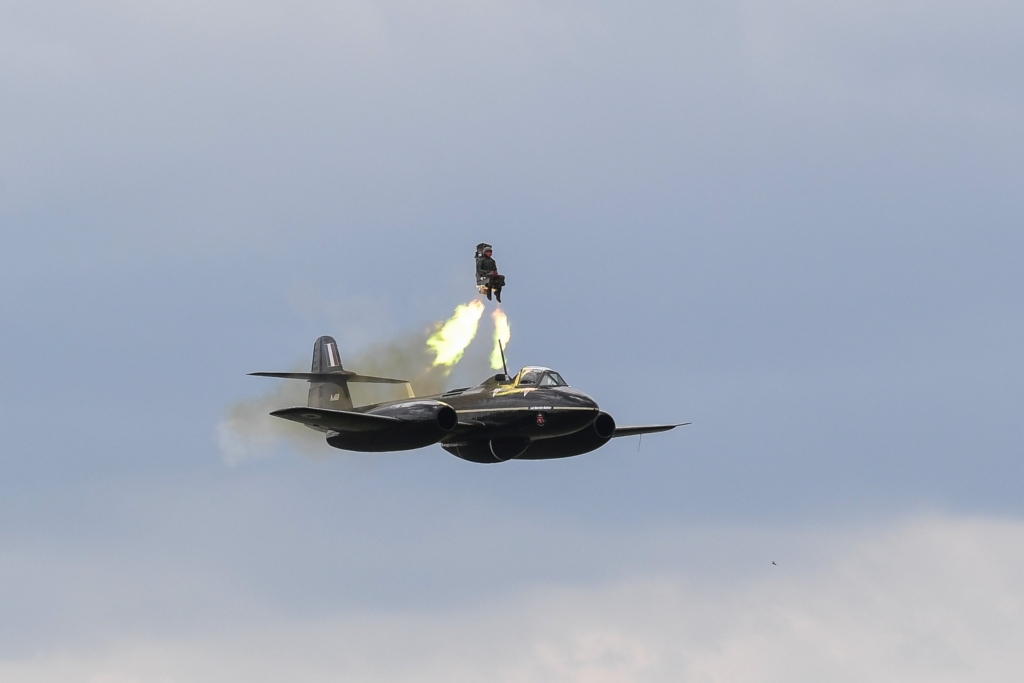
Counterintuitively, the Meteor has been a remarkably enduring and successful test platform, including for the development of the F-35’s seats. The aircraft offers the right speed and altitude for particular ejection seat tests, while providing a stable and predictable platform.
The two aircraft have accumulated more than 800 airborne ejection tests, having been extensively modified for the task. Recreating that testing capability would represent a considerable engineering undertaking.
Alongside its testing infrastructure, Martin-Baker has accumulated decades of operational data. According to the company, its seats have saved more than 7,700 lives throughout its history.
For potential competitors, matching that depth of experience and established infrastructure would require substantial investment in a market where opportunities to secure new aircraft contracts are relatively infrequent.
The battle for the US ejection seat market
The United States has long represented one of the largest and most attractive markets for ejection seat manufacturers. Martin-Baker was approached by the US Navy as early as 1945, although the US subsequently developed its own series of escape systems, including what is now the Collins Aerospace ACES family.
Competition between the two manufacturers has raised concerns within the US government about the long-term health of its domestic ejection seat industry.
As early as 1977, a US Government Accountability Office report examined the competitive implications of Martin-Baker winning the F-18 ejection seat contract, including concerns over the pricing of its development and qualification work.
More recently, a 2013 US Department of Commerce assessment identified Martin-Baker’s selection for the F-35 programme as a concern among surveyed US suppliers.
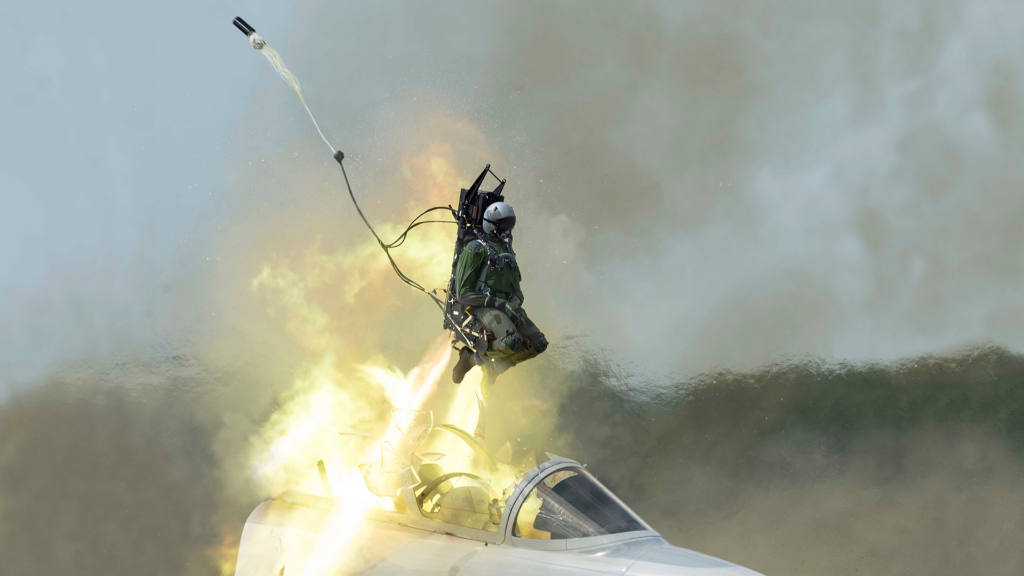
Nevertheless, Collins Aerospace retains a significant position in the American market. Its ACES family of seats is installed across a number of major US Air Force (USAF) fleets, including the F-15, F-16, F-22 and B-1B.
Collins is also supplying seats for the F-15EX Eagle II and the incoming T-7A Red Hawk trainer.
However, Martin-Baker has continued to make inroads into traditionally American territory, with Lockheed Martin selecting its US18E ejection seat for new-build F-16 Block 70/72 aircraft destined for international customers.
In December 2024, the USAF reopened competition for elements of its Next-Generation Ejection Seat programme, having previously awarded Collins a sole-source contract for the F-15.
The decision created an opportunity for Martin-Baker to compete for replacement seats for the USAF’s existing F-16 fleet, with the potential for further competitions covering other aircraft types.
However, in July 2026, Breaking Defense reported that the USAF had suspended the F-16 competition while it reassessed its requirements and acquisition options.
The developments illustrate the challenges facing procurement authorities seeking to maintain competition in a market with a limited number of established suppliers.
When ejection seats become a strategic dependency
The global distribution of ejection seat manufacturers largely reflects established geopolitical alliances, with Russia and China maintaining their own domestic production capabilities.
One notable exception is the Sino-Pakistani JF-17 Thunder, which uses a Martin-Baker PK16LE ejection seat.
India, South Korea, Türkiye, Sweden, Italy, Switzerland and France all use Martin-Baker ejection seats in their combat aircraft or trainer programmes.
For nations seeking to maintain control over their defence supply chains, however, reliance on overseas suppliers for safety-critical components can create vulnerabilities.
French fighter aircraft are predominantly French-designed and manufactured, but their dependence on British-designed ejection seats introduces an additional consideration when exporting aircraft.
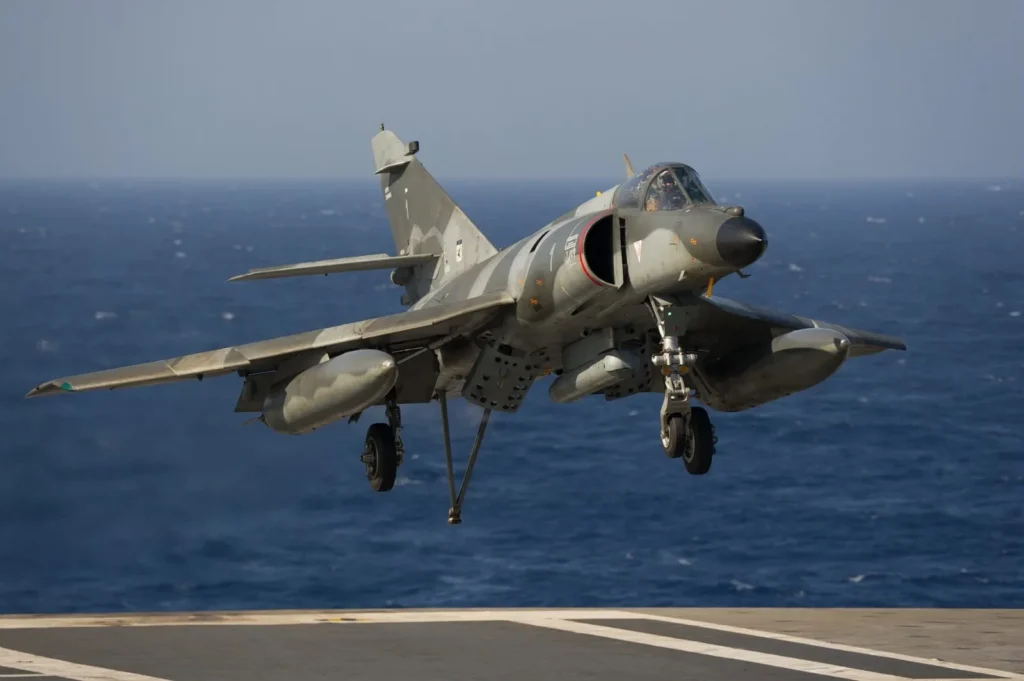
In 2017, France agreed to sell five retired ex-French Navy Dassault-Breguet Super Étendard attack aircraft to Argentina.
However, Argentina was unable to return the aircraft to operational service, in part because UK restrictions on military exports prevented it from obtaining replacement pyrotechnic components for its ejection seats.
After years of attempts to find an alternative solution, Argentina abandoned efforts to return the aircraft to service in 2026.
The episode illustrates how a relatively small subsystem can have significant implications for an aircraft’s operational availability and export potential, even when the vast majority of the aircraft is manufactured in another country.
It also demonstrates why decisions over ejection seat procurement extend beyond technical performance and acquisition costs. Access to replacement components throughout an aircraft’s operational life is an important consideration for both manufacturers and military customers.
Could sixth-generation fighters reshape the ejection seat market?
The development of a new generation of combat aircraft presents relatively rare opportunities for ejection seat manufacturers to secure major new contracts.
Martin-Baker has already been selected as a contractor for the BAE Systems-led Global Combat Air Programme (GCAP), involving the UK, Italy and Japan.
In the US, future combat aircraft programmes, including the F-47 and F/A-XX, could provide further opportunities for competition between Martin-Baker and Collins Aerospace, although their ejection seat suppliers have not been publicly confirmed.
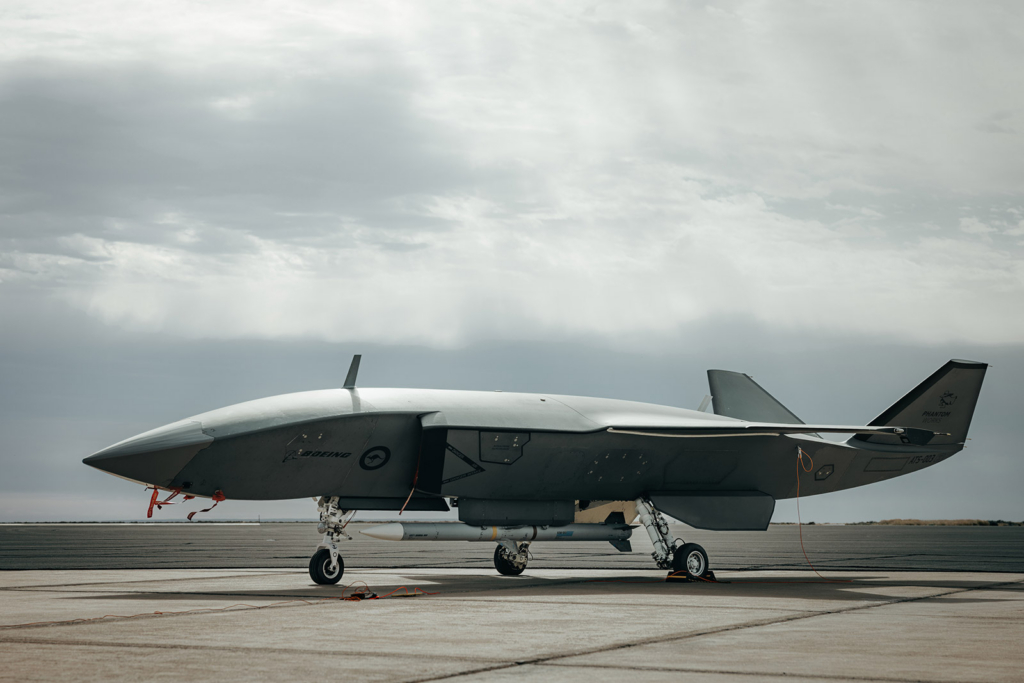
The emergence of uncrewed combat aircraft also introduces a longer-term question for the industry. As air forces increasingly look towards mixed fleets of crewed fighters and uncrewed collaborative combat aircraft, the relationship between combat aircraft production and demand for ejection seats could begin to change.
For now, the UK retains a strong position in one of the most concentrated markets in military aerospace. But maintaining that position will depend on securing contracts for future aircraft programmes, continuing to invest in new escape technologies and demonstrating the ability to support international customers throughout increasingly long aircraft service lives.
For governments, meanwhile, the challenge is balancing the benefits of established, proven technology against the need for competition, industrial capability and security of supply.
Sign up for our newsletter and get our latest content in your inbox.
Similar Reads

Sign up for our newsletter. Select all sectors relevant to you.
Related