The need for speed: Why the English Electric Lightning was designed the way it was


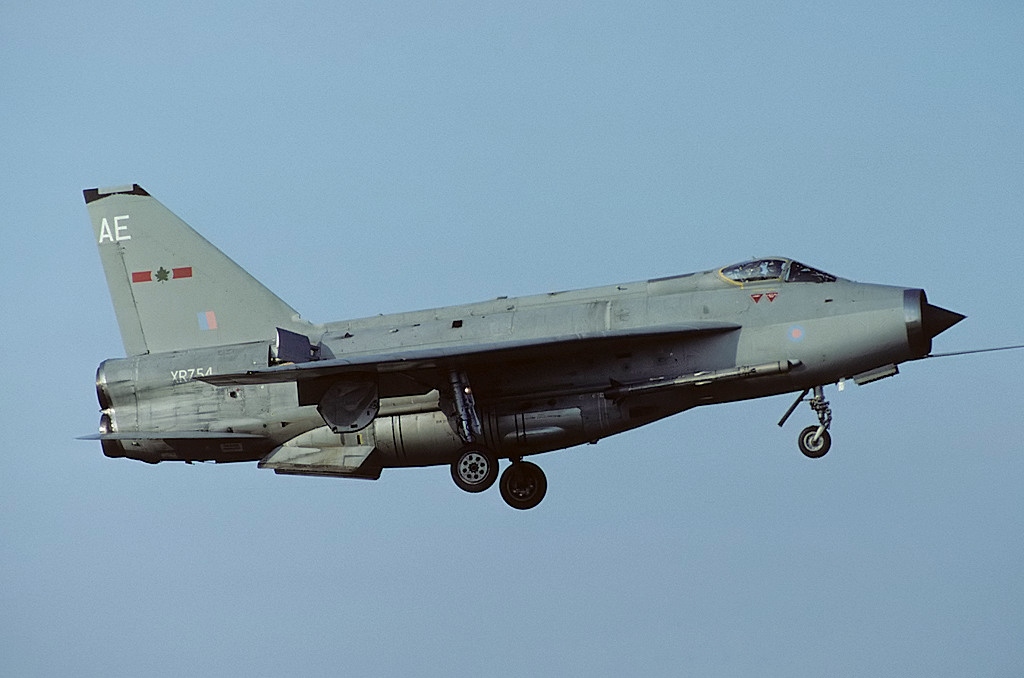
The English Electric Lightning was developed during the early years of the Cold War, when Britain urgently needed a high-performance interceptor capable of defending the country against fast, high-altitude Soviet bombers.
Designed by English Electric under the leadership of W. E. W. Petter, the Lightning first flew in 1954 and entered Royal Air Force service in 1960.
Its design was driven by one overriding requirement – to climb rapidly, reach great heights, and intercept an enemy aircraft before it could approach its target. Rather than prioritising long-range endurance or manoeuvrability, the Lightning was engineered for exceptional speed and rate of climb.
The unusual, stacked engines
Perhaps the Lightning’s most distinctive feature was its two Rolls-Royce Avon turbojet engines mounted one above the other in the fuselage. This unusual arrangement was chosen to provide substantial thrust while keeping the aircraft’s frontal area relatively small.
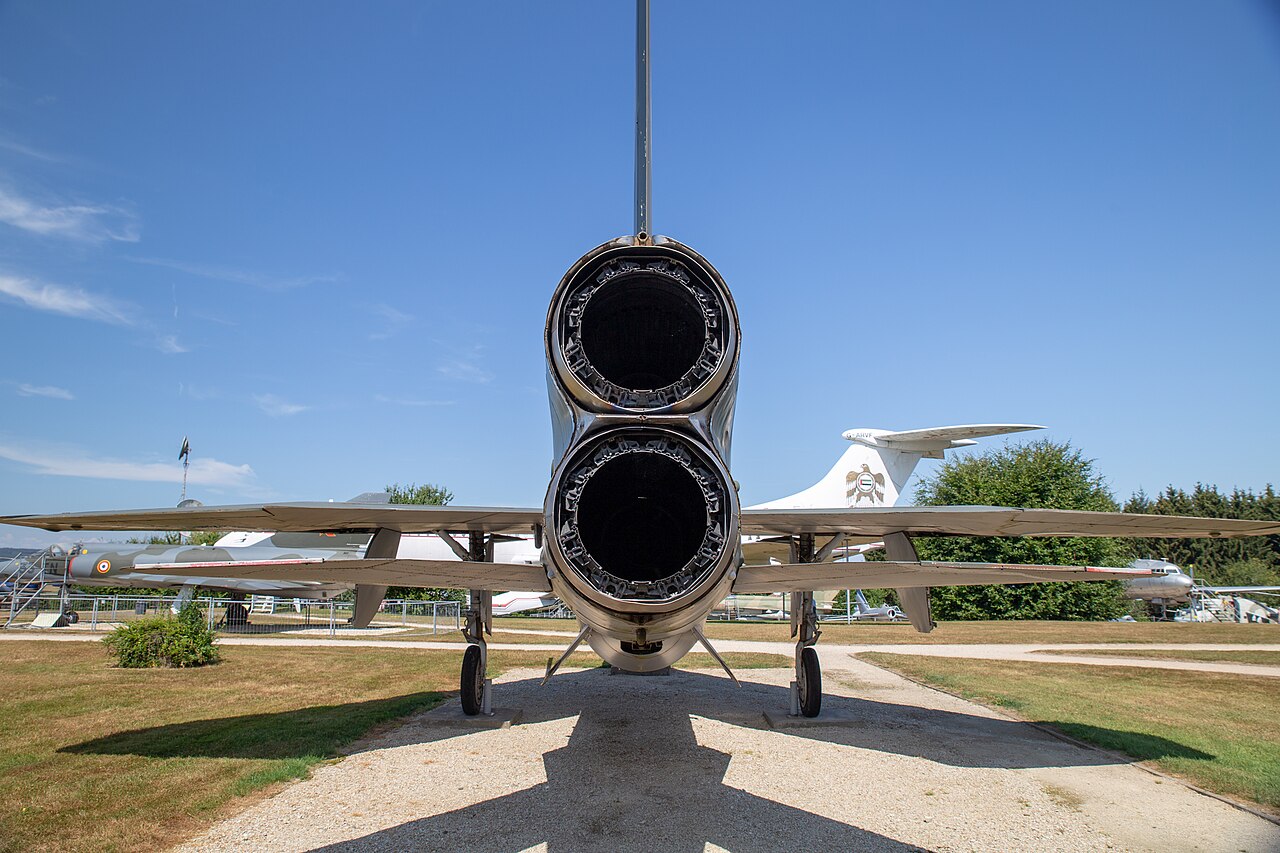
Mounting the engines vertically also allowed the designers to accommodate two powerful engines within a narrow fuselage, reducing drag compared with a wider, side-by-side arrangement. The configuration did, however, create engineering challenges, particularly in maintaining adequate airflow and managing the aircraft’s centre of gravity.
The engines were fed by a single nose intake, giving the Lightning its unmistakable appearance. This arrangement helped preserve a clean aerodynamic profile at the high speeds for which the aircraft was designed.
Swept wings and aerodynamic efficiency
The Lightning’s sharply swept wings were another essential feature. At transonic and supersonic speeds, conventional straight wings generate substantial drag as airflow becomes locally supersonic. Sweeping the wings backwards delays these effects, allowing the aircraft to fly faster and more efficiently.
The relatively small wing area also reduced drag, but it came at a price. The Lightning had a high wing loading, meaning it could be demanding to handle at low speeds and required relatively high approach and landing speeds.
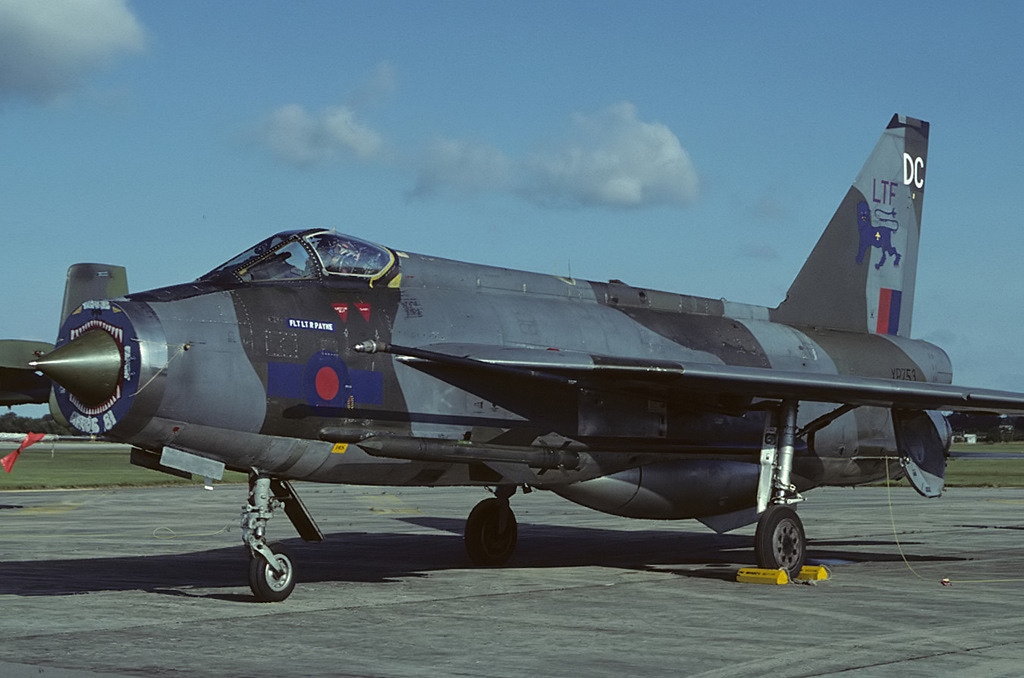
These compromises reflected the aircraft’s intended role: it was designed primarily to intercept hostile aircraft at altitude, rather than to excel in slow-speed combat or provide sustained long-range patrols.
Climbing power and high-altitude performance
The Lightning’s powerful engines and lightweight airframe gave it an extraordinary rate of climb. It could accelerate rapidly through the atmosphere and reach altitudes that challenged many contemporary aircraft.
This performance was especially important because the threat of nuclear-armed bombers made early interception essential. The Lightning needed to reach an approaching target quickly, engage it with missiles or guns, and return to base.
Its limitations included relatively short range and high fuel consumption, particularly when using afterburner. These drawbacks were accepted because rapid interception, rather than endurance, was the priority.
A purpose-built Cold War interceptor
The English Electric Lightning was not designed to be a universal fighter. Almost every major feature reflected the demands of its intended mission: the stacked engines for compact power, swept wings for supersonic flight, and a streamlined fuselage for speed.
The result was one of Britain’s most distinctive combat aircraft. Although later developments in radar, missiles and aircraft design eventually made newer interceptors more practical, the Lightning remained a remarkable example of engineering shaped by a specific military need – getting airborne, getting high and getting to the enemy as quickly as possible.
Sign up for our newsletter and get our latest content in your inbox.
Similar Reads



Sign up for our newsletter. Select all sectors relevant to you.
Related