British-German hypersonic missile developer raises €100m as UK advances deep-strike plans

British-German defence company Hypersonica has secured €100 million (£83.5 million) in new investment to accelerate development of hypersonic weapons, as the UK and Germany work towards introducing a new generation of long-range precision-strike missiles in the 2030s.
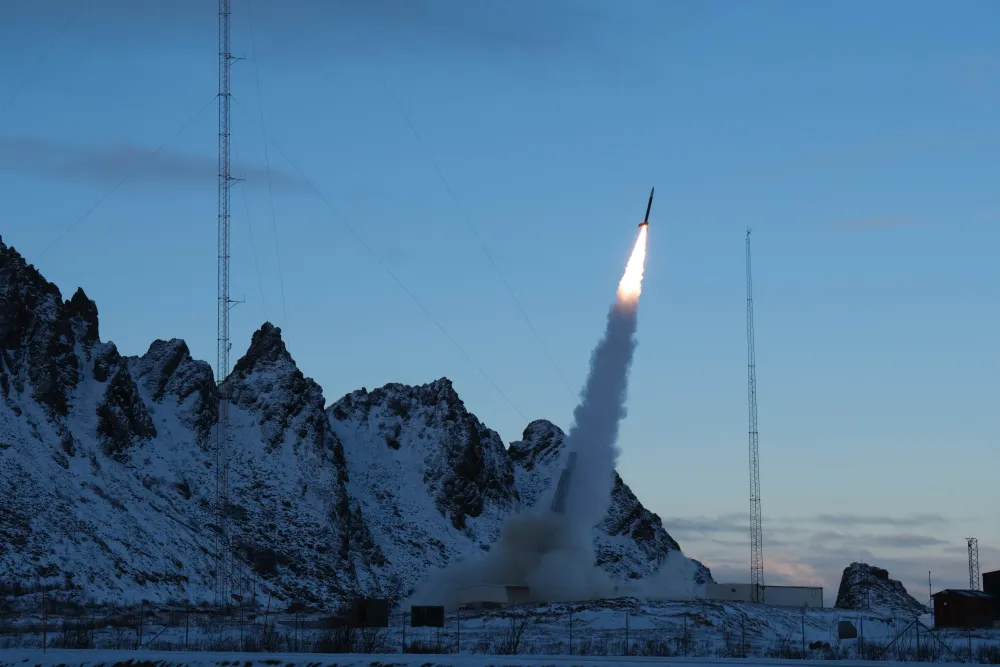
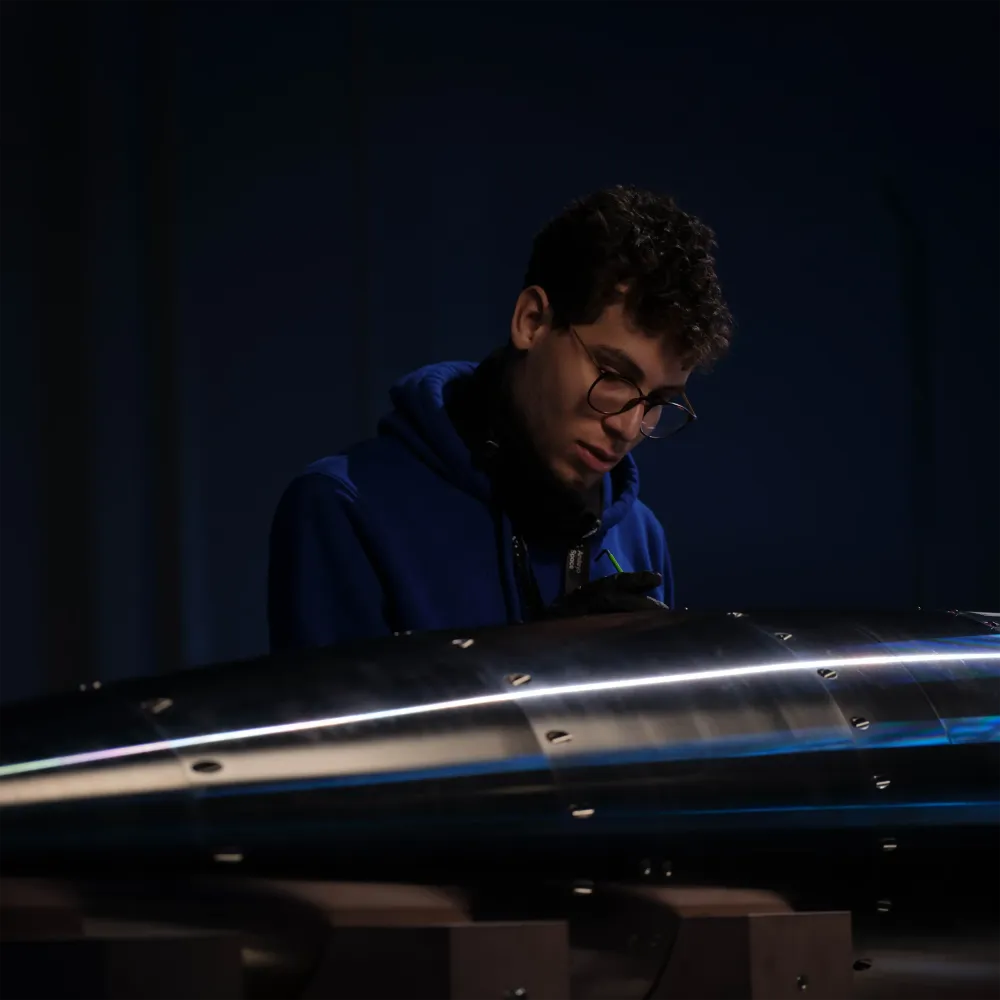
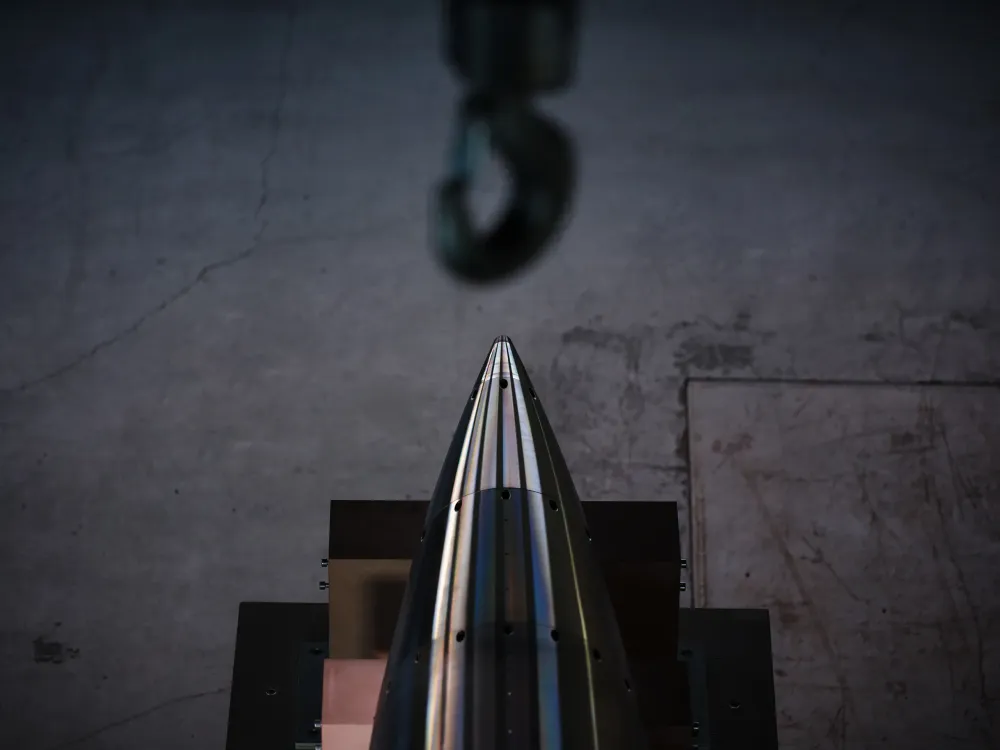
The funding, announced on 2 November, follows Hypersonica’s successful flight test of its HS-1 prototype in February, when the vehicle exceeded Mach 6 and travelled more than 300 kilometres.
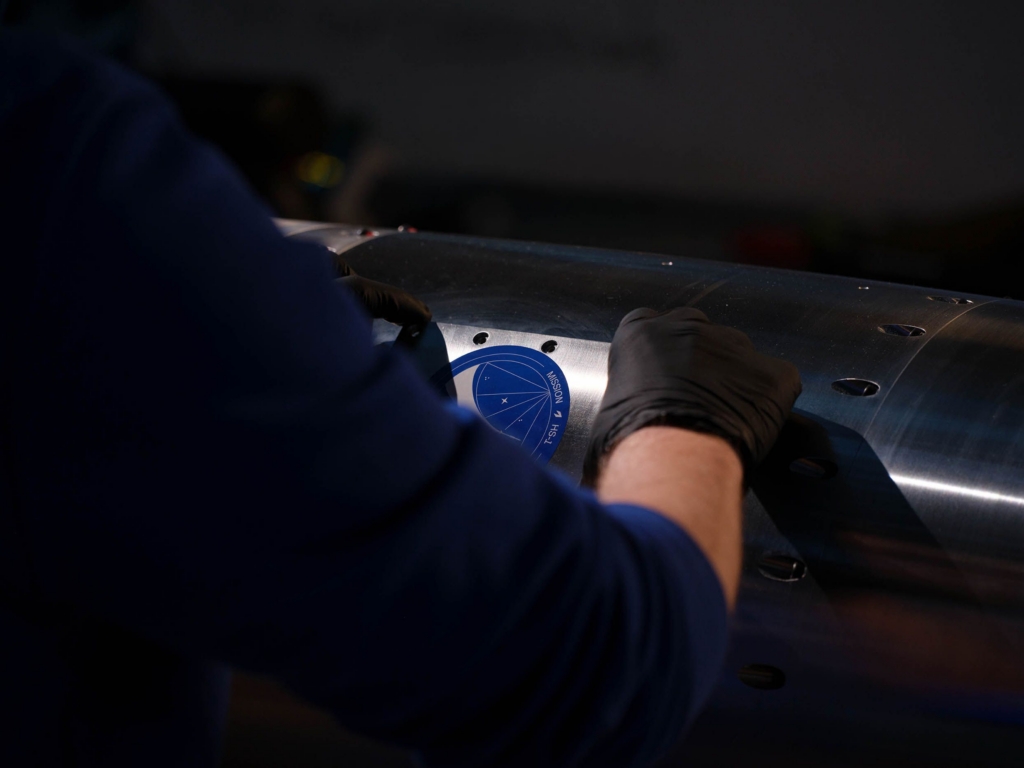
The company aims to develop hypersonic deep-strike systems by 2029, while expanding its engineering and manufacturing operations in the UK and Germany.
The investment comes as London and Berlin advance their joint Deep Precision Strike programme, which envisages a family of stealth cruise and hypersonic weapons capable of travelling more than 2,000 kilometres.
The €100 million Series B funding round was co-led by Lightspeed and General Catalyst, with participation from existing investors Plural, 201 Ventures and Germany’s Federal Agency for Breakthrough Innovation (SPRIND).
Hypersonica said the investment would support more frequent flight testing, accelerate development and create hundreds of skilled engineering and manufacturing jobs across the UK and Germany.
Company co-founders Dr Philipp Kerth, chief executive, and Dr Marc Ewenz, chief technology officer, said governments were increasingly prepared to invest in the technology.
“The debate about whether Europe needs hypersonic deep-strike capability is over. Governments have recognised the requirement and begun funding programmes. The challenge now is delivery. Europe needs credible hypersonic long-range capability, and more value for every pound and euro it spends.”
UK and Germany plan missiles with 2,000km range
The UK-German Deep Precision Strike programme is being developed under the Trinity House Agreement, signed in October 2024 to strengthen defence cooperation between the two countries.
The programme is intended to produce a family of long-range weapons, including stealth cruise missiles and hypersonic systems.
According to the UK Ministry of Defence, the missiles are expected to enter service in the 2030s.
The initial focus will be on ground-launched weapons, although the two governments are also examining air-launched and naval capabilities.
These options could eventually allow missiles to be deployed from different military platforms, giving commanders greater flexibility in responding to threats.
The Ministry of Defence confirmed the programme’s scope following talks in Berlin on 16 March between Luke Pollard, then Minister for Defence Readiness and Industry, and Germany’s State Secretary for Armament and Innovation, Jens Plotner.
The meeting took place under the bilateral Ministerial Group on Equipment and Capability Cooperation.
Pollard said at the time: “The UK-Germany relationship is incredibly strong, and we’ve marked a step forward in our work to develop cutting-edge missile capabilities.”
He also emphasised the industrial benefits of the partnership.
“We are not only arming our military personnel with the best weaponry to act as the strongest possible deterrent to our adversaries, but in doing so we are also building the industrial foundations that will keep both nations at the forefront of defence technology, making us secure at home and strong abroad.”
The UK has allocated an initial £770 million over four years to the joint Deep Precision Strike programme, according to Hypersonica’s latest announcement.
A separate NATO-led multinational initiative announced in July envisages £37 billion of investment in deep precision-strike capabilities over the next decade.
The UK-German programme remains open to participation by other countries.
Although Hypersonica is developing technology relevant to these requirements, neither its latest announcement nor the March government statement confirms that it has received a production contract under the bilateral programme.
What makes a missile hypersonic?
Hypersonic weapons travel at speeds exceeding Mach 5, meaning more than five times the local speed of sound.
At sea level, Mach 5 is approximately 6,175 kilometres per hour, although the precise speed varies with atmospheric conditions and altitude.
The principal advantage is the ability to cover considerable distances in a relatively short time, reducing the warning available to an adversary.
Some hypersonic weapons can also manoeuvre during flight, complicating attempts to predict their trajectory and intercept them.
Two main types are under development internationally.
Hypersonic cruise missiles use advanced propulsion systems to sustain high-speed flight through the atmosphere. Hypersonic glide vehicles are typically accelerated by rockets before separating and manoeuvring towards their targets.
The technology presents significant engineering challenges. At hypersonic speeds, frictional and compression heating can expose the missile’s structure to extreme temperatures, requiring specialised materials and thermal protection.
Guidance and control systems must also remain effective under these conditions.
Hypersonica has not publicly disclosed the full technical configuration of its planned operational weapon, including its propulsion system, warhead, launch platform or intended range.
Its February demonstration nevertheless provided an important development milestone.
The company said its HS-1 prototype exceeded Mach 6 over a distance of more than 300 kilometres, describing it as the first successful hypersonic test flight by a privately funded European defence company.
It also claims its development approach can reduce costs by more than 80% compared with conventional methods, although that comparison has not been independently verified.
The HS-1 remains a test vehicle rather than an operational missile. Further development will be required before the company can demonstrate a complete weapon system.
From prototype to operational capability
Hypersonica’s immediate priority is to build on the February flight by conducting additional tests and developing the technologies needed for an operational system.
Since its earlier financing round, the company says it has expanded its engineering workforce, strengthened relationships with European defence manufacturers and increased engagement with governments.
Kerth and Ewenz said the company had demonstrated that hypersonic technology could be developed more quickly and at lower cost than traditionally expected.
“We have shown that next-generation hypersonic systems can be developed in Europe faster and more affordably than conventional wisdom suggests. And we’re proud to be backed by investors who share our conviction that Europe should be able to develop and produce advanced strategic capabilities itself.”
They added: “Series B marks our transition from demonstration to delivery. This funding will accelerate development, increase testing cadence, support European reindustrialisation and help ensure Europe has access to sovereign capability developed and produced in Europe.”
The company says its technology is developed, owned and controlled in Europe and is intended to be free from US International Traffic in Arms Regulations, or ITAR, restrictions.
Such an arrangement could give European governments greater control over the production, deployment and export of future systems, subject to national and European regulations.
Hypersonica has not announced a detailed schedule for its next flight test or specified when its proposed missile could enter military service.
Investment to expand UK and German defence industry
The financing round also reflects growing private investment in European defence technology, particularly in areas where governments are seeking to reduce dependence on external suppliers.
Alexander Schmitt, partner at Lightspeed, said the company had demonstrated its ability to develop complex defence systems.
“Hypersonica is redefining how advanced defence capability gets built. The team pairs deep technical expertise with exceptional speed of execution, and the strength of our support reflects our confidence in both the technology and their ability to deliver.”
Jeannette zu Furstenberg, president and managing director at General Catalyst, said Europe’s ability to manufacture critical defence technologies was becoming increasingly important.
“Strategic autonomy begins with the ability to build critical technologies at speed, at scale and at a fraction of the cost of traditional systems. That is exactly what Philipp, Marc, and the Hypersonica team are doing.”
She added: “They combine the ambition to tackle one of Europe’s most critical capability gaps with the engineering excellence to actually solve it. As Europe invests in its security and resilience, it will be companies like Hypersonica that play a defining role in translating ambition into real capability.”
Sign up for our newsletter and get our latest content in your inbox.
Similar Reads


Sign up for our newsletter. Select all sectors relevant to you.
Related