First British special forces Chinook takes flight

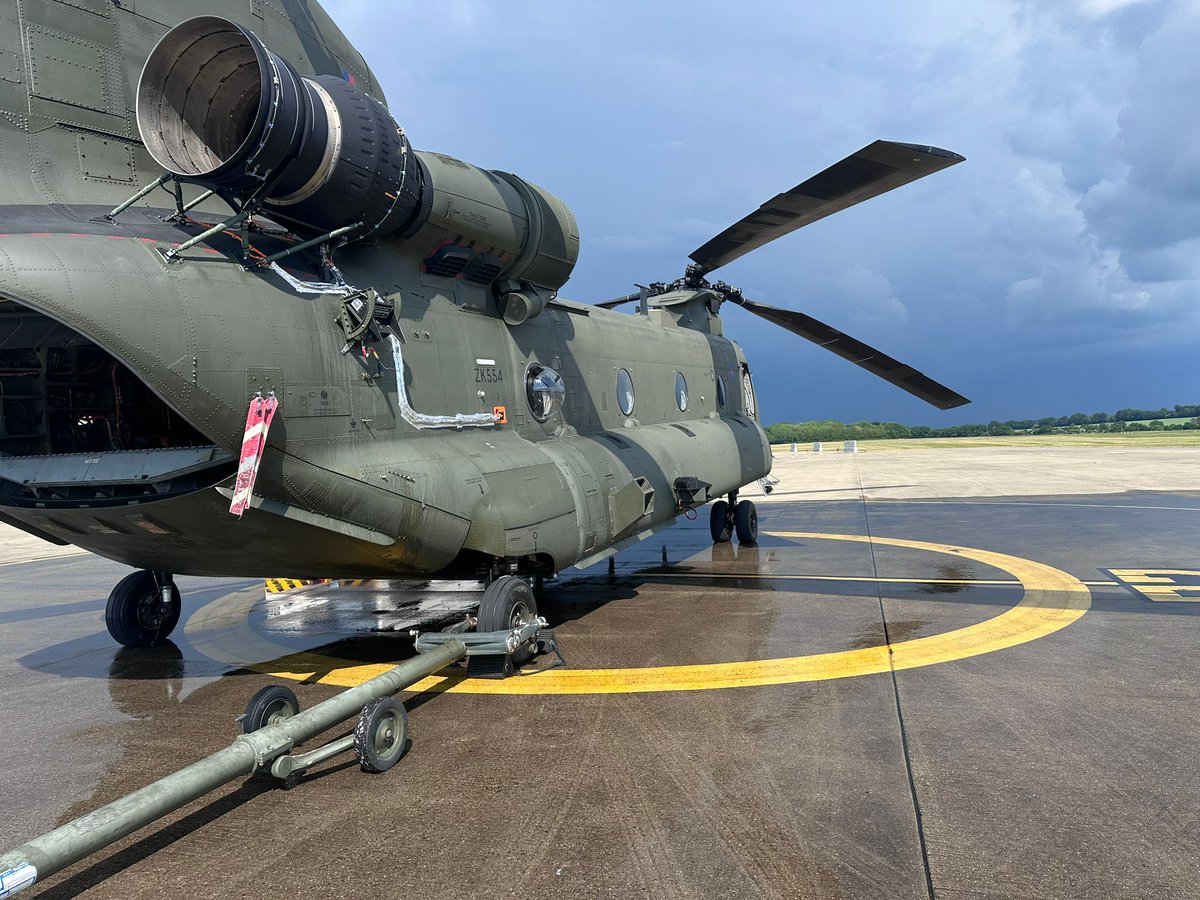
The first special-forces H-47 Chinook helicopter intended for the Royal Air Force (RAF) made its maiden flight at its production facility in Philadelphia. Deliveries are expected to run from 2028 to 2032.
Boeing UK posted, “The UK’s first H-47 Extended Range Chinook has taken to the Philadelphia skies for the first time with Active Parallel Actuator System (APAS), which works similar to lane assist for cars. This is the first flight of APAS on an international operator.”
It can be seen flying with ER (‘fat tank’) fuel tanks. These H-47s will also come with an in-flight refueling probe, which will be a new capability for the British helicopter fleet.
The flight took place at the Boeing Ridley Park production facility in Pennsylvania, where it was assembled. Boeing unveiled the future British helicopter at the same facility in July.
They will also be fitted with the RTX-Raytheon AN/APQ-187 Silent Knight terrain-following and weather detection multi-mode radar (MMR).
You’ve seen it in production, now see it fly. The UK’s first H-47 Extended Range Chinook has taken to the Philadelphia skies for the first time with Active Parallel Actuator System (APAS), which works similar to lane assist for cars. This is the first flight of APAS on an international operator.
— Boeing UK (@BoeingUK) November 13, 2026
The special mission Chinooks are to support RAF special forces, notably No. 7 Squadron / Joint Special Forces Aviation Wing.
No. 7 Squadron is a frontline Royal Air Force (RAF) heavy-lift support helicopter unit based at RAF Odiham. It serves as a dedicated rotary-wing aviation element within the Joint Special Forces Aviation Wing (JSFAW)
JSFAW provides clandestine air assault, insertion, extraction, and resupply for the UK’s famous SAS and SBS special forces.
Incoming fleet of British special mission Chinooks
The UK has ordered a fleet of 14 new special operations forces (SOF). They will receive the same matte black finish as the US Special Operations Command (SOCOM)’s MH-47G Chinooks.
These were purchased via US Foreign Military Sales, with the procurement being confirmed around March 2024.
Currently, the RAF has a fleet of 50 Chinooks in inventory of all types. HC. Mk 6A variants are being withdrawn from service, and the number is expected to fall to around 36 helicopters.
The RAF currently operates around eight HC. MK 5 variant helicopters, primarily used by No. 7 Squadron for special forces support. It has 14 HC Mk6 new-build CH-47F standard aircraft delivered in 2014 and 2015.
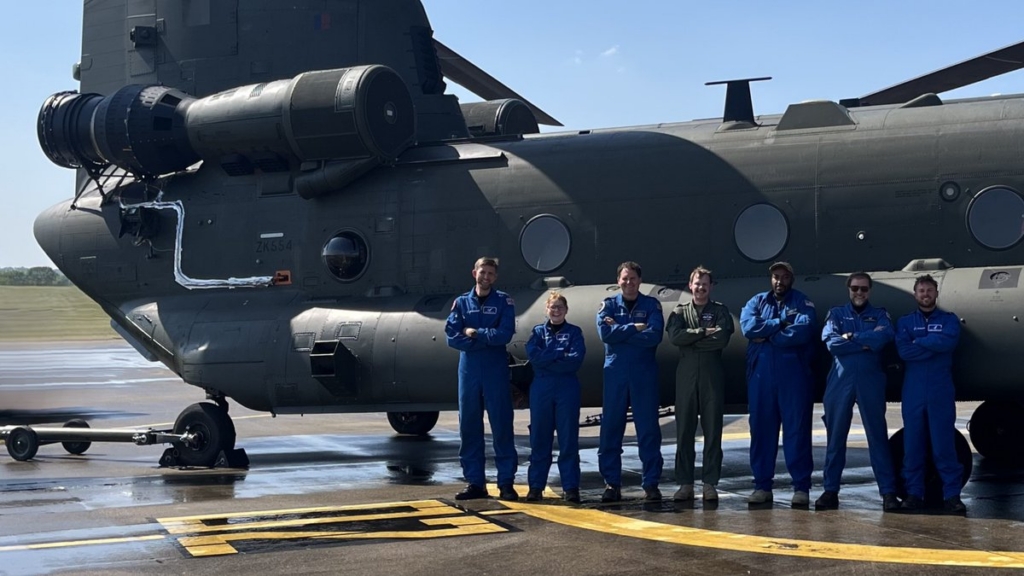
As for the remaining 29 older HC. Mk 6A aircraft, these have high flight hours and ageing airframes. They are to be retired by 2030, with the UK planning to order a second tranche of Chinook procurement for the 2030s, resulting in a temporary but significant gap.
New H-47(ER)/Block II helicopters will replace older high-hour airframes, providing greater range, aerial refueling, and SOF mission systems.
In-air refueling capabilities for future British helicopter fleet
While the H-47s will come with an air-refueling capability, the UK currently lacks aircraft capable of refueling slow-moving helicopters. The RAF’s Airbus A330 Voyager tankers cannot perform the role for helicopters.
Helicopters are typically refueled by slower turboprop aircraft, such as KC-130Js, although the RAF has divested its C-130J-30s.
MP James MacCleary asked if the RAF could use its A400M Atlas turboprops to conduct in-air refueling for the helicopters and about relevant compensation payments to the Airtanker Consortium.
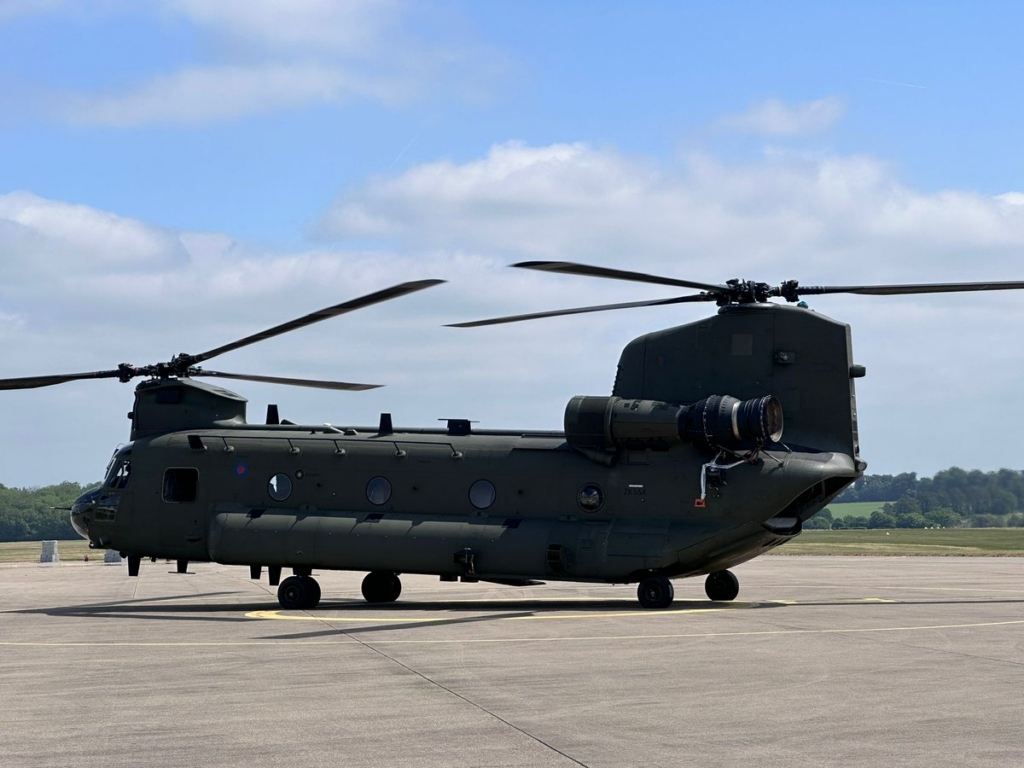
Defence Minister Luke Pollard said in a written parliamentary answer given in February, “The Chinook H‑47(ER) is being procured with full air‑to‑air refuelling (AAR) receiver capability. On current plans, refuelling support will be provided by the U.S. KC‑130.”
British Army and UK Joint Helicopter forces typically rely on FARP (Forward Arming and Refueling Points). These are temporary ground, austere, or shipboard fuel sites, which often rely on A400M airlifters for offloading fuel via pumps in austere locations.
Sign up for our newsletter and get our latest content in your inbox.
Similar Reads



Sign up for our newsletter. Select all sectors relevant to you.
Related