NATO medical leaders see UK Defence Medical personnel test concealed field hospital
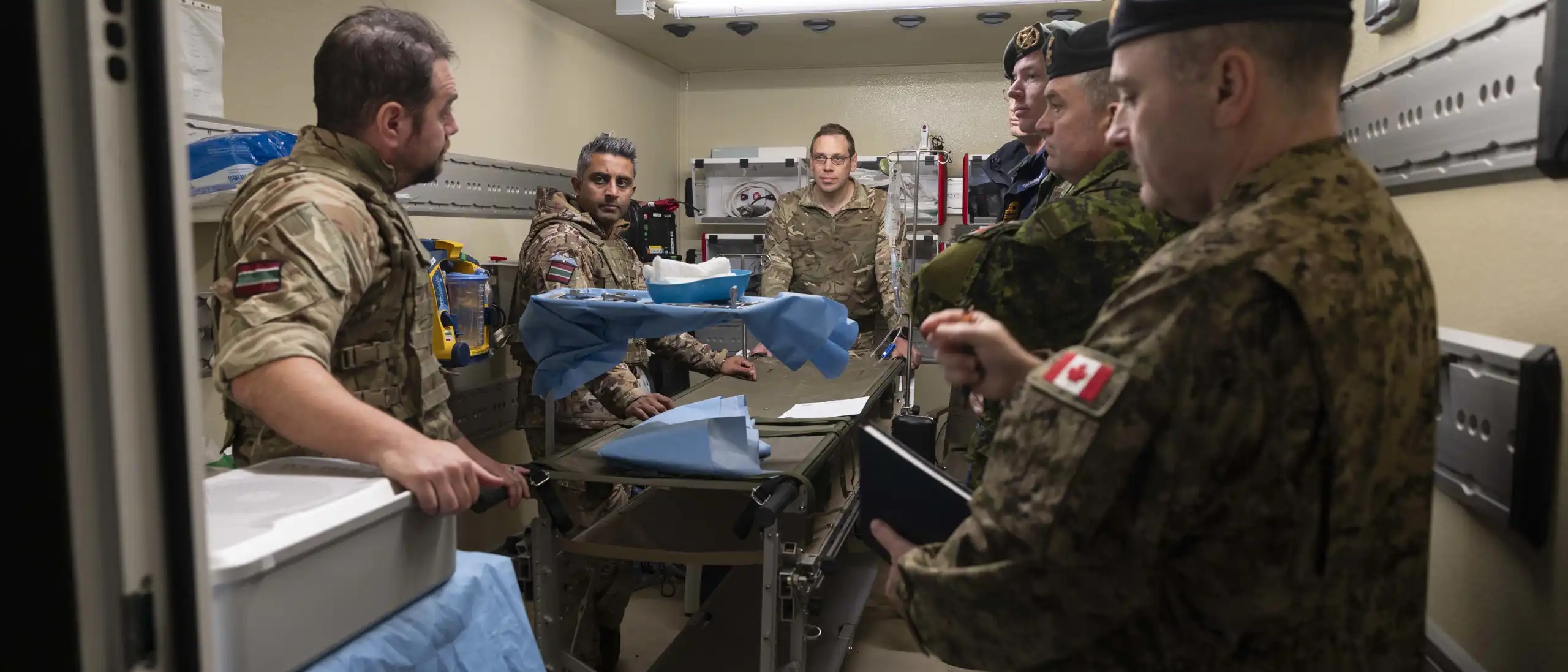
UK military medics serving with the Royal Army Medical Services have tested a concealed field hospital on Salisbury Plain Training Area, Wiltshire, drawing on lessons from Ukraine to keep lifesaving care operating under threat.
Led by the Army’s 2 Medical Group, including 206 Multirole Medical Regiment and 335 Medical Evacuation Regiment, Exercise Bellatorean Cyclone brought together more than 200 specialists to develop hospital and mobile surgical capabilities that can operate hidden across multiple locations, rather than from a single large medical facility.
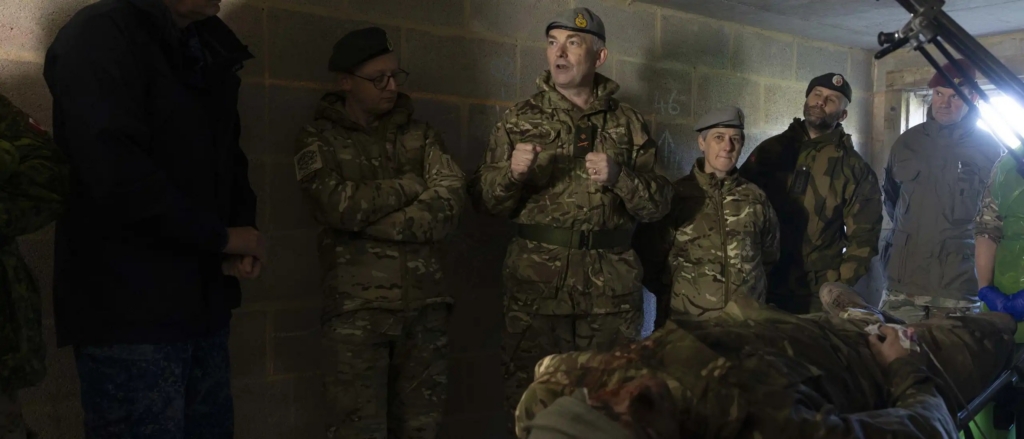
They were joined by senior representatives from NATO’s Committee of the Chiefs of Military Medical Services (COMEDS) including its Vice-Chair, Major General Marc Ongena of the Belgian Armed Forces, who saw how UK medical teams reduce the physical and electronic signs that could reveal a hospital’s location.
Why smaller field hospital teams in different locations makes them harder to detect
An approach known as MESH splits a large field hospital into smaller teams working from separate locations, including existing buildings and damaged urban infrastructure. This makes facilities harder to detect while allowing teams to receive, treat and stabilise casualties.
UK Surgeon General, Major General Phil Carter, who attended the exercise and is the UK representative to NATO COMEDS, said: “Two Medical Group is helping lead the conversation on what Deployed Hospital Care must look like on the modern battlefield: innovative, dispersed, resilient and connected. The professionalism and enthusiasm of our people, working alongside NATO partners to test and develop these concepts, was hugely impressive.”
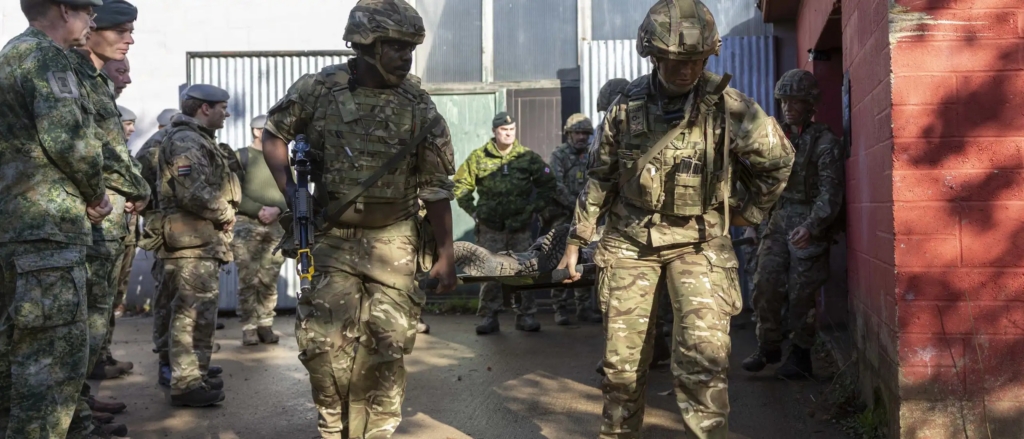
The exercise tested the provision of advanced resuscitation, damage control surgery and short-term treatment to stabilise casualties before further evacuation.
The war in Ukraine has highlighted the vulnerability of medical facilities to drones, artillery and surveillance. Attacks can also delay casualty evacuation, making access to surgery closer to the front line vital. Ensuring military medical facilities can survive on the battlefield is essential to treating patients.
Developing dispersed surgery and medical care in challenging environments
Teams tested how to maintain treatment and communication across separate locations.
Staff Sergeant Diane King, a Critical Care Nurse with 206 Multi-role Medical Regiment, said: “Exercising as part of a team in an unfamiliar environment allowed us to further develop concepts and operational procedures based on what we see in conflicts around the world today.”
Warrant Officer Class Two Daniel Wesley, of 206 Multi-role Medical Regiment, said: “The exercise really allowed us to develop dispersed medical care in a complex environment. The challenges we faced as a team developed our understanding of medical treatment in contested conflict zones around the world. Our aim now is to take this new knowledge and skill set, develop and build it.”
Personnel also tested a mobile surgical team designed to reinforce overwhelmed medical facilities quickly, with limited additional logistical support.
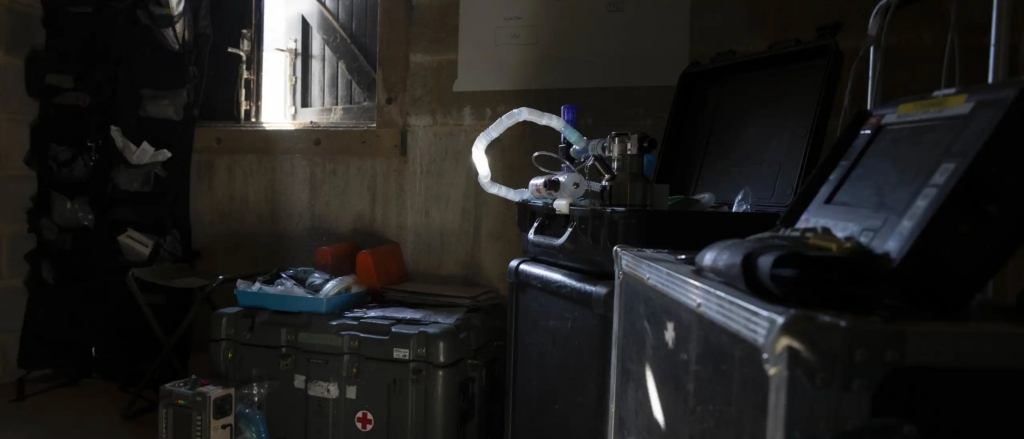
Staff Sergeant Ollie Hobbs, a paramedic with 335 Medical Evacuation Regiment, said: “It was exciting to work on improvised vehicle platforms and experimenting with how we would adapt platforms to meet the needs of contemporary conflicts.”
The findings will help 2 Medical Group develop more resilient medical capabilities and inform cooperation with NATO allies preparing to support each other on operations.
Sign up for our newsletter and get our latest content in your inbox.
Similar Reads

Sign up for our newsletter. Select all sectors relevant to you.
Related