Advancing UK Aerospace, Defence, Security & Space Solutions Worldwide
  • Home
  • /
  • Space
  • /
  • ACJ319 to go on display at MEBAA

Space

ACJ319 to go on display at MEBAA

Airbus Corporate Jets (ACJ) is showcasing an ACJ319 at the Middle East and North Africa Business Aviation Association (MEBAA) show to highlight the trend towards larger cabins in new-generation business jets.

Above: More than 190 ACJs are in service today.

Operated by Acropolis Aviation of the UK, which is upgrading to an ACJ320neo, the aircraft is offered for VVIP charter flights.

“What you get in the cabin, and being able to fly when and where you want, is the bedrock of business aviation, and being able to stand upright and move around freely – a trademark feature of Airbus corporate jets – makes a huge difference to enjoyment and productivity,” said ACJ President Benoit Defforge.

Advertisement
Tritax 300x250

Airbus ACJ320 Family aircraft have the widest and tallest cabins of any large business-jet, while being about the same size and delivering similar operating costs. New members of the family, such as the ACJ319neo and ACJ320neo, feature new engines and wingtip-mounted Sharklets, enabling even longer intercontinental flights.

The first of these new aircraft, an ACJ320neo for Acropolis Aviation, successfully completed flight trials in November and will be delivered for outfitting in the coming weeks. It will join more than 500 A320neo Family aircraft that are already in widespread airline service.

A total of 11 ACJ320neo Family aircraft have been ordered to date, from customers that include Acropolis Aviation, Comlux, K5 Aviation and undisclosed customers.
 
The Middle East is one of the biggest business-jet markets in the world and was where Airbus sold its first corporate jet in the mid-Eighties. Around 60 ACJs are currently flying in the Middle East, comprising about 40 ACJ320 Family aircraft and some 20 VIP widebodies. It is a key market for Airbus’ VIP widebodies - such as the new ACJ330neo and ACJ350 XWB.


Advertisement
Leonardo animated rectangle


Advertisement
General Atomics LB
UK Space Agency invests £17m to drive space innovation

Space Events

UK Space Agency invests £17m to drive space innovation

4 December 2025

The UK Space Agency unveiled £17 million for 17 UK space projects through its National Space Innovation Programme (NSIP), at Space-Comm Expo in Glasgow.

British designed satellites successfully launched

Defence Security Space

British designed satellites successfully launched

3 December 2025

A cluster of British designed and built satellites has been successfully launched into low Earth orbit, providing defence, security and civil sectors with UK space-based intelligence, surveillance and reconnaissance to enhance the nation’s ability to protect against modern threats.

Filtronic awarded NSIP funding to develop 550W Ka-Band SSPA

Space

Filtronic awarded NSIP funding to develop 550W Ka-Band SSPA

3 December 2025

Filtronic has been awarded funding through the UK Space Agency National Space Innovation Programme (NSIP) to develop a high-power 550W Ka-Band Solid-State Power Amplifier (SSPA).

Scottish space sector secures UK Space Agency investment

Space Events

Scottish space sector secures UK Space Agency investment

3 December 2025

Scotland’s space sector will receive a major funding boost to accelerate breakthrough technologies and boost commercialisation, the UK Space Agency will announce today at Space-Comm Expo Scotland.

Advertisement
ODU RT
Airbus

Space

Airbus' ESM-4 ships out for Artemis IV

1 December 2025

Airbus' fourth European Service Module (ESM-4) has reached a major milestone, as it began its journey last week to NASA’s Kennedy Space Center in Florida, for Artemis IV.

UK space weather probes capture solar radiation spike

Space

UK space weather probes capture solar radiation spike

27 November 2025

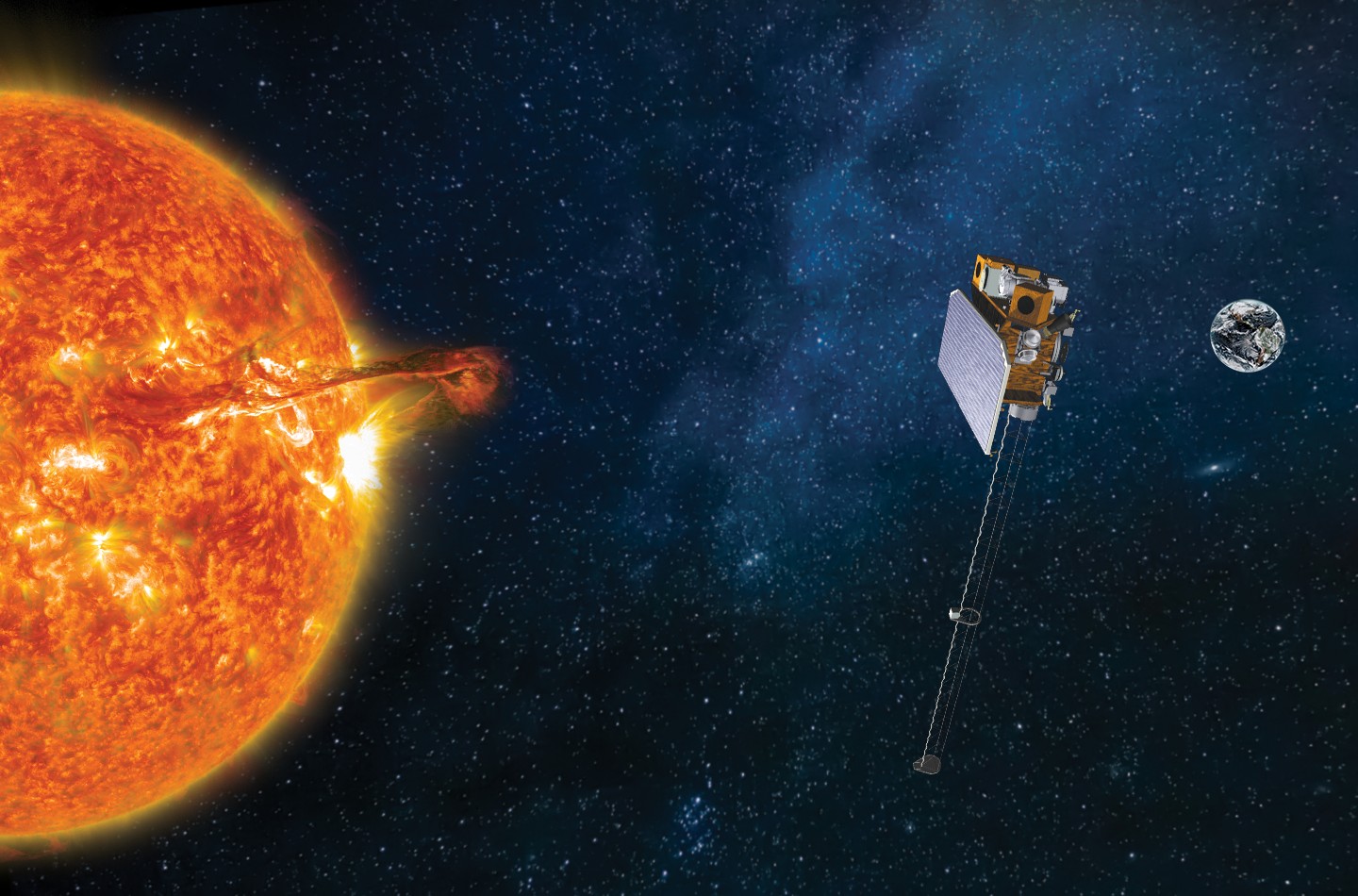
New balloon-mounted space radiation probes developed by the Surrey Space Centre at the University of Surrey have captured their first measurements of a major solar storm, confirming the research team’s model, which indicates the flare caused the highest levels of radiation at aviation altitude in almost two decades.

Advertisement
ODU RT