Air defence laser engages multiple missiles simultaneously
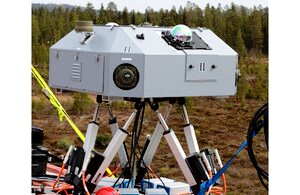
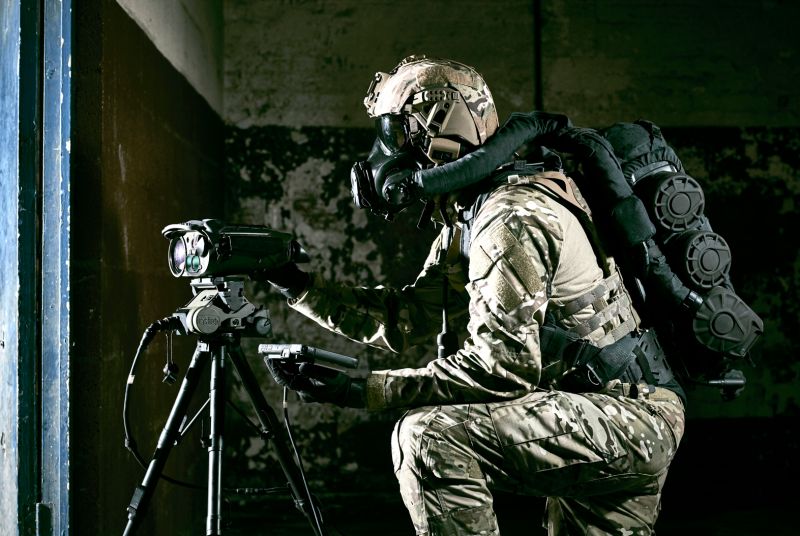
Above: The new air defence laser system.
Courtesy MoD / Crown Copyright
The laser is being designed to be fitted to a range of RAF aircraft including the intelligence gathering Shadow R2 and A400M transporter, ready to rapidly detect and defeat threats such as missiles.
During the trial at the Vidsel Test Range in Sweden, the operational system defeated a range of infrared heat-seeking missiles being fired simultaneously.

One hundred per cent of threats were quickly defeated using a laser with pinpoint accuracy, which has been designed and developed by the Team Pellonia partnership between Leonardo UK, Thales UK and the MoD’s Defence Science and Technology Laboratory.
Defence Secretary, John Healey said: "Identifying, tracking and defeating threats from the air in seconds is crucial to having the edge over those who try to do us harm.
"We’re equipping our Armed Forces with the very latest technology to keep them safe and give them the advantage on operations.
"This high-tech laser is another excellent example of joint working between our Dstl experts and the UK’s defence industry."
The system works by Thales’s Elix-IR threat warning system quickly detecting and identifying the launch of missiles, using a series of algorithms to filter out background clutter so that only valid threats are tracked, classified and declared.
Once the threat(s) has been classified, an alert is sent to the Leonardo’s Miysis directed infrared countermeasure which moves to track the incoming missile and directs a jamming laser onto the missile with ultimate precision.
Threats are defeated faster than the time it takes to read this sentence. This UK engineered capability gives the MoD the latest generation best-in-class protection, whilst enjoying full operational independence, and offering the same freedoms to export customers.
The live tests were witnessed by senior military officers from a number of NATO nations.
Dstl’s Chief for Air Survivability, Mark Elson, said: "The UK defensive aids system is the culmination of MoD’s detailed understanding of changing threats alongside years of sustained defence investment in science and technology nurtured within Dstl. This has been aligned with the development capabilities of our commercial partners through Team Pellonia.
"The design of the system has the agility to protect platforms now and into the future, providing long-term operational advantage to the UK and our allies. This is enabled through Spiral Development which provides capabilities such as the Dstl developed jamming waveform that defeats the guidance of the missile threat."
Dstl’s research programme and partnerships like Team Pellonia help boost UK economic growth, sustaining 700 jobs at Thales in Glasgow and 1,250 specialist roles at Leonardo in Edinburgh, supporting both the local as well as national economies.
Leonardo’s Senior Vice-President of Radar and Advanced Targeting, Mark Stead, said: "The results of these latest trials speak for themselves, and are a testament to the skills and experience within Leonardo as a global leader in directed infrared countermeasures. Miysis DIRCM has again proven itself as a reliable, effective protection system and is flying operationally on many platforms today.
"My thanks go to the Miysis team who demonstrated superb leadership and technical prowess during the trials at Vidsel, working alongside our partners in Defence and Industry to prove our capabilities which help to protect our Armed Forces."
Thales’s Managing Director of Optronics & Missile Electronics UK, Stephen McCann, said: "Once again, as previously witnessed during SALT 3 in 2018, Elix-IR has proved its world leading capabilities as the latest generation multi-function infrared threat warning system during what was a comprehensive and complicated multifaceted trial.
"I am extremely proud of our entire team that supported both the UK, under Team Pellonia, and other NATO member teams in the preparation and execution of this event. UK MoD has adopted Elix-IR as its core reference capability threat warner of choice, based on its maturity and proven capability."