
Advancing UK Aerospace, Defence, Security & Space Solutions Worldwide
  • Home
  • /
  • Space
  • /
  • Airbus-built SpainSat NG-I satellite launched

Space

Airbus-built SpainSat NG-I satellite launched
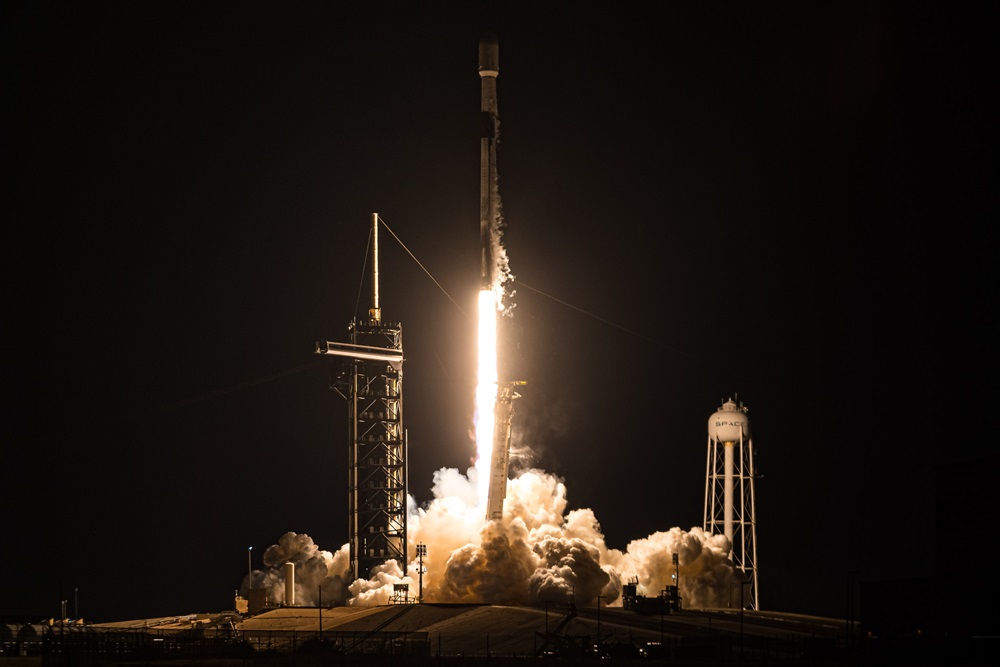
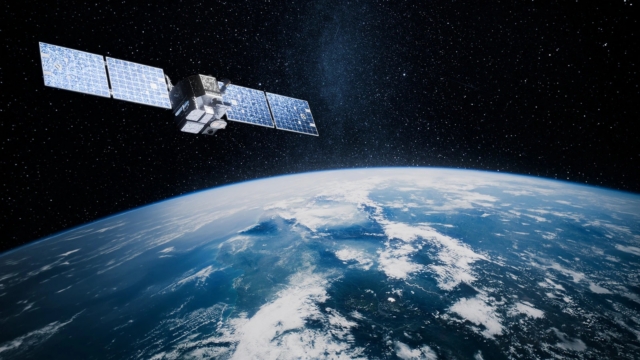
The first of the two new generation SpainSat satellites, SpainSat NG-I - built by Airbus Defence and Space - as been successfully launched on a Falcon 9 rocket from Cape Canaveral, in the US.

Image courtesy Airbus / copyright SpaceX 2025

The first of the two Airbus-built new generation SpainSat satellites, SpainSat NG-I, has been successfully launched on a Falcon 9 rocket from Cape Canaveral, in the US.

Operated by Hisdesat for the Spanish Armed Forces, Europe’s most advanced secure communications satellite operating in UHF, Ka and X band, will enter into service in geostationary orbit from the second half of 2025, following initial testing and commissioning.

Advertisement
ODU RT

Alain Fauré, Head of Space Systems at Airbus Defence and Space, said: “The launch of SpainSat NG-I with cutting-edge secure communications technology enabled by our industry-leading Eurostar Neo platform is a major step for Spanish and European sovereignty. Its innovative payload, which represents more than 45% of the satellite, has been developed thanks to a joint effort of the Spanish space industry, led by Airbus.”

Airbus Defence and Space, as prime contractor, designed, integrated and tested the satellite at the Airbus facilities in Toulouse. Airbus in Spain also developed the innovative X-band transmit and receive active antenna system, providing the functionality equivalent to 16 traditional antennas. These active antennas provide the satellite with exceptional flexibility and resilience. Their software enables them to adapt and change the coverage up to 1,000 times per second and can detect, geolocate and mitigate multiple and simultaneous interference with high precision. The satellite is also radiation hardened to protect against a potential nuclear blast.

Advertisement
ODU RT

SpainSat NG satellites will deliver a tenfold increase in communications capacity over the previous generation, allowing the transmission of more data more quickly with coverage over two thirds of the Earth’s surface.

The twin satellite SpainSat NG-II, which is currently under construction and testing at Airbus Defence and Space facilities, will be completed at the end of 2025.

Advertisement
General Atomics LB
SOLAR-1 becomes operational

Space

SOLAR-1 becomes operational

16 June 2026

Global space weather forecasting is getting a step-change in capability as the National Oceanic and Atmospheric Administration’s (NOAA) SOLAR-1 satellite becomes operational.

Optera funding fuels UK hub for space domain awareness

Defence Security Space

Optera funding fuels UK hub for space domain awareness

15 June 2026

Optera, a neuromorphic sensing company delivering next-generation space domain awareness (SDA), has raised £3 million to establish and scale its UK headquarters and engineering team.

ESA officially adopts ARRAKIHS as F2 Mission

Space

ESA officially adopts ARRAKIHS as F2 Mission

12 June 2026

The European Space Agency (ESA) has officially adopted ARRAKIHS as its second FAST-class (F2) scientific mission, with the University of Surrey leading the UK’s role in the project to uncover the hidden history of galaxies ahead of a confirmed target launch date of 2030.

UK funding boosts breakthrough space tech

Space

UK funding boosts breakthrough space tech

11 June 2026

At London Tech Week, UK Space Minister Liz Lloyd unveiled more than £19 million to support British companies developing next-generation space technologies.

Advertisement
ODU RT
Tekever and Sapient Perception to explore airborne ISR sensing integration

Aerospace Security Space

Tekever and Sapient Perception to explore airborne ISR sensing integration

9 June 2026

Tekever and Sapient Perception have signed a Memorandum of Understanding to explore the integration and evaluation of Sapient Perception’s 10K camera system on Tekever uncrewed aerial systems.

NewOrbit to open Earth’s last empty orbit

Space

NewOrbit to open Earth’s last empty orbit

8 June 2026

Between commercial aircraft at 10 km and conventional satellites at 500 km lies a band of near-Earth space, called very low earth orbit (or VLEO), which until now, has not been accessible for commercial space flight.

Advertisement
ODU RT
Advertisement
FIA2026 animated banner