Advancing UK Aerospace, Defence, Security & Space Solutions Worldwide
  • Home
  • /
  • Space
  • /
  • Airbus drives OPTIMA photonics payload tech to next level

Space

Airbus drives OPTIMA photonics payload tech to next level

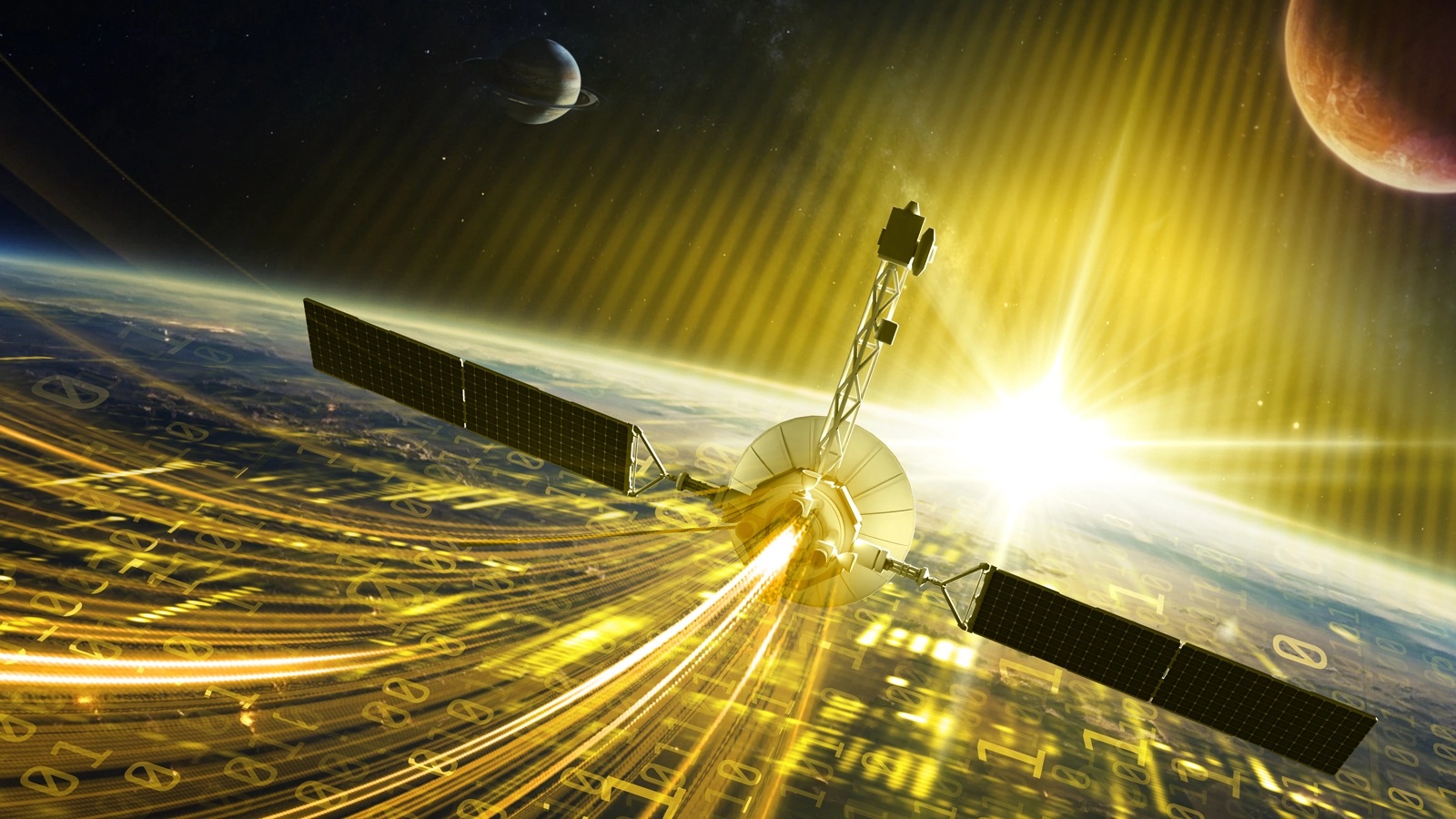
Airbus has validated and demonstrated photonic satellite payload technology to Technology Readiness Level 6, the last level before prototype in orbit, led by Airbus in Stevenage through the OPTIMA Horizon 2020 project.


Image By Lia Koltyrina /
© Shutterstock

This proof of concept demonstrator brings the use of photonic payloads in telecommunications satellites one step closer. Photonic payloads have the potential to revolutionise the design, capacity and capability of future generations of telecommunications satellites.

Advertisement
ODU RT

 
Photonic payloads will use light to transfer the signals throughout the spacecraft, replacing current radio frequency (RF) technologies, allowing for the development of more efficient and powerful satellites which are able to meet the increasing complexity and sophistication required by customers.
 
OPTIMA takes into account the future evolution of telecom satellite payloads and inter-satellite links which are expected to enter the terabit per second and multi-Gb/s 'era' in the 2020 horizon.
 
OPTIMA technology enables the design of such payloads with significant reduction of mass, volume and power consumption against full microwave approaches, whereas Photonic Integrated Circuits enable low overall production and integration costs.
 
Advertisement
Leonardo animated rectangle

The technology developed in OPTIMA will see the sustained entry of photonics into telecom satellite payloads. This will enable easier capacity upgrades of multi-beam telecommunication satellites and also leverage the R&D investment to address next generation coherent inter-satellite links with fully integrated and qualified components.
 
Javad Anzalchi, Airbus project manager and technical lead said: “By bringing together industry partners, we have managed to develop, demonstrate, and raise the technology readiness level of photonics for applications in space. Using the low power equipments developed in OPTIMA, enables us to achieve high capacity payloads and multi-Gb/s inter-satellite links with considerable savings in power, mass and footprint.”
 
The OPTIMA project, led by Airbus in Stevenage and part of Horizon 2020 funded by the European Commission, comprises specialist partners from across Europe, including: DAS Photonics (Spain), CORDON Electronics (Italy), SODERN (France), Huber+Suhner Polatis (UK) and IMEC (Belgium).

 

Advertisement
Tritax leaderboard 728x90 Tritax leaderboard 728x90
British designed satellites successfully launched

Defence Security Space

British designed satellites successfully launched

3 December 2025

A cluster of British designed and built satellites has been successfully launched into low Earth orbit, providing defence, security and civil sectors with UK space-based intelligence, surveillance and reconnaissance to enhance the nation’s ability to protect against modern threats.

Filtronic awarded NSIP funding to develop 550W Ka-Band SSPA

Space

Filtronic awarded NSIP funding to develop 550W Ka-Band SSPA

3 December 2025

Filtronic has been awarded funding through the UK Space Agency National Space Innovation Programme (NSIP) to develop a high-power 550W Ka-Band Solid-State Power Amplifier (SSPA).

Scottish space sector secures UK Space Agency investment

Space Events

Scottish space sector secures UK Space Agency investment

3 December 2025

Scotland’s space sector will receive a major funding boost to accelerate breakthrough technologies and boost commercialisation, the UK Space Agency will announce today at Space-Comm Expo Scotland.

Airbus

Space

Airbus' ESM-4 ships out for Artemis IV

1 December 2025

Airbus' fourth European Service Module (ESM-4) has reached a major milestone, as it began its journey last week to NASA’s Kennedy Space Center in Florida, for Artemis IV.

Advertisement
Tritax 300x250
UK space weather probes capture solar radiation spike

Space

UK space weather probes capture solar radiation spike

27 November 2025

New balloon-mounted space radiation probes developed by the Surrey Space Centre at the University of Surrey have captured their first measurements of a major solar storm, confirming the research team’s model, which indicates the flare caused the highest levels of radiation at aviation altitude in almost two decades.

UKSA, IMEO and GHGS team to tackle methane emissions

Space

UKSA, IMEO and GHGS team to tackle methane emissions

25 November 2025

The UK Space Agency (UKSA) has announced a significant collaboration with the United Nations Environment Programme’s International Methane Emissions Observatory (IMEO), reinforcing the UK’s leadership in tackling one of the most urgent climate challenges: methane emissions.

Advertisement
Leonardo animated rectangle