Advancing UK Aerospace, Defence, Security & Space Solutions Worldwide
  • Home
  • /
  • Space
  • /
  • Airbus successfully completes CHEOPS IOC

Space

Airbus successfully completes CHEOPS IOC
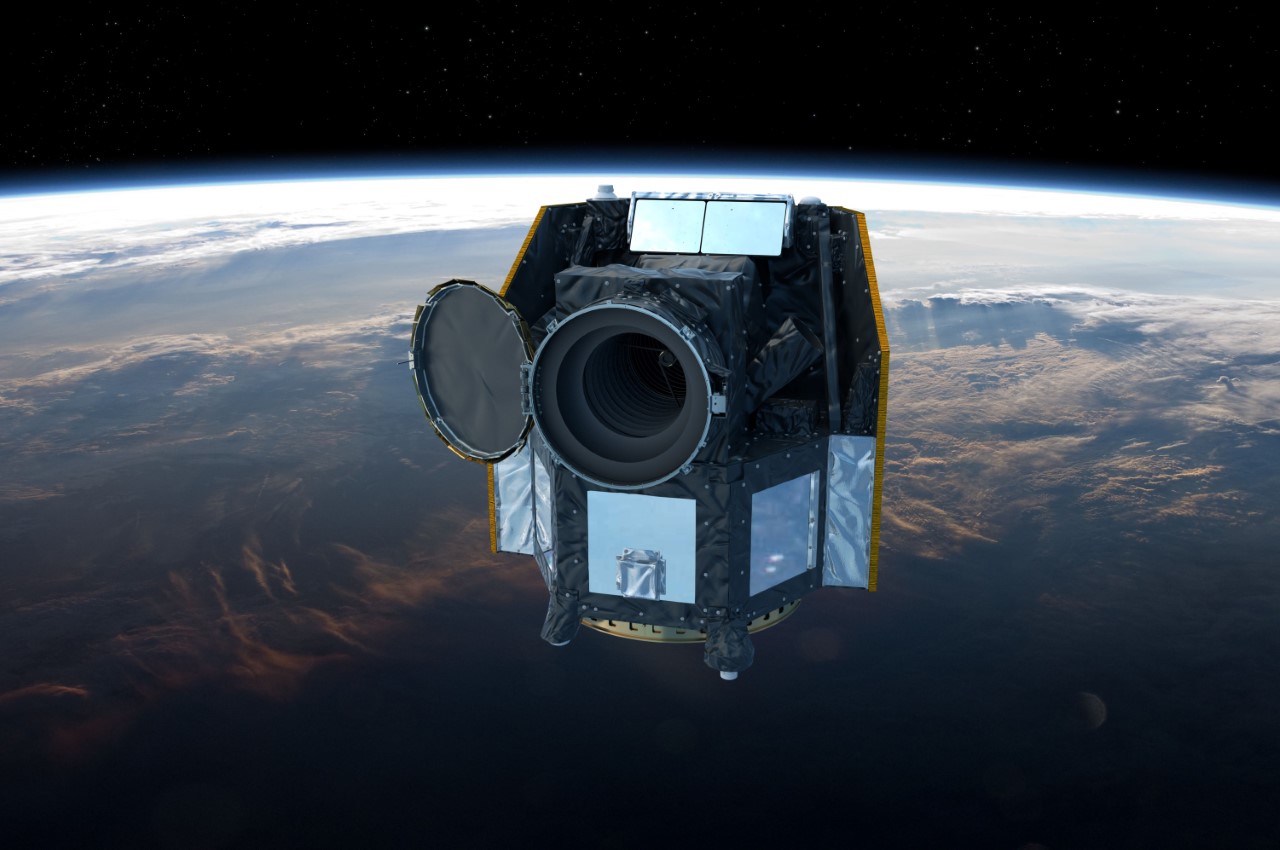
Airbus has received confirmation from ESA of a successful end to the In Orbit Commissioning (IOC) of CHEOPS after the IOC review yesterday.

Above: CHEOPS In Orbit.
Copyright ESA-ATG medialab

This critical phase was performed by Airbus in Spain with the support of the Instrument Team (University of Bern), Mission Operation Centre (INTA), Science Operation Centre (University of Geneva) and ESA.

The IOC phase started on 7th January and over the past two and a half months Airbus has conducted the operations to verify the performance of the satellite (platform and instrument), the ground segment and the science package. During this time the main goal was to consolidate the documentation, processes and procedures for use during the operational phase.

Advertisement
ODU RT

ESA recognised the great job done by the Airbus teams and stated there were no issues preventing routine operations from starting and confirmed hand-over of the mission operations from Airbus to INTA and the mission consortium.

Fernando Varela, Head of Space Systems in Spain, said: “The in-orbit delivery of the CHEOPS satellite is the culmination of the Airbus participation in the programme. It is the first European exoplanetary mission and the first ESA mission built by Airbus in Spain. The professionalism of the technical  and engineering teams at Airbus was key to this success.”

CHEOPS will be controlled by INTA and the mission consortium (University of Geneva and University of Bern). Nevertheless, Airbus is also ready to assist during the operational phase for the whole mission life.

CHEOPS marks the first time that Airbus in Spain has been the prime contractor for the whole mission, from satellite development, through launch, to LEOP and IOC. The entire mission development was completed in record time without delays and met the very tight budget. To do this, Airbus managed a team of 24 companies from 11 European countries, seven of them Spanish, confirming Airbus as the driving force behind the space industry in Spain.

As a reminder, CHEOPS is the first in ESA’s FAST TRACK missions programme whose main characteristics are low cost and a challenging budget. CHEOPS will characterise exoplanets orbiting nearby stars, observing known planets in the size range between Earth and Neptune and precisely measuring their radii to determine their density and understand what they are made of.


Advertisement
ODU RT


Advertisement
Gulfstream banner
Seraphim establishes Global Space Futures Advisory Council

Space

Seraphim establishes Global Space Futures Advisory Council

17 April 2026

London based space technology investment group, Seraphim Space, has announced the establishment of the Global Space Futures Advisory Council, created to address key strategic, commercial and geopolitical opportunities and challenges facing the space sector.

AccelerComm granted 56th patent as it advances 5G

Space

AccelerComm granted 56th patent as it advances 5G

16 April 2026

UK based provider of physical layer IP for 5G non-terrestrial networks (NTN), AccelerComm Ltd, today announced the grant of its 56th international patent, marking a significant milestone as the company completes its 10th year of operations.

DESI completes 3D map of the Universe

Space

DESI completes 3D map of the Universe

16 April 2026

The Dark Energy Spectroscopic Instrument (DESI) has completed the largest 3D map of the Universe.

BAE Systems introduces Ascent spacecraft

Defence Space

BAE Systems introduces Ascent spacecraft

15 April 2026

BAE Systems has introduced its Ascent spacecraft, a new addition to the company’s Elevation spacecraft line that supports superiority and exploration missions across the space domain.

Advertisement
ODU RT
Amazon to acquire Globalstar

Space

Amazon to acquire Globalstar

14 April 2026

Amazon.com, Inc. and Globalstar, Inc. have announced that they have entered into a definitive merger agreement under which Amazon will acquire Globalstar, enabling Amazon Leo to add direct-to-device (D2D) services to its low Earth orbit satellite network and extend cellular coverage to customers beyond the reach of terrestrial networks.

Northumbria University researchers awarded £4m to solve space radiation mystery

Space

Northumbria University researchers awarded £4m to solve space radiation mystery

14 April 2026

Researchers at Northumbria University have been awarded £4 million to unlock the secrets of Earth's radiation belts and why they behave so unpredictably – information which is crucial for protecting satellites and forecasting space weather.

Advertisement
ODU RT
Advertisement
FIA2026 animated banner