Babcock advances Anglo-Danish naval cooperation

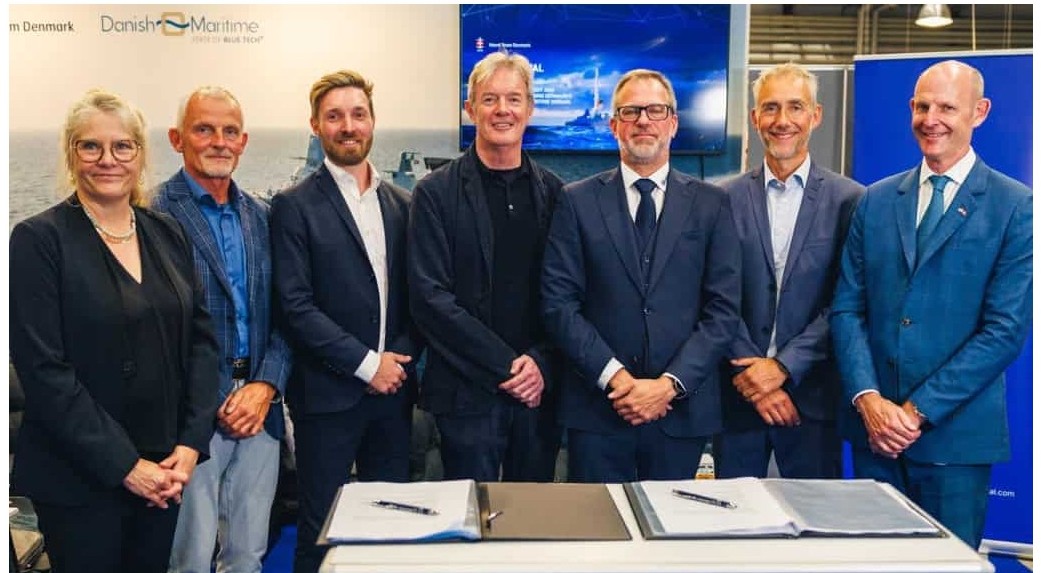
Babcock has strengthened its partnership with Danish industry through a series of agreements focused on future frigates, autonomous systems and hybrid naval operations.
Announced at the Danish Ministry of Defence Acquisition and Logistics Organisation (DALO) Industry Days earlier this month, the deals are designed to boost UK-Danish defence cooperation.
What was agreed at Dalo?
At the event at MCH Messecenter Herning in Denmark on 19-20 August, Babcock extended its partnership with Danish industry through a number of major agreements.
Babcock signed Memoranda of Understanding (MoU) with Danish technology companies, STORMBORN and CUBEDIN, to examine future hybrid naval capabilities and autonomous systems integration, aimed at supporting a hybrid Danish fleet where crewed ships and unmanned systems operate together. It signed a third MoU with SH Group, which will explore collaboration on ship and naval platform systems to further strengthen the UK-Denmark offering and maximise Danish industry involvement on platforms for and exported from Denmark.
Babcock also signed a signed a Letter of Collaboration with and Danish naval consortium, Danske Flådeskibe K/S (DFS), to develop a joint UK-Danish industrial approach to potential new frigates for the Royal Danish Navy.
How will collaboration between the UK and Denmark advance Hybrid Navy capabilities?
The agreements come as navies worldwide adapt to a changing character of warfare. The UK Royal Navy has committed to a Hybrid Navy – crewed warships commanding dispersed, AI-enabled autonomous systems – as its way ahead. These partnerships with our Danish partners intend to help develop and deliver the potential Hybrid Navy capabilities, in collaboration with the Royal Danish Navy for the wider Danish defence ecosystem.
Sir Nick Hine, Chief Growth Officer, Babcock, said: “The relationship between Babcock and Denmark is built on shared maritime heritage, trusted defence cooperation and world-class engineering. The Arrowhead 140 is a powerful example of that partnership, taking the proven Danish Iver Huitfeldt design and developing it into a successful international frigate programme.
“At a time when European security challenges demand closer cooperation between allies, these agreements strengthen an industrial relationship that can deliver capability, jobs and long-term value for both nations.”
The agreements reflect the enduring relationship between the UK and Denmark, two seafaring nations with deep historic ties, shared democratic values and a long-standing commitment to collective security.
Frederik Søndergaard Hansen, Founder and CEO of STORMBORN, said: “Building a Hybrid Navy to combat the threats of today and tomorrow requires innovative solutions, system interoperability and rapid production at scale. STORMBORN’s cooperation with Babcock gives us an opportunity to explore how our uncrewed technology can be integrated in larger naval programmes and create new capabilities for Denmark and our allies.”
Increasing collective security through industrial cooperation
As founding NATO allies, both nations work closely across NATO operations, the Joint Expeditionary Force, support to Ukraine and security activities in the North Atlantic and Arctic regions. Against a backdrop of increasing geopolitical uncertainty, closer defence industrial cooperation is becoming ever more important.
Danny Ingemann, CUBEDIN CEO, said: “Future naval operations require crewed and uncrewed systems to work closely together. Through this cooperation with Babcock, we will explore how standardised physical and digital interfaces can simplify the integration of mission systems and autonomous capabilities, enabling a more flexible and adaptable fleet.”
Kaare Vang Jensen, CEO, SH Group, said: “The signing of this MoU with Babcock marks a significant milestone for SH Defence, part of SH Group and reinforces our commitment to delivering innovative and modular mission solutions that meet the evolving needs of modern naval operations.
“Together, we look forward to strengthening the supply chain and supporting the Royal Danish Navy with adaptable, future-focused capabilities, while strengthening defence industrial cooperation on an international scale.”
Forging a deeper Anglo-Danish naval partnership for future frigate solutions
Babcock’s signing of a Letter of Collaboration with DFS to develop new frigates for the Royal Danish Navy, builds on a framework agreement established between Babcock and DFS in early 2026.
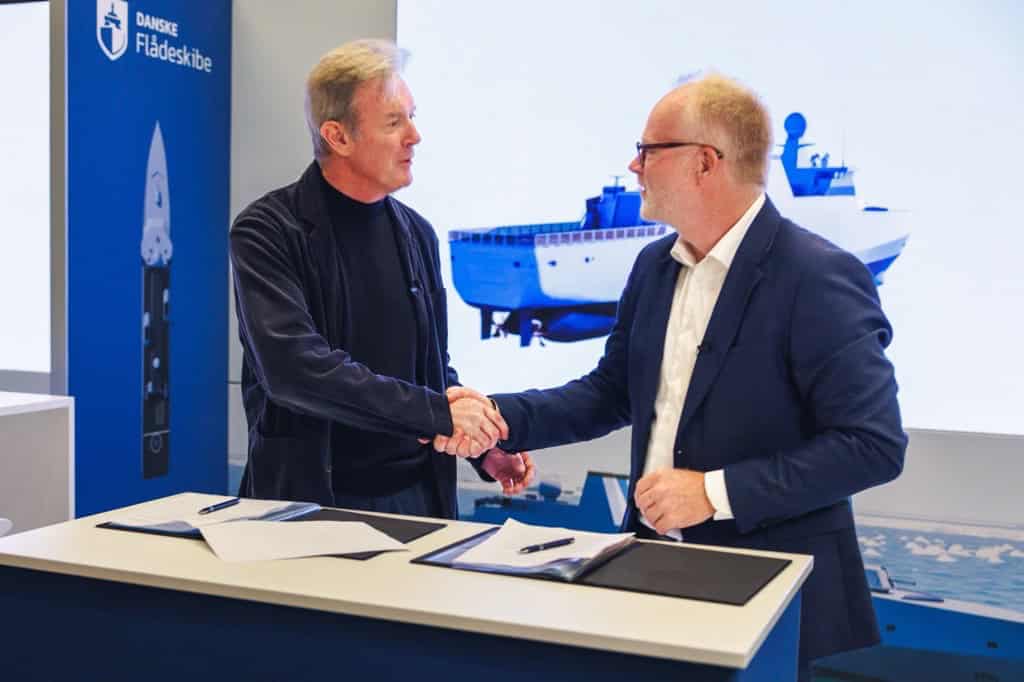
DFS brings together OMT Group, Terma, PensionDanmark and Semco Maritime and was established to offer an integrated Danish solution for the design, construction and through-life support of the Royal Danish Navy’s future vessels.
Since early this year, Babcock and DFS have been exploring how Babcock’s frigate design and international programme experience can be combined with DFS’s Danish industrial capabilities and infrastructure. The latest agreement cements collaboration on frigate solutions, as well as the development of a joint UK-Denmark industrial solution for the delivery of the programme and through-life of naval assets.
Transferring technology and integrating naval shipbuilding capability
Sir Nick Hine said: “Our new agreement with DFS, together with our growing partnerships across Danish industry, demonstrates our commitment to building the future together. We are offering Denmark far more than a ship. We are offering a genuine industrial partnership that puts Danish companies, Danish skills and Danish shipbuilding at the heart of a programme already founded on Danish innovation.”
The collaboration is intended to support the development of a long-term Danish naval shipbuilding capability through knowledge and technology transfer, construction and integration in Denmark and sustained participation by Danish suppliers. Babcock estimated that its proposed industrial model could support around 2,000 direct and indirect jobs in Denmark.
Hans Schneider, CEO of Danske Flådeskibe, said: “For DFS, this agreement is about ensuring that Denmark’s future frigates strengthen both the Royal Danish Navy and Denmark’s sovereign industrial capability. Together with Babcock, we can combine an internationally recognised frigate platform and programme experience with a strong Danish set-up for building, integrating and supporting the ships throughout their service life.
“Our ambition is clear: Denmark should have the responsibility, expertise and capacity at home to support its frigates from the outset and for decades to come.”
Sign up for our newsletter and get our latest content in your inbox.
Similar Reads



Sign up for our newsletter. Select all sectors relevant to you.
Related