BAE Systems and NMITE launch MSc to tackle UK RF engineering shortage

Why British aerospace giant, BAE, is helping to fund a new accelerated masters programme to address a shortage of skilled engineers.

BAE Systems Tempest with loyal wingman drones
Photo: BAE Systems

Today, BAE Systems and the New Model Institute for Technology and Engineering (NMITE), based in Hereford, announced that they are launching a new Master of Science (MSc) degree programme in Radio Frequency (RF) and Wireless Systems Engineering.

Radio Frequency technologies underpin satellite navigation, wireless communications, medical imaging, power grids, next-generation wireless networks, and a suite of other critical systems.

James Newby, President and CEO of NMITE, noted that the institute has already successfully launched its MEng in Autonomous Robotics degree in partnership with the British Army last December. Aerospace companies like BAE Systems and Airbus are hiring NMITE graduates.
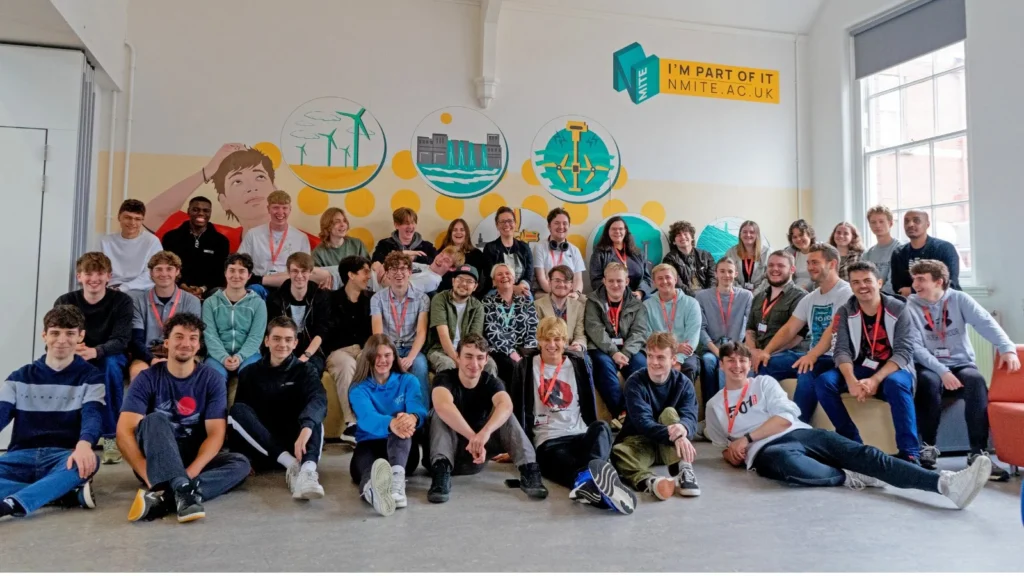
New Model Institute for Technology and Engineering (NMITE)
Photo: NMITE

At the time, ADS Advance reported that the UK Armed Forces’ new undergraduate degree in Autonomous Systems is set to welcome its first students in September 2026.

NMITE’s Newby adds that the new degree “ensures graduates are equipped to make an immediate impact across defence, communications, healthcare, advanced manufacturing and many other sectors that increasingly depend upon sophisticated wireless technologies.”

As part of the new Master’s programme, students will be directly engaging with practising engineers and receive exposure to “genuine technical challenges” during the programme.

Addressing a shortage of specialist engineers

The programme is intended to address the critical shortage of specialist engineering skills in Britain. In a statement, BAE noted that the demand for engineers with the right expertise continues to outstrip supply.

BAE Systems’ Digital Intelligence business will help fund the first two years of the programme. This will provide the initial investment needed to get the MSc off the ground. After that, BAE intends to continue supporting the programme with guest lectures, collaborative research, masterclasses, mentoring, and the like.

The defence contractor notes that this poses a risk to national security, economic growth, and industrial resilience.

Andrea Thompson, Group Managing Director of BAE Systems’ Digital Intelligence business, said: “This new programme addresses that shortage – helping to develop the next generation of engineers by combining academic teaching with practical industry experience to support the long-term capability and resilience of the UK’s engineering ecosystem.”

NMITE’s industry-led approach to engineering programmes

NMITE announced in May 2026 that it had become a fully accelerated institution as it now only offers accelerated degrees. This was presented as a strategic move to respond to employers who “prioritise capability and work-readiness.”
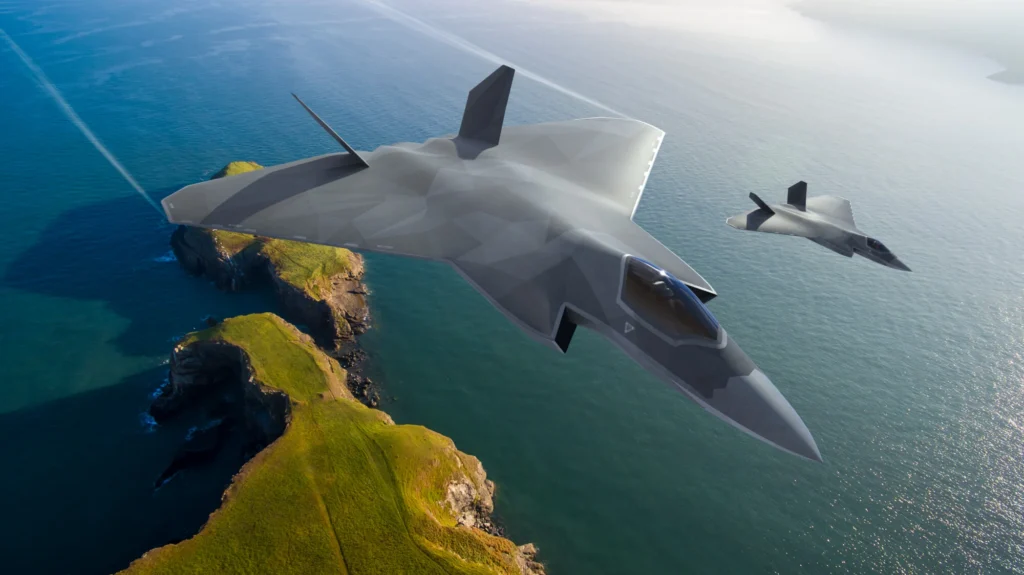
6th generation fighter Tempest being developed under the global combat air programme (GCAP)
Photo: BAE Systems

NMITE describes itself as a “reimagining higher education” through an industry-led, challenge-based model that seeks to provide graduates with the work-ready skill set they need to tackle complex real-world issues.

The institute works with employers to develop programmes that “respond rapidly to emerging skills needs while broadening participation in engineering and technology.”

BAE Systems is the largest British defence contractor and the country’s leading aerospace company. Its current flagship programme is the GCAP/Tempest next-generation fighter jet. BAE Systems’ Digital Intelligence functions as the digital hub of BAE, employing over 4,300 digital, cyber, and intelligence experts in the UK and abroad.

Related

The Vickers VC10: The British airliner built for a different kind of flying
Vickers VC10
The Vickers VC10: The British airliner built for a different kind of flying
The VC10 remains a reminder of a time when British engineering took a different path from the competition and set a new level in design and comfort.
Aerospace

15 Nov 2026

Why the UK has so few domestic flights outside London
With fewer regional routes, strong competition from rail and airlines favouring more profitable international services, flying outside London has become increasingly difficult.
Aerospace

15 Nov 2026

UK flights impacted by US nationwide ground stop as knock-on effects continue
Heathrow Airport
UK flights impacted by US nationwide ground stop as knock-on effects continue
The US Transportation Secretary blamed ageing infrastructure and overloaded TDM routers for the nationwide FAA ground stop.
Aerospace Security

14 Nov 2026

The history of the Blackburn Buccaneer: from Royal Navy service to the Gulf War
Blackburn Buccaneer
The history of the Blackburn Buccaneer: from Royal Navy service to the Gulf War
Few British aircraft enjoyed a second act quite like the Buccaneer, which proved its worth from the Cold War to Operation Granby.
Defence

14 Nov 2026

UK faces 41% rise in Russian naval activity as undersea threat grows
The Russian Navy's Neustrashimy-class guided-missile frigate is shadowed by an 815 NAS-operated Wildcat HMA2 as it transits the English Channel on 10 October 2026. Image: MOD Crown Copyright/Royal Navy
UK faces 41% rise in Russian naval activity as undersea threat grows
Russian naval activity around the UK has increased by 41% this year, prompting fresh warnings over threats to UK security, undersea cables and critical infrastructure.
Defence

13 Nov 2026

New facilities opened for Air C2 Force at RAF Leeming
The new Single Living Accommodation building at RAF Leeming.
New facilities opened for Air C2 Force at RAF Leeming
Delivered under the MoD’s Defence Estate Optimisation (DEO) Portfolio, the opening of new sustainable infrastructure at RAF Leeming will allow the Air C2 (Command and Control) Force to complete their move to the station.
Defence Member News

13 Nov 2026

Protecting satellites is not enough to keep the UK’s critical services running
Steve Knibbs, director, Vodafone business
Protecting satellites is not enough to keep the UK’s critical services running
Protecting satellites alone cannot guarantee continuity. Steve Knibbs argues for resilience across the infrastructure supporting the UK’s critical services.
Insights Space

15 Nov 2026

Serco acquires QinetiQ’s US business
Satellite orbiting earth
Serco acquires QinetiQ’s US business
It was announced today that Serco's acquisition of QinetiQ’s US business has been agreed, substantially expanding the defence capabilities of Serco, whilst strengthening QinetiQ's balance sheet and enabling it to concentrate its resources on the UK, European, NATO and key allied defence and security markets.
Defence Member News Space

12 Nov 2026

UK military satellite Titania reaches orbit as MoD trials space-threat sensors
Titania Satellite
UK military satellite Titania reaches orbit as MoD trials space-threat sensors
The UK's second ISTARI military satellite, Titania, reaches orbit as trials launch for a three-site sensor network to monitor potential threats to spacecraft.
Defence Space

9 Nov 2026

UK flights impacted by US nationwide ground stop as knock-on effects continue
Heathrow Airport
UK flights impacted by US nationwide ground stop as knock-on effects continue
The US Transportation Secretary blamed ageing infrastructure and overloaded TDM routers for the nationwide FAA ground stop.
Aerospace Security

14 Nov 2026

Smiths Detection to supply Norwegian Customs with advanced mobile screening systems
Norwegian Customs
Smiths Detection to supply Norwegian Customs with advanced mobile screening systems
Advanced mobile vehicle screening systems from Smiths Detection will enable Norway to enhance its capability to inspect goods traffic across key border and customs locations.
Member News Security

13 Nov 2026

NCSC warns UK businesses of scams following global Microsoft outage
Laptop user pressing Windows key
NCSC warns UK businesses of scams following global Microsoft outage
Cybercriminals could exploit the global Microsoft outage, warns the NCSC, as an AI expert urges UK businesses to have a Plan B when systems fail.
Security

13 Nov 2026