Birmingham Airport charts flight path to net zero
Having first announced its ambition in 2019, the Midlands’ airport remains steadfast in achieving its 2033 target. Its roadmap prioritises zero-carbon airport operations while minimising the use of carbon offsets.
The plan builds on a decade of learning and investments that have already seen emissions, which the airport controls, reduce by 33%. This has been achieved through the use of solar, electric vehicle transition and energy-efficiency measures.

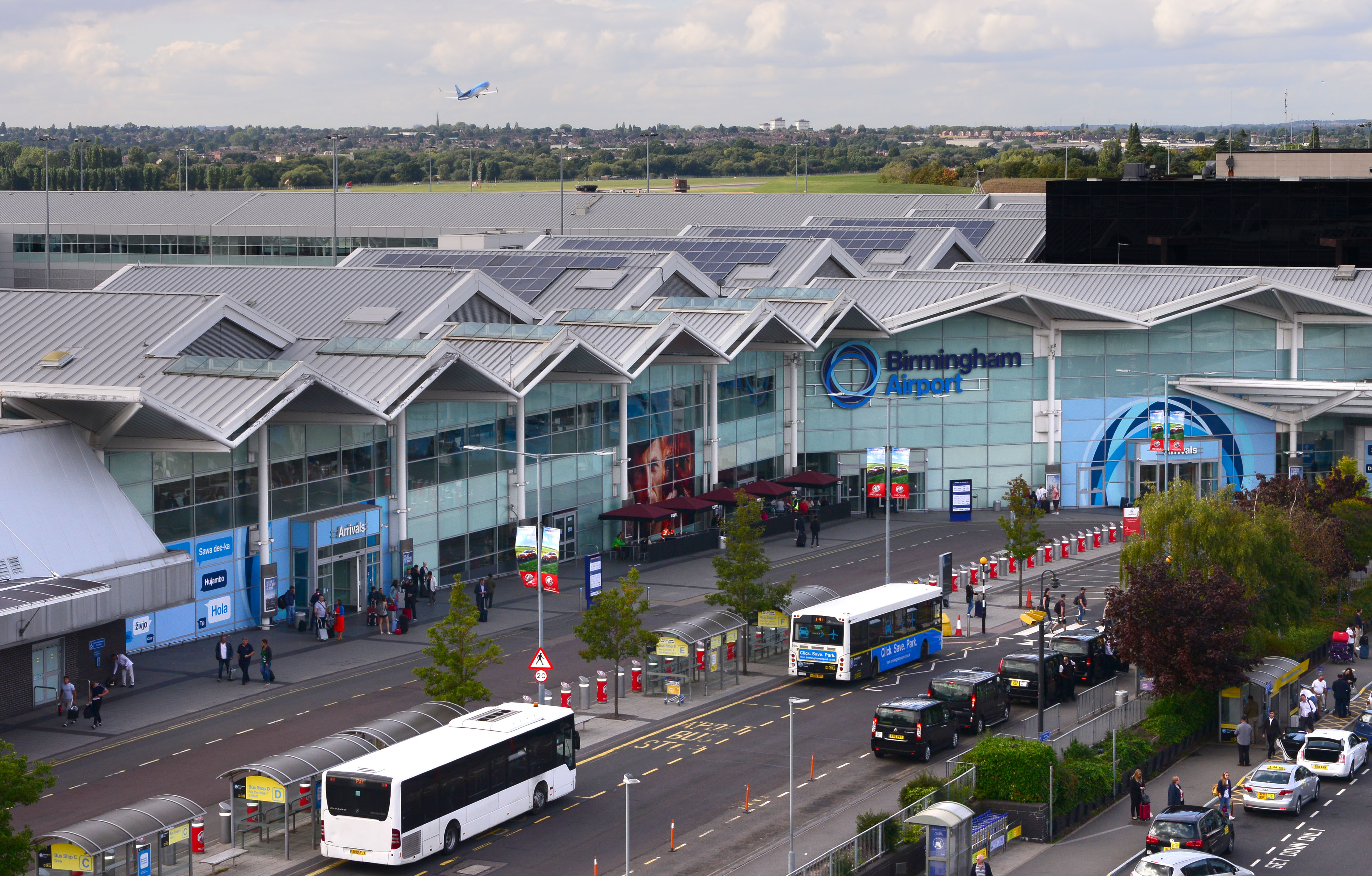
Image courtesy Birmingham Airport
Birmingham Airport commitment over the next decade includes:
- an initial multi-million pound commitment over the next four years to reduce emissions that the airport controls (*Scope 1 and 2) by 60% by investing in on-site renewable energy generation, energy-efficient lighting and energy management technology.
- sourcing up to 40% of electricity used at the airport through solar power.
- switching the whole airport site to 100% green tariff electricity from April 2022.
- extending the number of electric vehicle charging points to 25 to prepare for the growing number of low-carbon vehicles accessing the airport.
- renewing the airport’s heating and cooling infrastructure, including upgrades to the building fabric and a gradual transition to low carbon.
- investment in new emerging technologies to generate low-carbon energy beyond 2030.
- engaging with a range of stakeholders including customers, employees, tenants and political stakeholders to collaborate and bring lower-carbon technologies, aircraft and operations to Birmingham Airport.
Emissions from UK airports represent around 0.7% of UK aviation emissions. So, while it is important Birmingham Airport reduces its own Scope 1 and Scope 2 emissions, it is also essential to support airlines and other third parties using the airport to reduce their airport-associated emissions.
Birmingham Airport’s chief executive, Nick Barton, said: “Our Net Zero Carbon Plan sets out how we will become net zero by 2033 through investments in energy saving initiatives and stakeholder partnerships over the next decade.
“Our investment to become net zero will escalate immediately with a multi-million pound outlay up to 2025, focusing on renewables and energy efficiencies. The second phase of investment will be developed to complete our net zero transition by 2033, with a focus on emerging technologies to create a low-carbon environment.
“While we have a good track record in achieving low carbon operations, we know that meeting our net zero target will need more impactful and immediate action. Through innovation and partnership cooperation, we can make real change to climate impact by our combined operations.
“We’re proud to have made this commitment and eager to reduce our carbon footprint for emissions within our own control, but also to innovate with our stakeholders to introduce low-carbon operations associated with aircraft and ground movements.”
Alongside the launch of its Net Zero Carbon Plan, the airport has also published its Sustainability Update for the year 2020/21, which describes progress made in the first year of implementing its 2020-2025 Sustainability Strategy. This outlines the aims and objectives for climate change, local air quality, waste, supply chain and the circular economy, water, biodiversity, noise, community investment and wellbeing, and economic development and employment.
Nick added: “When we launched the Sustainability Strategy in late 2019, never could we have imagined the catastrophic impact the pandemic would have on all our lives. While by no means unique, the impact on aviation has been severe and we have had to diversify and prioritise investments over the last few years.
“As we now see signs of recovery, I feel confident that we will meet net zero by 2033 and deliver on our sustainability strategy commitments in the coming years. Being a responsible neighbour is a key business imperative for Birmingham Airport so I hope these publications will inform our stakeholders on how we will continue to create jobs and serve our region’s flying needs whilst mitigating our impact on the environment and surrounding communities.”
Government policy is supportive of allowing time for technological innovation to decarbonise air travel. It has formed the Jet Zero Council to develop a coordinated approach to policy and regulatory framework needed to deliver net zero aviation by 2050.
Birmingham Airport recently signed the The Toulouse Declaration which marks the first time that European Governments, the European Commission, industry, unions and other key stakeholders formally align on aviation decarbonisation.It is a highly significant moment, paving the way for the concrete next steps, both in the establishment of an EU Pact for Aviation Decarbonisation, and globally as we look to the UN’s ICAO to set a global goal for international aviation later this year.
The airport is also a member of Sustainable Aviation, a long-term strategy which sets out the collective approach of UK aviation to tackling the challenge of ensuring a cleaner, quieter, smarter future for the aviation industry. Launched in 2005, it is a world first, bringing together major UK airlines, airports, manufacturers, air navigation service providers and key business partners.
Footnote: *Scope 1 and 2 emissions are those for which Birmingham Airport is directly responsible. Indirect emissions for which the airport has some influence over, including aircraft emissions, are known as scope 3.