General Atomics

BMT launches Maritime Autonomous Systems e-learning course

As autonomous technologies rapidly evolve and the autonomy skills gap widens, BMT's maritime autonomy specialists have developed a new e-learning course to cultivate broader understanding of autonomy beyond specialist engineering teams.

eFleet
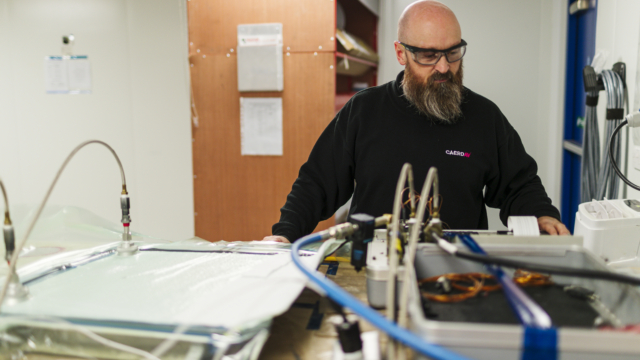
Photo: BMT

With the first International Maritime Organisation (IMO) MASS Code having taken effect on 1st July and Maritime Autonomous Systems moving rapidly into defence and commercial operations, the understanding needed to engage with autonomy is struggling to keep pace.

In response, BMT has launched a new introductory e-learning course designed to help professionals close that gap, building the knowledge and confidence to engage effectively with autonomy technologies.

Developed by BMT’s maritime autonomy specialists, the self-paced online course provides a thorough introduction to Maritime Autonomous Systems, covering autonomy fundamentals, operational considerations, safety, regulation, emerging technologies and real-world applications.

Why understanding of autonomy must be disseminated across the maritime sector

The course has been created in response to a growing industry need for broader understanding of autonomy beyond specialist engineering teams. As autonomous technologies continue to evolve, organisations across the maritime sector are increasingly being asked to make decisions about autonomous capabilities, procurement, operations and regulation without a foundational understanding of the technologies involved.

Will Alexander, Campaign Lead – Maritime Autonomous Systems at BMT, said: “Maritime Autonomous Systems are becoming part of the maritime ecosystem, whether organisations are introducing remote operations, deploying autonomous capabilities or procuring new technologies. With the IMO’s first MASS Code having taken effect on 1st July, the regulatory picture is now maturing alongside the technology – and as adoption grows, it is becoming increasingly important for a much wider audience to understand the opportunities, challenges and implications of autonomy.”

“Many organisations recognise the potential benefits of autonomy but successfully integrating these technologies requires more than technical innovation alone. It requires understanding how autonomy affects operations, safety, regulation, organisational culture and ways of working. This course has been developed to help educate and upskill professionals across the sector, building that foundational understanding.”

Who will benefit from taking the course?

The course is aimed at programme and project managers, engineers, procurement and commercial teams, regulators, compliance professionals and senior decision-makers who need to understand how autonomous technologies are reshaping the maritime sector.

Participants will gain an introduction to key concepts including levels of autonomy, autonomous system architecture, sensing and AI-enabled technologies, regulatory frameworks, safety considerations and current and emerging maritime applications.

Emma Johnson, Director of the Maritime Autonomous Systems Group at the Society of Maritime Industries (SMI), said: “BMT’s introduction to Maritime Autonomous Systems course is an excellent resource for anyone entering the maritime autonomy sector or looking to expand their understanding of this rapidly evolving field. The course is easy to navigate, well structured and presents complex topics in a clear and accessible way. Interactive quizzes throughout help reinforce learning and ensure key concepts are retained.

“I was particularly impressed by the breadth of content, covering both UK and international perspectives on maritime autonomy. Despite already working in the sector, I came away having learnt new information. This course provides a strong foundation for industry professionals seeking to better understand the technologies, opportunities and challenges shaping the future of autonomous maritime operations.”

The launch builds on BMT’s extensive experience supporting the development, integration and assurance of Maritime Autonomous Systems across defence and commercial markets. The company has worked with customers across the autonomy lifecycle, helping organisations understand risks, develop concepts of operation, evaluate technologies and integrate autonomous capabilities into maritime operations.

Supporting the adoption of autonomous and remotely operated technologies

As the maritime sector’s transition towards autonomous and remotely operated technologies accelerates, building the skills and understanding needed to support adoption will be critical. Earlier this year, BMT’s award-winning Remote Operations Centre Simulator (ROC-Sim) supported SeaBot Maritime in delivering its first USV ROC Supervisor course at BMT’s Digital Innovation and Simulation Centre (DISC) in Fareham.

The programme marked ROC-Sim’s first commercial deployment and, in collaboration with Marine AI, enabled participants to develop the practical skills required to supervise multiple uncrewed vessels in a realistic, high-fidelity operating environment

The course also reflects BMT’s growing footprint in the maritime education and training space, forming part of the company’s broader growth and diversification as it continues to expand. That broader commitment also extends through BMT’s wider global training offer, helping bridge the education gap for naval architects through courses such as Warships 101 and its Whole Life Warship Capability Management training, which are designed to build technical understanding across the naval architecture community.

Related

Filton recognised by AIAA as Historic Aerospace Site
CONCORDE PASSES OVER THE CLIFTON SUSPENSION BRIDGE IN BRISTOL ON ITS FINAL FLIGHT TO ITS BIRTH PLACE IN FILTON, WHERE IT WILL REMAIN.
Filton recognised by AIAA as Historic Aerospace Site
The Filton site and airfield has been recognised by the American Institute of Aeronautics and Astronautics (AIAA) for its contribution to aviation, as the world’s longest continuously operating aircraft design and manufacturing site.
Aerospace

23 Oct 2026

Met Office secures new five-year Heathrow Airport weather support contract
Aircraft wing
Met Office secures new five-year Heathrow Airport weather support contract
A renewed five-year agreement will see Met Office meteorologists continue delivering round-the-clock weather intelligence to help Heathrow prepare for disruption and keep passengers and cargo moving.
Aerospace Security

23 Oct 2026

Caerdav expands St Athan operations with new composites and paint workshop
The new facility will expand the company’s maintenance support capabilities
Caerdav expands St Athan operations with new composites and paint workshop
Following significant investment, Caerdav has commenced work on a standalone composites and paint workshop at its St Athan base, renovating a currently unused building adjacent to the company’s existing hangars, adding another 4,300 sq ft of workshop space.
Aerospace Member News

23 Oct 2026

Royal Engineers trial new construction methods for conflict and disaster zones
Royal Engineers Museum
Royal Engineers trial new construction methods for conflict and disaster zones
At the Royal Engineers Museum in Gillingham, Kent, soldiers from the Corps of Royal Engineers evaluated ongoing research aimed at the development of practical reconstruction solutions for real-life scenarios in environments impacted by conflict, where resources for making concrete are limited.
Roke appoints Jo Rayson as its first COO
Roke HQ, Romsey
Roke appoints Jo Rayson as its first COO
Responsibility for the expansion of Roke's systems and infrastructure has been entrusted to its first ever Chief Operating Officer (COO), Jo Rayson.
Defence Member News

23 Oct 2026

Royal Navy leads AUKUS submarine-hunting trials using autonomous systems
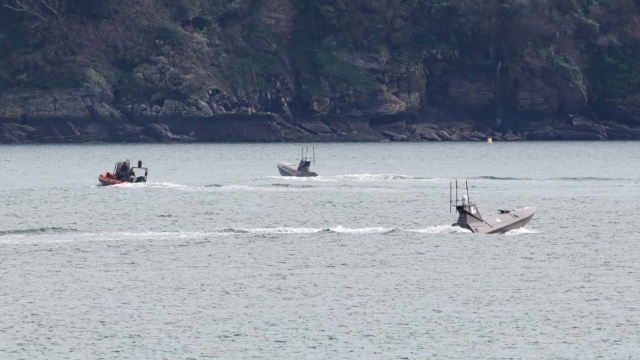
09 Mar 2026- Exercise SPRING SABRE Building on the success of trials and tests in 2025, Exercise Spring Sabre landed in Plymouth in early March, to develop and manage the diversity of uncrewed maritime and airborne available to a Hybrid Navy construct. Utilising the unique and diverse environments on offer across Plymouth Sound, Ex Spring Sabre has been able to improve collaboration between operators as well as reduce the duplication of effort and make planned operations more efficient. Falling under the AUKUS Pillar II - Maritime Big Play programme, in which sees UK, Australia, and the United States test and integrate autonomous systems, the Exercise enabled several Industrial partners to share command-and-control software and grow a baseline for using autonomous kit in a Littoral setting.
Royal Navy leads AUKUS submarine-hunting trials using autonomous systems
The UK is leading anti-submarine warfare experiments in San Diego as Australia, the UK and the US test how crewed warships, underwater vehicles and autonomous systems can operate together.
Defence

23 Oct 2026

ClearSpace and Eutelsat sign term sheet to advance Phoenix GEO life-extension services
Artificial rendering of Phoenix approaching a client satellite.
ClearSpace and Eutelsat sign term sheet to advance Phoenix GEO life-extension services
A new agreement between ClearSpace and Eutelsat has established a framework for cooperation on the Phoenix mission and future commercial life-extension services, bringing satellite operator expertise into the development of next-gen in-orbit servicing capabilities.
Member News Space

22 Oct 2026

UK Space Agency opens £2m fund to bring satellite data into new markets
Satellite
UK Space Agency opens £2m fund to bring satellite data into new markets
UK businesses can partner with space suppliers to test satellite-enabled environmental and emissions services, with applications closing on 11 December.
Space

21 Oct 2026

Newquay could host twice-daily space flights under new plan
Aurora - Flight 61, Scout Space - High Altitude
Newquay could host twice-daily space flights under new plan
Spaceport Cornwall and Dawn Aerospace are exploring plans to bring reusable spaceplane operations to Newquay, with ambitions for twice-daily flights to the edge of space.
Aerospace Space

20 Oct 2026

Hostile states are exploiting public information. UK organisations must respond
Headshot for Jack Borthwick at Fivecast
Hostile states are exploiting public information. UK organisations must respond
Jack Borthwick, account director, EMEA, at Fivecast, argues that AI-enabled open-source intelligence can help organisations spot hostile activity earlier.
Security

24 Oct 2026

Royal Engineers trial new construction methods for conflict and disaster zones
Royal Engineers Museum
Royal Engineers trial new construction methods for conflict and disaster zones
At the Royal Engineers Museum in Gillingham, Kent, soldiers from the Corps of Royal Engineers evaluated ongoing research aimed at the development of practical reconstruction solutions for real-life scenarios in environments impacted by conflict, where resources for making concrete are limited.
Met Office secures new five-year Heathrow Airport weather support contract
Aircraft wing
Met Office secures new five-year Heathrow Airport weather support contract
A renewed five-year agreement will see Met Office meteorologists continue delivering round-the-clock weather intelligence to help Heathrow prepare for disruption and keep passengers and cargo moving.
Aerospace Security

23 Oct 2026