British Antarctic Survey unveils pilotless plane for Antarctica tests
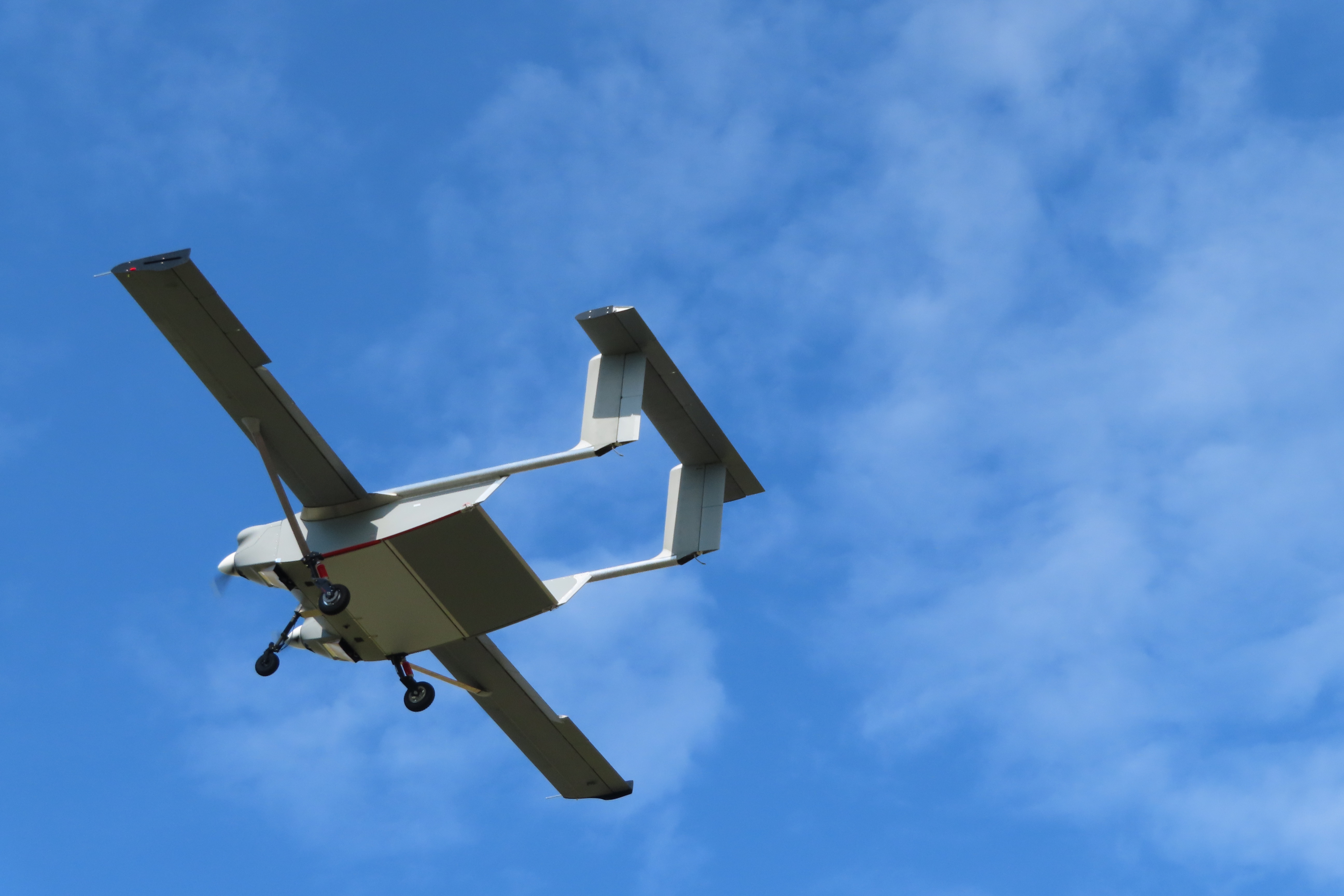
Image courtesy Windracers & British Antarctic Survey
The unveiling of the Windracers ULTRA UAV comes ahead of the UK hosting a two-day AI safety summit at Bletchley Park and as the UK Government highlights the benefits, as well as the risks, of AI and automation.
A new, state-of-the-art autonomous drone capable of carrying a wide range of science sensors is heading south for its inaugural flight on the icy continent this Antarctic field season from January to March 2024. This forms part of plans by the British Antarctic Survey (BAS) to automate its science platforms and reach net zero carbon emissions by 2040.

Designed for extreme environments like Antarctica, the Windracers ULTRA UAV (uncrewed aerial vehicle) is a fully autonomous, twin-engine, 10-metre fixed-winged aircraft, capable of carrying 100 kg of cargo or sensors up to 1000 km. It can take off, fly and land safely with minimal ground operator oversight thanks to its sophisticated autopilot system Masterless, developed and patented by Distributed Avionics.
Incorporating a high level of redundancy, the ULTRA can continue to fly even if one of the engines or components is damaged or fails. The flexible platform can also be configured as required to carry a range of sensors for collecting scientific data. Furthermore, using AI-driven SWARM technology multiple autonomous drones can organise themselves as a single unified system – for example to collect science data across a larger area.
The ground-breaking project is being funded by Innovate UK’s Future Flight 3 Challenge and is part of its pilot programme called ‘Protecting environments with uncrewed aerial vehicle swarms’, aimed at demonstrating how advanced drone technology can be used to gather environmental data in Antarctica.
British Antarctic Survey’s Interim Science Director Dr Dominic Hodgson said BAS is exploring new ways of doing science in Antarctica as part of its new science strategy and Net Zero Carbon Strategy: “At BAS, we are changing our approach to science by increasing the use of autonomous platforms, such as UAVs and autonomous underwater vehicles (AUVs), to collect data. By deploying unpiloted platforms, such as the Windracers ULTRA, BAS has the potential to scale up airborne science and accelerate research, given the dramatic increases in flight time and geographic coverage that these enable.
“UAV drones will allow us to gather new and a broader range of science data in an effective, lower-carbon and lower cost manner than traditional crewed aviation – with the added benefit of greater levels of safety.”
Under this season’s testing phase, the Windracers ULTRA will be deployed to:
- survey protected environmentally sensitive areas and assess the marine food chain (krill) using cameras
- investigate tectonic structures with magnetic and gravity sensors
- assess glaciological structures using airborne radar
- test an atmospheric turbulence probe for studies of boundary layer processes coupling ocean and atmosphere
Carl Robinson who manages BAS’s use of UAVs said: “The Windracers ULTRA is an ideal platform for integrating science sensors on to, because it has a large floor area, volume and 200W of power available for science instruments, which means a wide range of science sensor payloads can be flown.
“The ULTRA’s range and speed, and systems redundancy are well suited to the Polar environment and make for an attractive science platform. The removable floor can be quickly replaced with floors dedicated for various science sensors, allowing for a quick change between science applications. Using the easily configurable mission plans, our scientists can quickly plan flights to collect science data in areas of interest, allowing flexibility to collect their science data.”
“Our autonomous aircraft is able to collect a broad range of critical science data in places that are difficult and dangerous to reach. This is key for the future of research in high interest areas including climate change", says Stephen Wright, Co-Founder and Chairman of Windracers.
"We are proud to be working with British Antarctic Survey and are keen to support scientific research wherever possible with our high endurance and high payload platform.
"Future UAV science missions could involve air-dropping marine sensors, investigating the flow of water beneath ice shelves, or investigating areas inaccessible with traditional platforms in Antarctica and beyond.”
Funding for ‘Protecting environments with uncrewed aerial vehicle swarms’ has been provided by Innovate UK Future Flight 3 Challenge and is a partnership between Windracers Limited, Distributed Avionics Limited, Helix Geospace, Lancashire Fire and Rescue Service, National Environmental Research Council British Antarctic Survey, University of Bristol and The University of Sheffield.
British Antarctic Survey (BAS)
The British Antarctic Survey strives to uncover the secrets of the Polar Regions and the frozen regions of the Earth. Its expertise spans the depths of the oceans to the inner edge of space, conducting research that highlights the fragility of the Earth’s frozen environments and what that means for our planet. Its scientists have been living and working in the extremes of Antarctica and the Arctic for over 60 years, they discovered the hole in the ozone layer, identified key evidence for climate change in ancient ice and continue to inform decisionmakers. BAS provides the UK’s national polar capability by operating research stations, aircraft and Royal Research Ship Sir David Attenborough, supporting science at the poles and securing the UK’s presence in Antarctic affairs.
The British Antarctic Survey is part of the Natural Environment Research Council (NERC). NERC is part of UK Research and Innovation (UKRI).
Windracers
Windracers provides the capability to deliver essential logistics to the people and places that need them, anywhere and everywhere, anytime, every time. Powered by BAS autopilot technology Masterless, Windracers' highly reliable long-range drones fly without the need of a pilot, delivering an autonomous solution from engines on to engines off and offering high utilisation and scalability. The robust and cost-effective ULTRA (Uncrewed Low-cost TRAnsport) platform can carry 100 kg up to 1,000 km and has Short Take-Off and Landing (STOL) capability. With a flexible payload, Windracers Group provides solutions across four sectors: Mail & Parcel, Humanitarian Assistance, Defence and Environmental Protection.
The ground-breaking autopilot system Masterless has been developed and patented by Distributed Avionics, part of the Windracers Group, to bring greater efficiency and safety.
Future Flight Challenge
The UK Research and Innovation (UKRI) Future Flight Challenge is a £300 million programme, co-funded by government and industry, that is supporting the creation of the aviation ecosystem needed to accelerate the introduction of advanced air mobility (AAM), drones and electric sub-regional aircraft in the UK.
Delivered by Innovate UK and the Economic and Social Research Council, the programme works with industry, academia, government and regulators to transform how we connect people, transport goods, and deliver services in a sustainable way that provides socioeconomic benefits using new types of air vehicles with novel technologies.