

British Army trials ARX Robotics’ GEREON UGVs in US-led Project Convergence drill


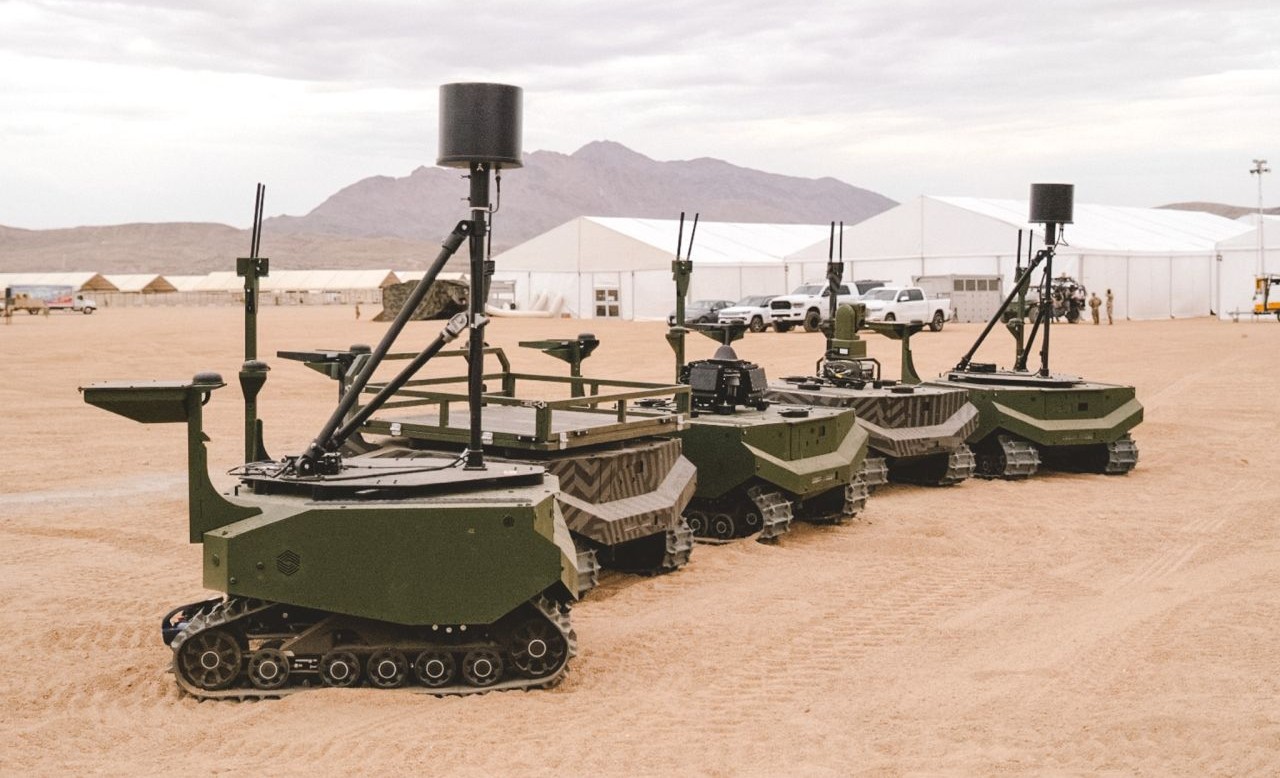
ARX Robotics UK has completed a major series of operational trials involving its GEREON uncrewed ground vehicles (UGVs) during the US Army-led Project Convergence-Capstone 6 (PC-C6) exercise, demonstrating the platform’s ability to support a broad range of missions while operating alongside British forces as part of a wider multinational force.
Held from 20-29 July at the US Army’s National Training Center at Fort Irwin in California, PC-C6 was the largest experimental drill conducted to date under Project Convergence – the service’s principal modernisation and experimentation campaign.
Led by the US Army’s 4th Infantry Division, the exercise brought together military personnel from Australia, Canada, New Zealand, the UK and the US to evaluate more than 100 emerging battlefield technologies under operational conditions.
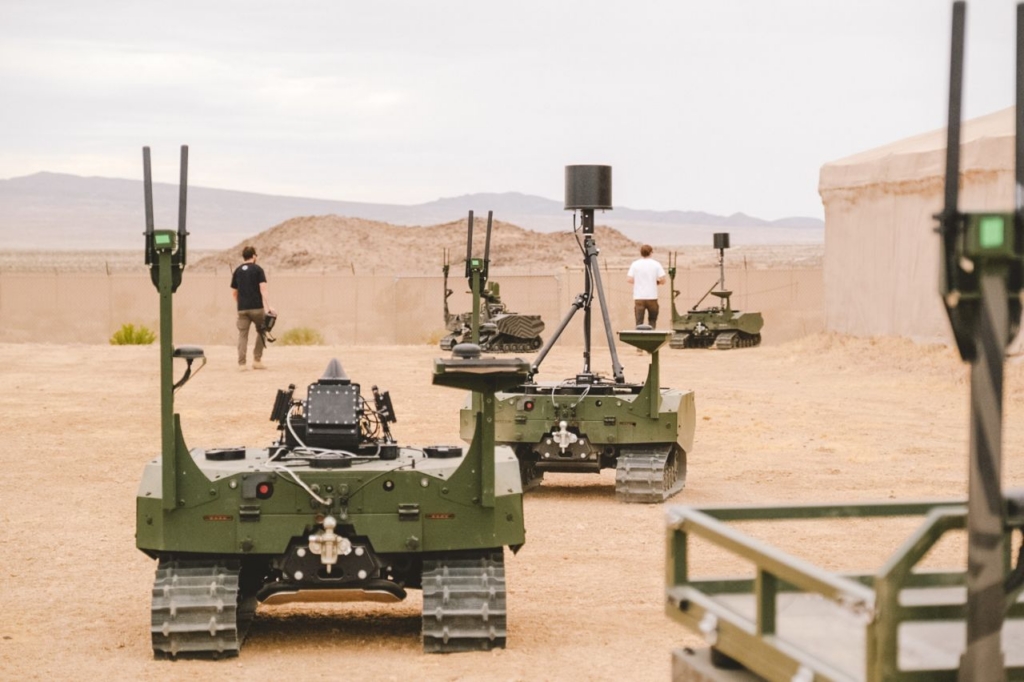
As part of the UK’s contribution to PC-C6, ARX Robotics UK deployed eight GEREON UGVs to work alongside the British Army’s Experimentation and Trials Group (ETG), 11th Brigade and 3rd Deep Recce Strike Brigade to demonstrate the platform’s maturity, versatility and operational relevance.
Developed by ARX Robotics UK, GEREON is a medium-sized, modular and autonomous UGV designed to provide a flexible robotic capability for use in demanding austere environments. The system uses a common vehicle architecture that can be fitted with different mission payloads, while its all-terrain mobility and autonomous design aim to both reduce personnel exposure and extend the reach of frontline units.
GEREON can be operated either manually or autonomously, has a payload capacity of up to 500kg (1,102lb), a maximum speed of 9mph (15km/h), a range that extends to 24 miles (40km) and an operating time of up to 72 hours.
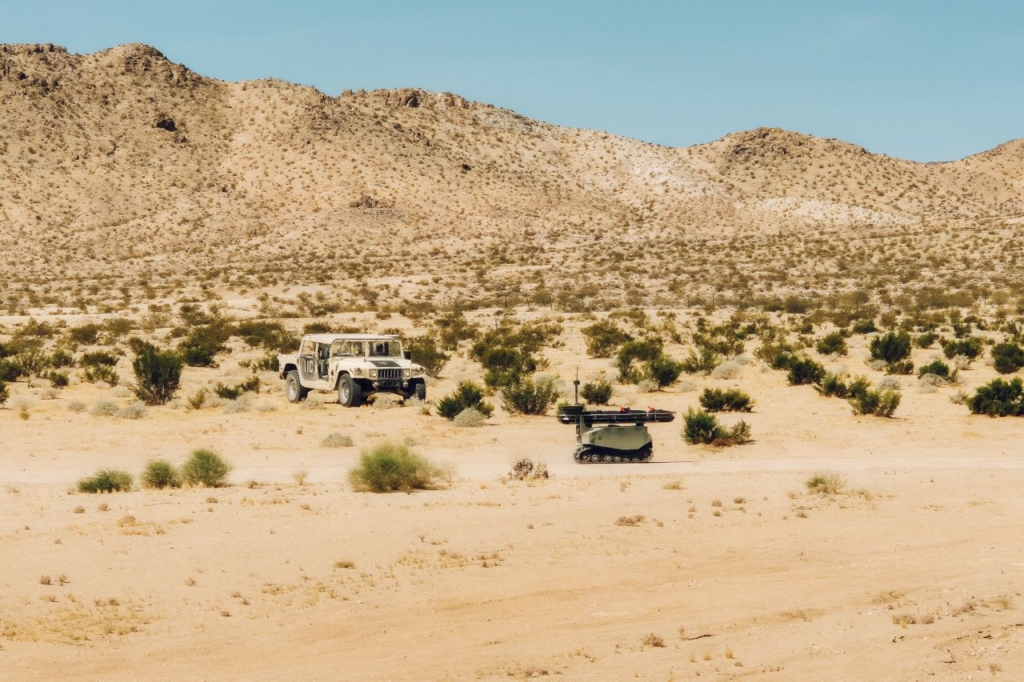
The tracked UGV leverages ARX Robotics’ Mithra OS software, which the firm describes as an AI-powered operating system that provides GEREON with autonomous functions, sensor integration, connectivity and fleet-level coordination.
During the exercise, the GEREON UGVs were employed continuously in a range of intelligence, surveillance and reconnaissance (ISR), electronic warfare (EW), counter-uncrewed aircraft system (C-UAS), casualty evacuation (CASEVAC) and logistical resupply scenarios.
The platform operated alongside British soldiers, providing an opportunity to assess how UGVs could contribute to tactical land-based military operations in the future.
Project Convergence tests allied interoperability
The trial subjected GEREON to the demanding environmental conditions and terrain offered by Fort Irwin. According to ARX Robotics UK, the systems successfully completed the exercise’s training scenarios and battlefield tasks while operating at range and remaining connected to allied communications, command-and-control (C2) and data networks.
A key element of this experiment was the integration of GEREON-generated information into higher-level operational networks.
Data from these platforms was incorporated into brigade, divisional and corps-level networks, proving how robotic systems can contribute to wider allied C2 architecture rather than operating as isolated assets. This level of interoperability is vital to the success of ground-based manned-unmanned teaming (MUM-T) operations in future network-centric battlespaces.
GEREON supports C-UAS, CASEVAC and logistics missions
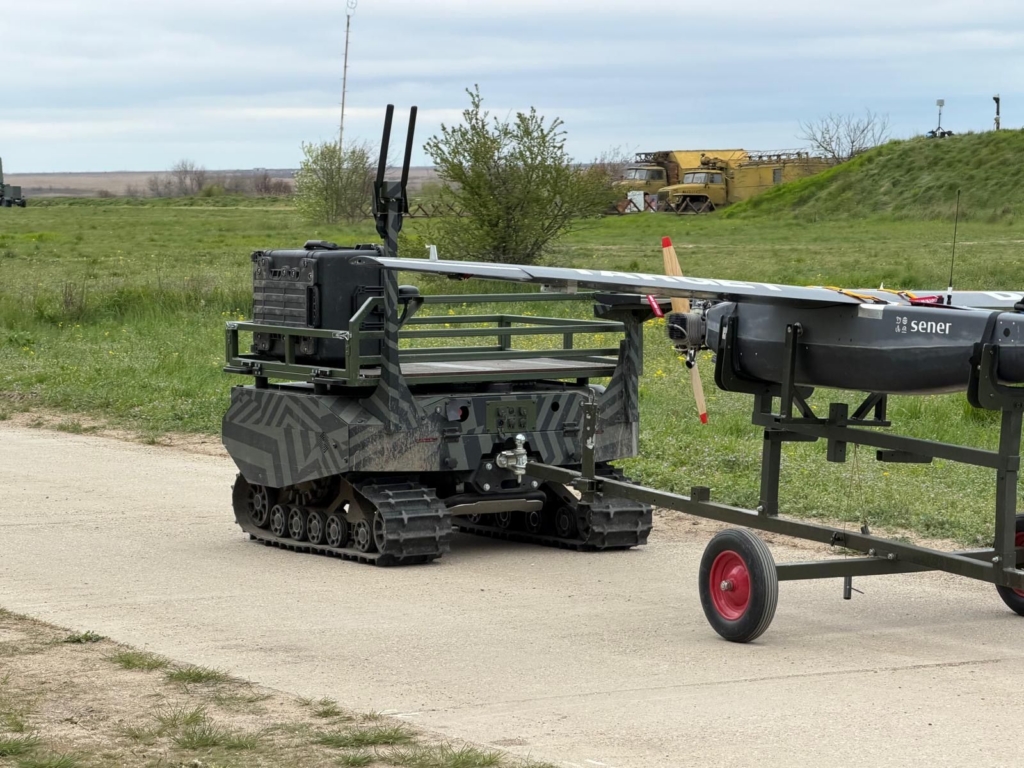
PC-C6 also examined the potential of UGVs to extend the reach of a unit’s specialist capabilities, such as reconnaissance. GEREON UGVs were used to transport and reposition sensors into forward, dispersed and potentially hazardous areas, allowing key specialist payloads to be deployed without exposing personnel or crewed vehicles to the same level of risk.
Among the payloads tested were L3Harris’ CORVUS-RAVEN EW and C-UAS system, MyDefence’s Watchdog C-UAS sensors and Overview’s Podview reconnaissance and targeting system. The trials demonstrated the potential for a common UGV to carry different mission-specific equipment according to operational requirements.
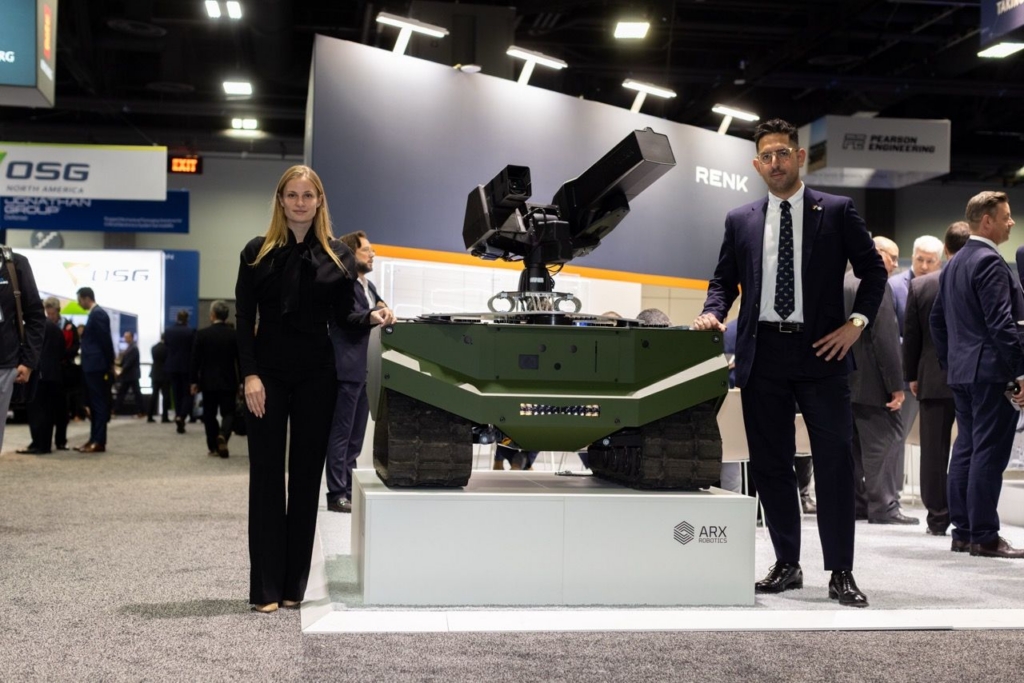
Commenting on the demonstration, Col Jim Howard OBE – the officer commanding the British Army’s ETG – said: “It is great to see ARX Robotics being put through its paces in one of the world’s most demanding training scenarios, both geographically and under highly technology-contested conditions, across mission sets ranging from [ISR] and [C-UAS] to logistics and [CASEVAC]…
“[PC-C6] provided a valuable opportunity to test how the British Army integrates autonomous and uncrewed systems into land operations alongside existing networks and capabilities, within a multinational corps-level event. This experimentation is central to delivering the Chief of the General Staff’s 20-40-40 vision and understanding how autonomous systems can generate greater mass, reach and operational effect,” he added.
ARX Robotics explores robotic battlefield sustainment
Beyond combat and ISR applications, ARX Robotics UK participated in the British sustainment experimentation project. GEREON was employed in logistical resupply and CASEVAC scenarios, with the drill exploring how robotic systems could be powered and sustained during prolonged operations in austere environments.
One trial involved charging GEREON’s robotic control system using a Plasan All-Terrain Electric Mission Module (ATeMM) mobile energy platform. ARX Robotics UK also examined how its systems could interact with the British Army’s newly developed hybrid support vehicle.
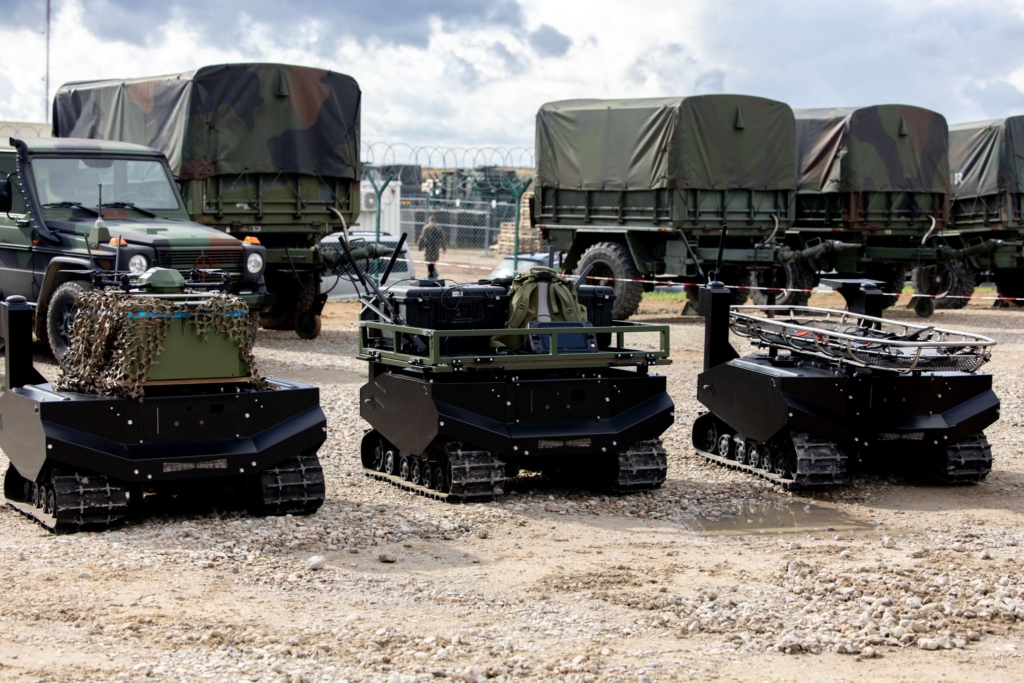
David Roberts, CEO of ARX Robotics UK, said the exercise demonstrated that the firm’s systems could operate as part of a wider allied force, rather than as standalone technology.
“This is an important step in ARX’s growing activity in the US. It showed that our common, software-defined platform can be deployed across multiple missions, integrated rapidly with partner technologies and connected into allied operational networks,” he explained.
For ARX Robotics UK, the deployment provided an opportunity to demonstrate GEREON’s capabilities across multiple mission sets while gathering operational lessons on the integration, employment and sustainment of robotic ground systems with allied forces.
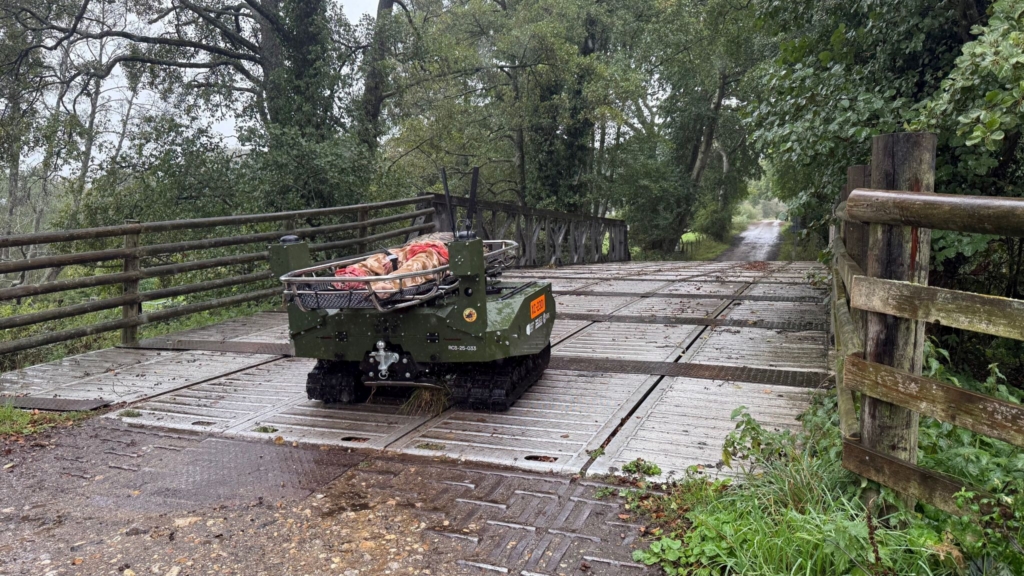
The operational evidence generated from its Fort Irwin deployment will feed into the continued development of GEREON, as well as the firm’s Mithra Operating System (OS). The results will also contribute to future concepts for software-defined ground autonomy.
With PC-C6 heavily focused on interoperability and the US Army’s Next Generation Command and Control (NGC2) architecture, the drill offered a significant test of whether emerging autonomous systems, like GEREON, can function within the increasingly connected battlefield environment.
Sign up for our newsletter and get our latest content in your inbox.
Similar Reads

Sign up for our newsletter. Select all sectors relevant to you.
Related