British Army retire Land Rover fleet
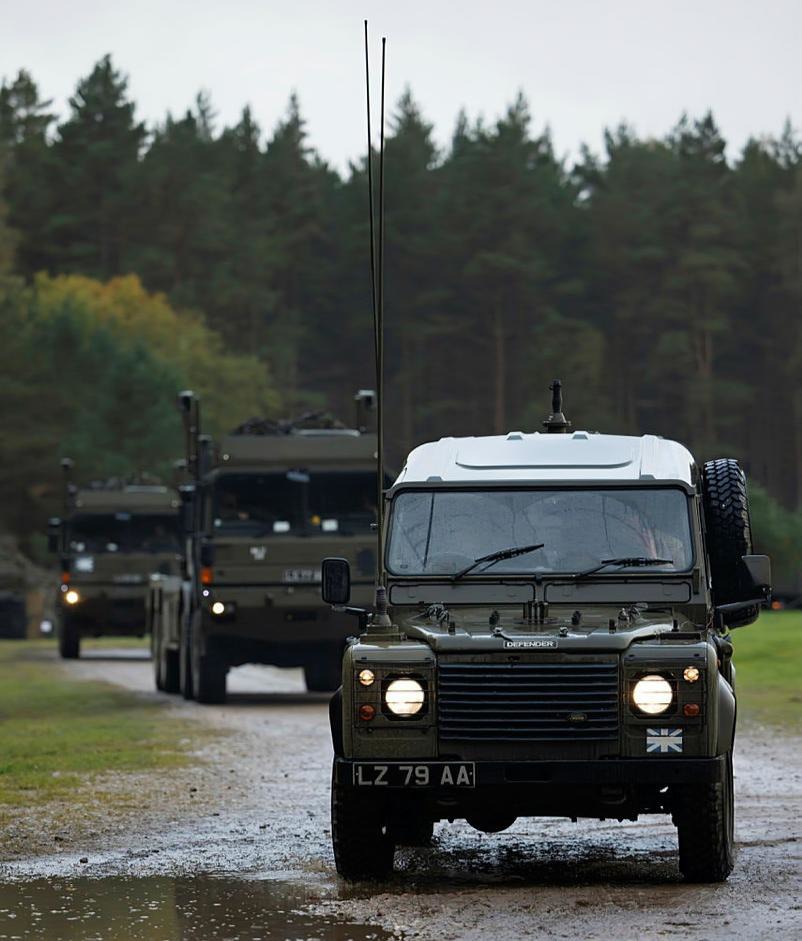
Image courtesy Defence Imagery / Photographer Corporal Paul Squires / Copyright UK MoD © Crown copyright 2025
The retirement, which began Friday 20th March, marks the end of an era for the vehicle that has been a cornerstone of military operations for more than 70 years.
As the Army looks to the future, plans are now underway to identify the next generation of light mobility vehicles, with the first new vehicles are expected to be in the hands of soldiers by 2030.

Simple, dependable and a workhorse of the British military, the Land Rover has been used for a range of duties, including patrol, command liaison and transportation of equipment and personnel.
A special commemorative event was held on Thursday 19th March, at Bovington, home to the Armoured Fighting Vehicle School, to honour the Land Rover’s legacy and outline the Army’s vision for its successor. The event brought together Minister for Defence Readiness and Industry, Luke Pollard MP, military personnel and industry, who showcased modern vehicles that could replace the Land Rover.
Minister for Defence Readiness and Industry Luke Pollard said: "The Land Rover and British Army share an incredible history and the image of a Landy in Army livery is truly iconic.
"As we look ahead to the future of light mobility vehicles, it is fitting to pay tribute to this extraordinary fleet that has served our Armed Forces so faithfully.
"I’m firing the starting gun on the replacement vehicle competition, seeking to put a modern vehicle in the hands of our personnel."
Land Rovers have been a trusted workhorse for the British Armed Forces since their widespread adoption in the 1950s. In 2025, more than 5,000 Land Rovers remained in service across the UK military, a testament to their durability and versatility.
The retirement of the Land Rover marks a significant milestone in the evolution of the British Army’s mobility capabilities. While the Land Rover’s legacy will endure, the Army is now focused on ensuring its personnel are equipped with a modern, technologically advanced fleet to support future operations.
The Light Mobility Vehicle (LMV) programme aims to identify an enduring successor to the Land Rover, ensuring the Army’s continued operational effectiveness and the programme will formally launch in due course. LMV will offer opportunities to British-based businesses through vehicle support and maintenance, helping make defence an engine for growth.
Over the decades, several bespoke Land Rover models were developed exclusively for military use, including:
- Series IIA Ambulance – Designed to carry four stretchers and a medic.
- Series IIA Pink Panther – Designed for use in the desert by the SAS, it was used for special operation missions and long-distance reconnaissance.
- Amphibious SIIA 109” – A prototype of a vehicle that could be used for sea landings.
- V8 Centaur Multi-Role Half-Track – Created with a track taken from the Scorpion light tank, it represented an attempt to merge road vehicle with a tank.