

Building airport resilience to reduce climate disruption


Image courtesy Atkins
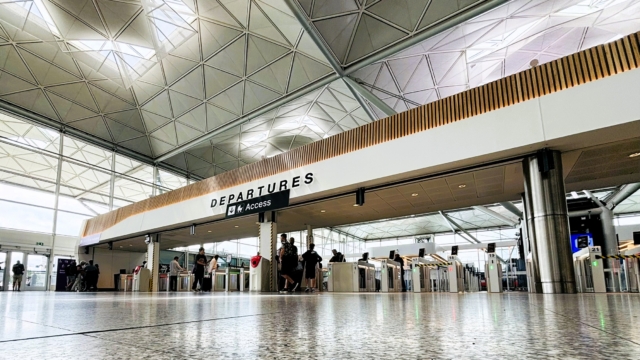
The global aviation industry provides a gateway for critical global interconnectivity but faces significant operational challenges due to the impacts of global climate change. Brazil’s Salgado Filho International Airport in Porto Alegre, for example, was closed for five months during 2024 due to unprecedented flooding as a result of extreme precipitation.
Globally, the financial impact of such incidents is huge – with the costs of flight cancellations, diversions and re-routing, airport closures and infrastructure damage and crippling cargo disruptions, expected to be as high as $500 billion by 2050.
This growing disruption from climate change has placed a spotlight on the need to better prepare airports and with strong action taken by the sector today, safety, connectivity and economic viability can be safeguarded through managing the impacts of extreme weather – resulting in a climate-resilient sector, underpinned by enhanced infrastructure and improved passenger outcomes.
Understanding climate risks that impact airport operations
The aviation sector faces major climate hazards across the air and ground and the World Economic Forum’s Airports of Tomorrow community has identified six main areas of climate risks on aviation operations. These include three in the air; clear air turbulences, heat waves and changing wind regimes and three on the ground, sea level rise, river flooding and extreme precipitation.
These climate risks result in a range of impacts, from workforce health and operational safety, to financial viability and damaged stakeholder perceptions of the sector.
As the sector mobilises to weather the storm, key challenges also have been identified, including the need for clear governance and co-ordination to manage climate disruptions on interconnected systems beyond airport boundaries.
Technological advancements present a unique opportunity to provide solutions to these challenges, through modelling and simulation opportunities with the creation of climate disruption models and standardised risk analysis tools.
These simulations support a systems-thinking approach allowing for a coordinated stakeholder response to climate risk and adaptation, with effective governance over the management of risk simulations and assessments.
Such simulations also enable the testing of proposed and targeted adaptation measures, which can be tailored and integrated within wider aviation stakeholders and their supply chains, including insurance stakeholders.
Simulation to anticipate, stress test and manage climate disruption
Climate-risk assessments involve analysing historical weather data and projections of future climate change to identify the key risks to an airport and how these might evolve in the future.
Risk is assessed based on the hazard, exposure and vulnerability of each asset in the system of systems that makes up the airport, and also considers the current ability of the airport to manage and respond to these risks, i.e. its adaptive capacity.
For example, this might include assessing changes in temperature extremes and their effects on runway surface, or passenger safety, or developing scenarios of plausible worst case flood events, informed by data on changes in heavy rainfall and flood risk.
Linking climate data to detailed understanding of airport operations, and the design specification of key infrastructure allows the identification of key areas of potential failure, and can inform investment plans, maintenance schedules and business continuity planning.
A tool to simulate and assess the current and future impact of climate change on airports can help to examine vulnerabilities in their day-to-day activities and operations to future disaster events. Once vulnerabilities are identified, it can help find the highest return-on-investment options to reduce vulnerability and increase resilience. A team of scientists, planners and engineers use the tool for airports to develop a digital twin of single, or multiple, airports, their surrounding area and the skyways they serve.
Simulations of day-to-day activities over the 21st century are then modelled, with both growth in airport traffic and likely changes in hazards like flood, high winds, extreme temperatures, turbulence, lightning, bird strike and other challenges airports will face considered.
The simulation tool is agent-based, meaning it simulates a population of avatars starting from their homes and hotels, travelling to the airport, parking, moving through security, using concessions, awaiting their flights, boarding, taxiing, taking off and landing at their destination – with similar detail simulated for airport arrivals.
The result is a highly detailed depiction of airport activity that integrates multiple systems beyond the airport and allows for measuring economic, social and environmental impacts to airport operations and operator bottom lines.
It enables them to effectively simulate the impact of different climate events on these activities and to conduct resiliency studies, stress test their future plans for airport growth and test proposed methods for generating new revenue.
Collaboration across systems is key to climate-resilient aviation
The aviation sector’s operational functionality relies on a series of interconnected systems, which are all also at risk from climate hazards; from surface access (rail, road and metros) to enable passengers to travel to and from airports to the critical utilities and telecoms infrastructure which underpin the ability for airports to safely operate.
Working together through targeted planning across these systems is critical for embedding operational resilience to climate change. By fostering strong collaboration across the sector, risk and interdependencies can be assessed at a system level, allowing for investment in adaptation. Emerging tools for climate risk and operational planning can provide the evidence base needed to develop the business case to invest in climate resilience.
Collaboration between aviation stakeholders, including governments, civil authorities, regulators and insurance providers, to systematically enhance resilience and reduce the physical impacts of climate change will not only reduce direct financial impacts but could also help to develop more affordable models of insurance for the sector.
Sign up for our newsletter and get our latest content in your inbox.
Similar Reads






Sign up for our newsletter. Select all sectors relevant to you.
Related