CAA unveils new AI strategy
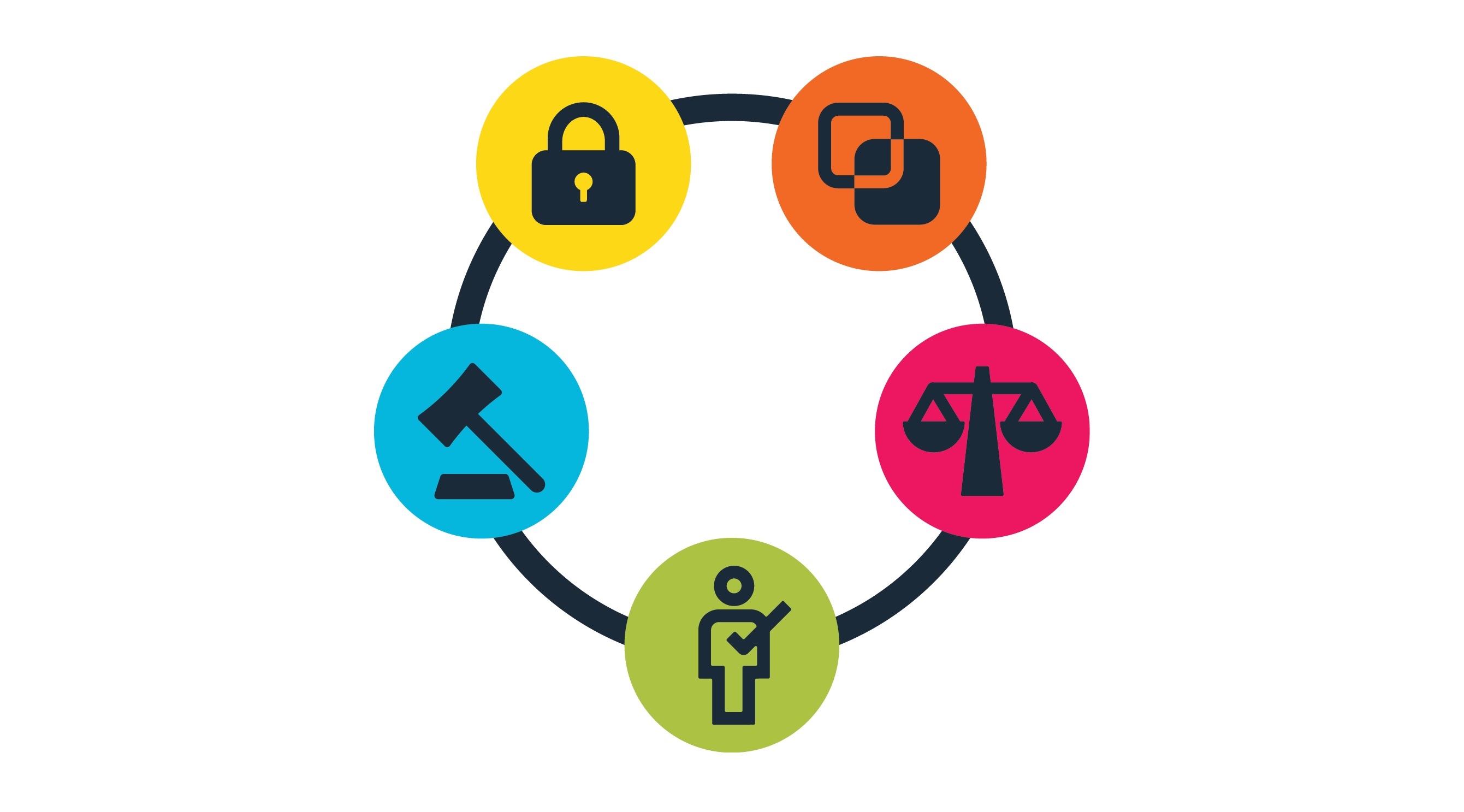
Above: Figure showing infographics for the five core principles of the Strategy: Accountability and Governance, Contestability and Redress, Fairness and Bias, Safety and Security, and Transparency and Explanation.
Courtesy CAA
The regulator lays out a two-pronged approach to enabling the aerospace sector’s use of AI and using the technology to support the performance of its own operations.

The new strategy addresses both the challenges and opportunities, with a focus on trust from passengers to pilots.
It sets out the steps that will guide the regulation of AI within the aerospace industry and aim to enable innovation while also protecting people.
AI has the potential to change aerospace for passengers, industry and regulation, including how we design planes, train pilots, plot routes and even navigate through the airport.
Tim Johnson, Director of Strategy and Policy at the UK Civil Aviation Authority, said: “AI is a technology that is being harnessed in many sectors and aerospace is no exception. In doing so, we must ensure the benefits can be realised whilst maintaining the levels of safety and consumer protection that the public rightly expect.”
By safely adopting AI, aerospace could potentially see:
- Changes in how we control the skies using real-time data and predictive modelling to boost the efficiency and effectiveness of air traffic controllers.
- Better pilots than ever, trained on adaptive, data-driven simulations.
- Fewer delays through airports and air traffic control having use of AI tools that are able to foresee operational delays and conflicts.
- Opportunities where AI can make booking, checking in, boarding and arrival procedures more efficient, leading to reduced costs for consumers.
- More fuel-efficient flying as technology on board makes planes go further with less.
- AI assisted flying that analyses real time data to make routes quicker and more efficient, using weather data and flying conditions to maximum advantage.
- Cutting time spent at airports as AI smooths the processes behind the scenes that get you from your home to your holiday.
- Smoother landings with AI being able to support passengers deal with crosswinds and make micro-adjustments as the tyres hit the tarmac.

As AI technologies advance, they also bring issues that need to be assured, including reliability, trust and safety, all with appropriate regulatory oversight.
The UK Civil Aviation Authority will introduce a roadmap so that the strategy set out today will enable the innovation of tomorrow. This supports the wider UK Government pro-innovation approach to regulating AI.
The regulator is working with organisations in the aerospace sector to identify emerging AI technologies and models. Engagement and collaboration with the sector and passengers, is essential.
By talking to the people it most effects the UK Civil Aviation Authority will continue to enable innovation and maintain the highest levels of safety and security.