DASA awards MSubs autonomous sub contract
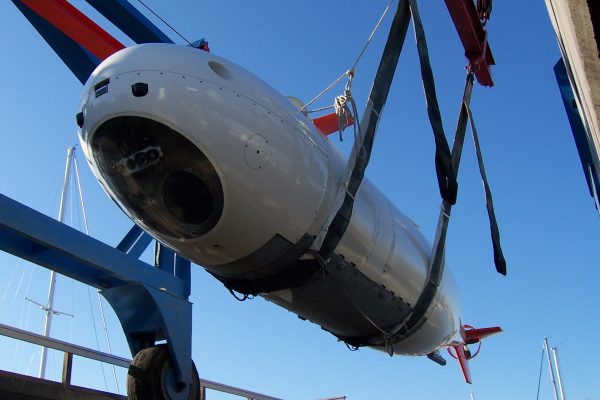
Above:
MSub’s S201 manned submersible to be converted into an unmanned vehicle (XLUUV).
Images copyright MSubs
An initial £1-million contract has been awarded to Plymouth-based MSubs Ltd to build a test submarine that will be used to explore the potential capabilities of larger uncrewed underwater vehicles in the future.

Measuring about 30 feet in length, this extra-large autonomous submarine is significantly larger than autonomous submarines used for beach reconnaissance, allowing it to operate at a range of 3000 nautical miles.
Admiral Tony Radakin, First Sea Lord announced the contract at the Underwater Defence & Security Symposium in Southampton. The First Sea Lord noted how the Ministry of Defence wants to increase its presence in the underwater battlespace and is exploring the use of extra-large uncrewed underwater vehicles (XLUUV) for surveillance, reconnaissance, and anti-submarine warfare operations.
Admiral Tony Radakin, First Sea Lord said: "I am enormously excited about the potential for remotely piloted and autonomous systems to increase our reach and lethality, improve our efficiency and reduce the number of people we have to put in harm’s way.
"These XLUUVs are at the forefront of underwater systems technology; UK technological developments such as this will be key to the Royal Navy maintaining its battle-winning edge in the underwater environment."
XLUUV submarines are especially adept at covert intelligence gathering. They can leave their dock autonomously and secretly move to the operational area without any embarked crew for up to three months. They are also able to sense hostile targets and report their findings back to the station, making them an important barrier for anti-submarine warfare.
Defence Minister Jeremy Quin said: "Submersible autonomous vessels have huge potential and this project could be a game-changer for the UK’s underwater capability, taking our submarine service to the next level.
"I am pleased that this funding supports MSubs Ltd., a UK based company committed to innovation and research in the autonomous sector.
"This is a key example of how defence is doing more than ever before to give industry the opportunity to research innovative new technology."
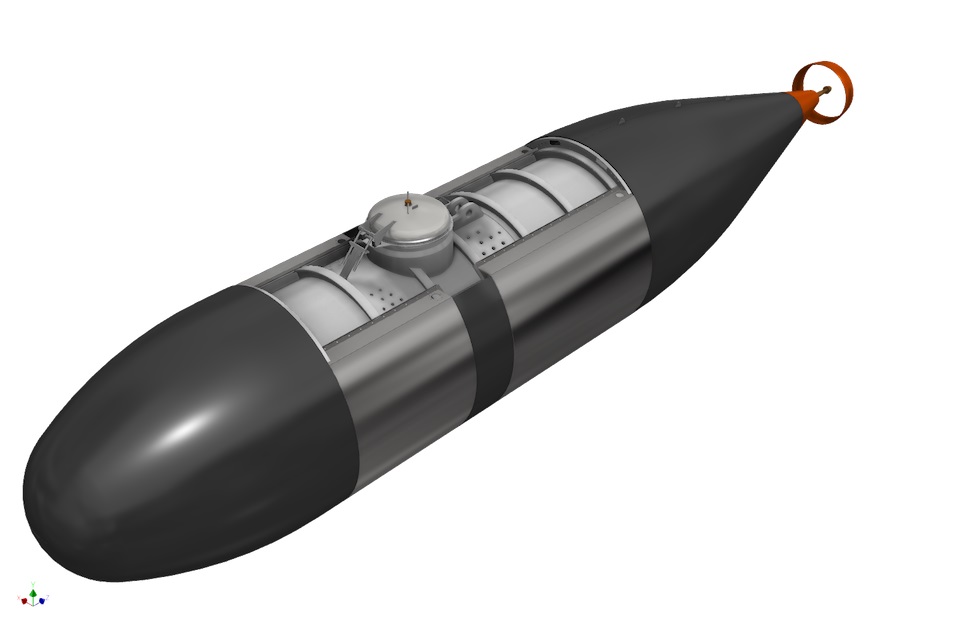
Above:
Concept image of XLUUV developed by MSubs.
Copyright MSubs
DASA delivery manager Adam Moore said: "DASA’s involvement is enabling this technology to advance at a much quicker pace and to deliver new capabilities to the Royal Navy years earlier than otherwise possible, making sure the UK stays ahead of our adversaries.
"Not only will this enhance the UK’s strategic advantage but also boost UK prosperity by supporting small and medium-sized companies like MSubs in Plymouth."
The first phase of DASA’s Developing the Royal Navy’s Autonomous Underwater Capability programme, run jointly with the Royal Navy and Defence Science and Technology Laboratory (Dstl), will see an existing crewed submersible refitted with autonomous control systems.
If initial testing is successful, up to a further £1.5-million is available to further test the new capability making it the largest joint contract awarded as part of a DASA competition.
Currently, smaller autonomous and remotely piloted submarines are unable to undertake all the tasks of larger crewed submarines.
Paddy Dowsett from MSubs said: "We are thrilled to be awarded this contract through DASA, and have the opportunity to work with defence scientists and experts to develop new and advanced capabilities for the Royal Navy.
"This funding will allow the Royal Navy to better understand their future roles and for us to remain at the forefront of Extra Large Uncrewed Underwater Vehicles (XLUUV) design and manufacture in Europe."