Advancing UK Aerospace, Defence, Security & Space Solutions Worldwide
  • Home
  • /
  • Defence
  • /
  • DASA IRC seeks explosives, weapons and illicit drugs detection solutions

Defence Security

DASA IRC seeks explosives, weapons and illicit drugs detection solutions

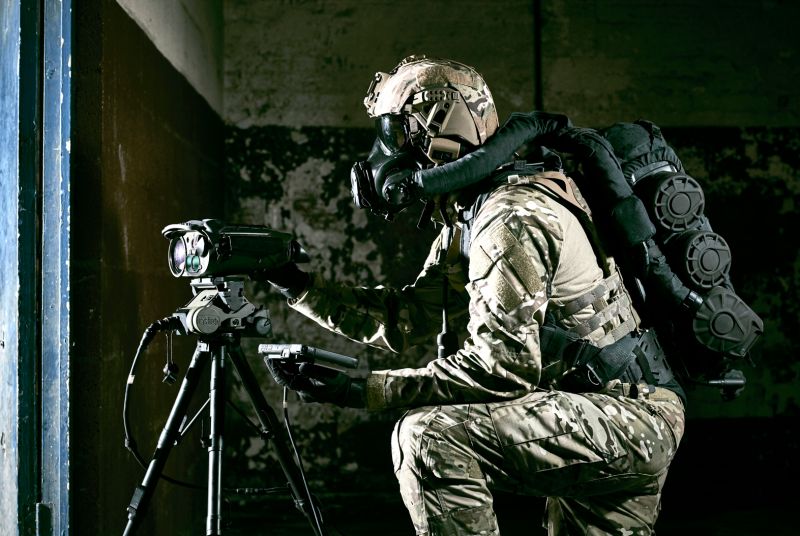
The Defence and Security Accelerator (DASA) is launching a £2.8 million Innovative Research Call (IRC) competition to find state of the art and technological solutions for the improved detection of explosives, weapons and illicit drugs, boosting the development of new technology to screen people, possessions, goods, vehicles, areas and buildings.

Image courtesy DASA

The Innovative Research Call (IRC) 2020 for Explosives and Weapons Detection is a cross-governmental programme that seeks proposals from industry and academia for the screening of people and/or their possessions, goods, vehicles, buildings and areas.

DASA delivery manager Laurence Bickerton said: "We are looking for the best innovations to keep our communities safe from the deadliest threats we face.

Advertisement
ODU RT

"To tackle this challenge, we are looking for new concepts and advances in current technology – and we are appealing far and wide for the best ideas and innovative solutions to help create a safer future for all."

The competition takes place in two phases. Up to £1 million is available in Phase 1 with proposal bids in the region of £70,000 for six months to develop proof of concept.

Proposals of a higher value will be considered if appropriately justified.

Proposals of higher technical readiness that do not require Phase 1 funding will still need to submit their proposals in Phase 1 in anticipation of Phase 2 funding.

Up to £1.8 million will be available for proposals in Phase 2. Projects will need to develop and evaluate their prototypes or demonstrators by the end of September 2023.

Advertisement
ODU RT

The deadline for Phase 1 proposal submissions is midday on 28th September 2020.

Full technical requirements and examples of use cases are available in the competition document.

The IRC competition is run on behalf of several government departments and law enforcement agencies, including:
Centre for the Protection of National Infrastructure (CPNI)
Department for Transport (DfT)
Defence Science and Technology Laboratory (Dstl)
Home Office, Office for Security and Counter Terrorism (OSCT)
Metropolitan Police Service
US Department of Homeland Security, Science and Technology Directorate
Border Force

This is the fifth run of IRC, with successful calls occurring in 2007, 2010, 2013 and 2016.

Advertisement
FIA2026 animated banner
Roke introduces CORTEXA GUARDIAN

Defence Events

Roke introduces CORTEXA GUARDIAN

21 April 2026

Roke has introduced its new, advanced Counter UAS (C-UAS), CORTEXA GUARDIAN to the market, following the system's development with armed forces and mission partners across the UK and Northern Europe.

Anotec achieves AS9100 certification

Aerospace Defence

Anotec achieves AS9100 certification

20 April 2026

Surface coating specialist Anotec has enhanced its position in the aerospace and defence sectors by achieving the AS9100 certification.

Securitas appoints Alan Rae as Area Director for UK North and BAE Systems

Defence Security

Securitas appoints Alan Rae as Area Director for UK North and BAE Systems

20 April 2026

Securitas UK has announced the appointment of Alan Rae to the newly created and expanded role of Area Director for UK North and BAE Systems.

Vision Engineering appoints Harry Curtis as Technical Director

Aerospace Defence

Vision Engineering appoints Harry Curtis as Technical Director

17 April 2026

Woking headquartered Vision Engineering Group, provider of ergonomic microscopy and metrology solutions, has announced the appointment of Harry Curtis to the position of Technical Director, effective 1st April 2026.

Advertisement
ODU RT
Drone swarms central to AWE26

Defence Events

Drone swarms central to AWE26

17 April 2026

Drones have been at the centre of this year's Army Warfighting Experiment 2026, which each year brings together soldiers, scientists, industry and universities, to test new military technology.

Dstl assesses robotic systems in hazardous incident recovery trial

Defence

Dstl assesses robotic systems in hazardous incident recovery trial

17 April 2026

In a ‘real life’ scenario played out in an empty shopping unit, the Defence Science and Technology Laboratory (Dstl) has tested the ability of robotic and autonomous systems to navigate through a building and detect, sample and remediate (clean) a contaminated environment.

Advertisement
ODU RT
Advertisement
FIA2026 animated banner