DASA seeks innovations in dermal protection against liquid chemicals

The Defence and Security Accelerator (DASA) has launched a new Themed Competition called ‘Innovations in dermal protection against liquid chemicals’, run on behalf of the Ministry of Defence (MoD) and the Home Office.


Image courtesy DASA

This competition is seeking proposals that will address the challenge of developing a solution to the problem of providing dermal protection against liquid chemical contamination. DASA are interested in treatments, fabric design, novel constructions or any other approach that prevents the penetration of low surface tension liquids.

Although being run on behalf of the UK government there is significant potential for solutions developed to be exploited internationally.

Key dates and funding
This competition has two challenges. The total possible funding available for this competition for both challenges is £2.6 million (excluding VAT) across the total two year duration. DASA anticipate funding up to 10 proposals for each challenge.

The deadline to submit a proposal is midday (GMT) on Tuesday 15th April 2025. Submit via the DASA Online Submission Service.

Background: why we need innovation in this area
Traditionally, dermal liquid protection has been provided by an air permeable, two-layer system, comprising an outer fabric – which controls the initial liquid interaction with the surface – and a carbon layer to absorb any vapours which penetrate the outer layer. It is the combination of these two layers which enables the wearer to operate in a CBRN (chemical, biological, radiological and nuclear) environment without incurring the associated physiological burden of an air impermeable garment.

Changes in legislation (e.g. REACH) over recent years are constraining the methods available to defence and security for providing dermal protection against low surface tension liquids (such as chemical warfare agents (CWAs). Due to these changes we are seeking innovative methods for future dermal protection.
Scope:

The scope of this competition is technologies that provide wearable dermal protection against liquid chemical contamination. There are various means by which this could be achieved and we are interested in any scientific and technological approaches that have the potential to deliver dermal protection against low surface tension liquids without the use of chemistries which are currently the subject of restriction proposals (e.g. under REACH and ECHA).

Supporting events

Dial in webinar

Thursday 6th March 2025 – a dial-in session providing further detail on the problem space and a chance to ask questions in an open forum. If you would like to participate, please register on the Eventbrite page.

One-to-one teleconference sessions
Wednesday 12th March 2025 – a series of 15 minute one-to-one teleconference sessions, giving you the opportunity to ask specific technical questions to the competition team in a closed forum. Registration details for these sessions will be available the day after the launch webinar which is taking place on 6th March 2025. Please attend the webinar or reach out to your local Innovation Partner if you have more general questions on the DASA application process.

To submit a proposal: click here

Related

British Airways navigates Q3 margin pressures amid rising costs and disruption
British Airways Boeing 777 aircraft at Atlanta Airport
British Airways navigates Q3 margin pressures amid rising costs and disruption
Rising fuel bills, air traffic control disruptions, and Middle East geopolitical pressures weighed on performance.
Aerospace

8 Nov 2026

Which UK aerospace jobs are hardest to fill in 2026?
Airbus engines
Which UK aerospace jobs are hardest to fill in 2026?
Aerospace skills shortages are particularly noticeable in positions requiring advanced technical knowledge, practical engineering experience and specialist qualifications.
Aerospace

8 Nov 2026

Why airlines pay millions to land at Heathrow
Aircraft landing at LHR
Why airlines pay millions to land at Heathrow
A pair of airport slots at London Heathrow can be worth tens of millions of pounds. With demand for access to the UK's busiest airport far exceeding available capacity, these valuable rights have become a major commercial asset, influencing airline competition, route planning and international connectivity.
Aerospace

7 Nov 2026

Which raw materials are critical to defence? NATO’s essential materials explained
Engineer robotic mechanic women technician working in advance robotic industry plant work assembly robot arm repair fix maintenance or service large machine by hand skill
Which raw materials are critical to defence? NATO’s essential materials explained
Raw materials are fundamental to military aviation, playing a vital role in aircraft structures, jet engines, avionics and electrical systems. We explore NATO's list of 12 defence-critical materials, how they are used in aerospace and why securing a reliable supply matters to the industry.
Defence

8 Nov 2026

Babcock and Everllence partner on propulsion of Arrowhead Frigates
MoU signing at Euronaval, Paris.
Babcock and Everllence partner on propulsion of Arrowhead Frigates
The new partnership framework will see Everllence supporting the development of next-generation power and propulsion systems across Babcock's Arrowhead programmes.
Defence Member News

6 Nov 2026

Inzpire facilitates delivery of COBRA WARRIOR 26-2 at RAF Waddington
COBRA WARRIOR 26-2 at RAF Waddington
Inzpire facilitates delivery of COBRA WARRIOR 26-2 at RAF Waddington
Inzpire personnel organised the integration of multinational participants, training objectives and the delivery of realistic scenarios during live missions, for the most complex COBRA WARRIOR held to date, at RAF Waddington in Lincolnshire.
Defence

6 Nov 2026

Leicester’s National Space Centre Discovery Team wins Sir Arthur Clarke Award
National Space Centre Discovery Team wins Sir Arthur Clarke Award
Leicester’s National Space Centre Discovery Team wins Sir Arthur Clarke Award
Following delivery of its education and outreach initiatives across the UK to inspire the next generation of scientists, engineers and space explorers, the National Space Centre's Discovery Team has gained national recognition by winning a prestigious Sir Arthur Clarke Award.
Member News Space

5 Nov 2026

Astroscale and OHB to collaborate on space security
Astroscale and OHB sign MoU
Astroscale and OHB to collaborate on space security
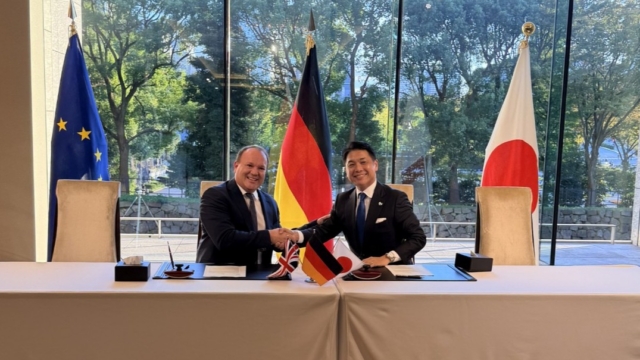
Following ratification of the Kensington Treaty in October, Astroscale and OHB have signed an MoU to enhance cooperation between the UK, Germany and Japan towards protecting critical infrastructure in space, whilst supporting the safe, sustainable and responsible use of the orbital environment.
UK Space Agency launches In-Orbit Manufacturing research competition
View_of_Harwell_campus_in_the_UK_article
UK Space Agency launches In-Orbit Manufacturing research competition
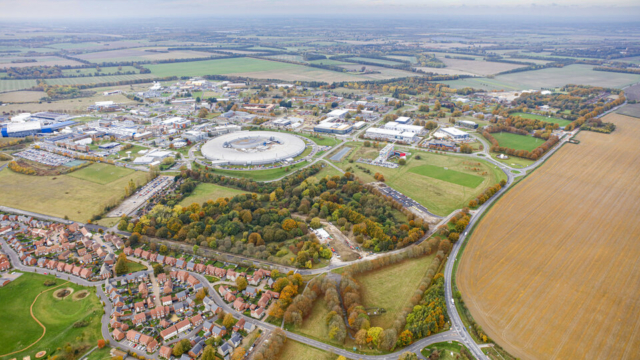
A new competition launched by the UK Space Agency (UKSA) seeks projects that will underpin the research, development and maturation of an In-Orbit Manufacturing process and associated payload.
Events Space

4 Nov 2026

Met Police chief calls for major overhaul to tackle cybercrime
Police on patrol
Met Police chief calls for major overhaul to tackle cybercrime
Metropolitan Police Commissioner Sir Mark Rowley has called for England and Wales’s 43 police forces to be reorganised into eight to 10 regional forces.
Security

6 Nov 2026

UK plans tougher facial recognition laws and police technology watchdog
Facial recognition
UK plans tougher facial recognition laws and police technology watchdog
The Home Office plans a statutory framework for police facial recognition, including independent oversight and mandatory bias testing.
Security

5 Nov 2026

Astroscale and OHB to collaborate on space security
Astroscale and OHB sign MoU
Astroscale and OHB to collaborate on space security
Following ratification of the Kensington Treaty in October, Astroscale and OHB have signed an MoU to enhance cooperation between the UK, Germany and Japan towards protecting critical infrastructure in space, whilst supporting the safe, sustainable and responsible use of the orbital environment.