DIP decoded: What the Investment Plan means for British airpower


Britain has placed future airpower at the centre of its Defence Investment Plan, committing £8.6 billion over the next four years to the Global Combat Air Programme while accelerating investment in autonomous aircraft, drones, AI-enabled targeting and integrated air defence.
The wider plan, published on 30 June, is backed by £298 billion over four years and is intended to turn the Strategic Defence Review into funded programmes. While the investment spans all three services, airpower features prominently throughout the plan.
The result is not simply a commitment to a new fighter aircraft. The Defence Investment Plan points to a future RAF built around crewed combat aircraft, autonomous systems, electronic warfare, space-based support, AI-enabled decision-making and stronger air and missile defence.
Airpower DIP commitments
| Airpower area | DIP commitment | Why it matters |
|---|---|---|
| Global Combat Air Programme | £8.6bn over four years | Funds the UK, Japan and Italy’s next-generation combat aircraft programme |
| Collaborative Combat Air | £300m | Supports autonomous aircraft designed to operate alongside crewed fighters |
| Drones and autonomous systems | More than £5bn | Accelerates uncrewed systems across the Armed Forces, including air domain applications |
| Expendable autonomous systems | £650m | Funds lower-cost drones and uncrewed systems to increase frontline lethality |
| Digital Targeting Web | Nearly £2bn | Connects sensors, commanders and weapons through AI-enabled software |
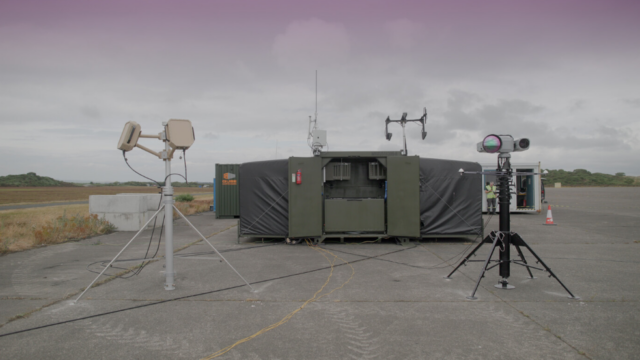
| Air, drone and missile defence | £790m | Supports radars, sensors, counter-drone systems, directed energy and command and control |
| Rapid AI Delivery Taskforce | £100m | Speeds up deployment of AI-enabled military capabilities |
| F-35A purchase | 12 aircraft | Allows the UK to join NATO’s dual-capable aircraft mission |
GCAP remains the anchor of future combat air
The £8.6 billion allocation for the Global Combat Air Programme is one of the most significant air-related commitments in the Defence Investment Plan.
GCAP is the UK, Japan and Italy programme to develop a sixth-generation combat aircraft that will eventually replace the RAF’s Typhoon fleet from the second half of the 2030s. The aircraft is expected to feature advanced stealth, artificial intelligence, networked sensors and significantly greater computing power than current-generation fighters.
The programme formally brought together the UK’s Tempest work with Japan’s F-X fighter initiative and is intended to preserve Britain’s sovereign combat air design and manufacturing base.
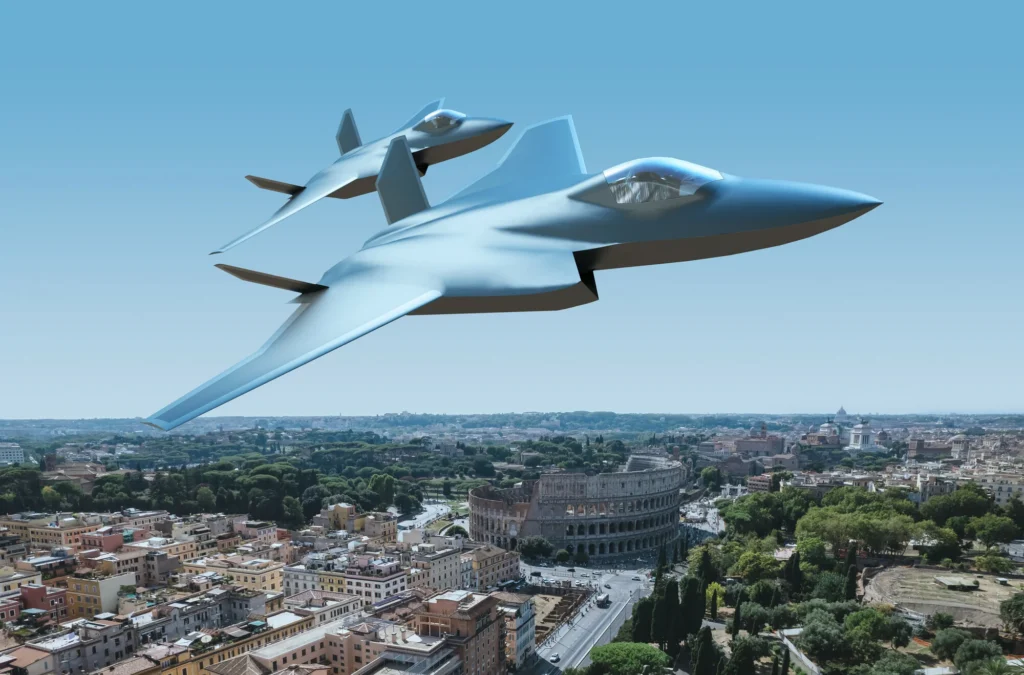
GCAP already supports thousands of jobs across the UK and involves companies including BAE Systems, Leonardo UK, MBDA UK and Rolls-Royce, alongside a wider network of suppliers.
The Defence Investment Plan also confirms that Typhoon will remain central to Britain’s air defence capability for years to come. Rather than moving directly from Typhoon to GCAP, the RAF will need to manage a long transition in which existing aircraft are upgraded while new crewed and uncrewed systems are brought into service.
That makes GCAP the centre of future British combat air, but not the whole picture.
The future RAF will combine crewed and autonomous aircraft
The Defence Investment Plan makes clear that Britain’s future air combat strategy extends well beyond a single aircraft programme.
Alongside GCAP, the government has allocated £300 million to a national Collaborative Combat Air programme. This will develop autonomous aircraft designed to operate alongside crewed fighters, with a demonstrator expected by at least 2030.
Officials have previously described future combat air as a “system of systems”, with crewed aircraft supported by uncrewed platforms capable of reconnaissance, electronic warfare, decoy missions and precision strike. The new investment reinforces that direction.
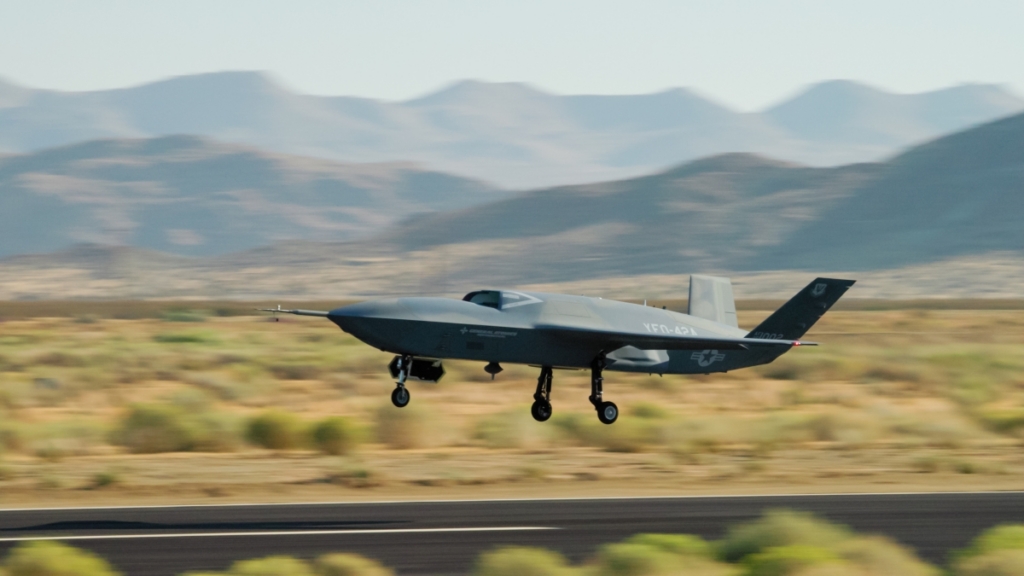
The wider drone package is also relevant. More than £5 billion has been committed to drones and autonomous systems over the next four years, including £650 million for inexpensive expendable autonomous systems such as drones and uncrewed ground vehicles.
For the RAF, this includes Storm Shroud, an autonomous electronic warfare drone expected to enter service in 2026. The plan also supports Project Pantheon, which will trial jet-powered drones as part of a hybrid carrier air wing operating alongside the UK’s F-35B aircraft.
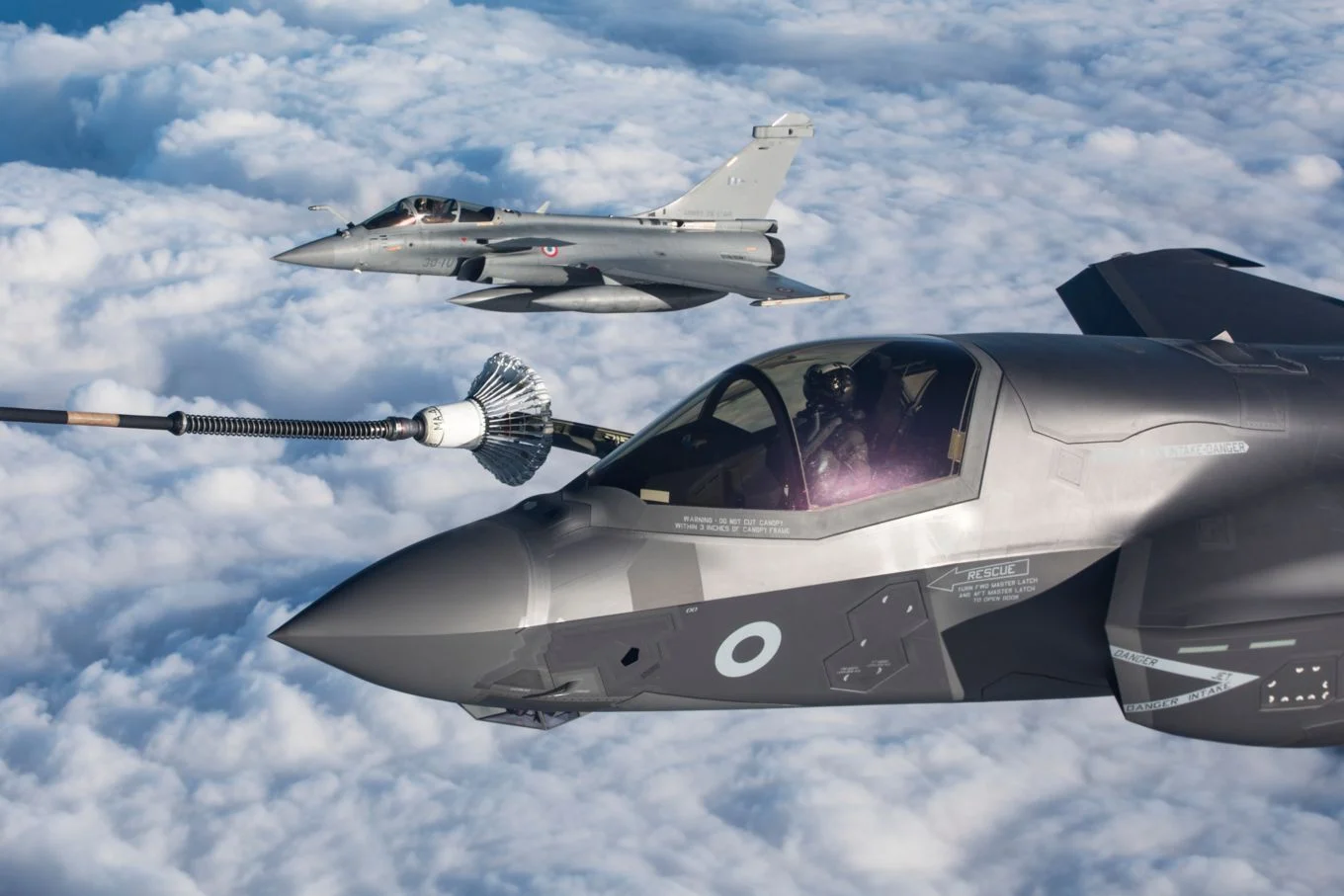
The planned purchase of 12 F-35A aircraft adds another important element. Unlike the short take-off and vertical landing F-35B, which operates from the UK’s aircraft carriers, the F-35A is the conventional take-off and landing variant and will allow Britain to join NATO’s dual-capable aircraft mission.
Taken together, these investments show how the RAF’s future force is expected to evolve. Crewed aircraft will remain essential, but they will increasingly operate alongside autonomous systems, electronic warfare platforms, drones and shared targeting networks.
AI and air defence become central to future operations
Artificial intelligence is another major theme running through the Defence Investment Plan.
Nearly £2 billion has been allocated to a new Digital Targeting Web, intended to connect sensors, commanders and weapons through AI-enabled software. The aim is to speed up decision-making and reduce the time between detecting a target and engaging it.
For airpower, this could be as important as any individual aircraft. Future combat advantage will depend not only on platform performance, but on how quickly aircraft, drones, satellites, sensors and weapons can share information and operate as part of a connected force.
A further £100 million has been allocated to the Prime Minister’s Rapid AI Delivery Taskforce, which is intended to accelerate the introduction of AI-enabled capabilities into frontline service.

The plan also reflects renewed concern about air, missile and drone threats to the UK homeland and overseas bases. The government has committed £790 million over four years to new radars, sensors, command-and-control systems and counter-drone capabilities.
The funding will also support directed-energy weapons, upgrades to the Royal Navy’s Sea Viper air-defence system and the creation of a new Integrated Air, Space and Missile Defence Operations Centre.
Recent conflicts have shown how drones, missiles and low-cost one-way attack systems can place pressure on even sophisticated air defence networks. The UK’s response is not only to invest in interceptors, but to improve detection, integration and command and control across air and space.
For industry, the airpower implications of the Defence Investment Plan are broad. The opportunity extends from combat aircraft design and advanced manufacturing to autonomy, sensors, software, electronic warfare, air defence, weapons integration and through-life support.
The plan confirms that Britain remains committed to retaining a sovereign fast-jet capability. More significantly, it shows how the RAF expects to fight in the decades ahead: not with crewed fighters alone, but with sixth-generation aircraft operating alongside autonomous systems, AI-enabled targeting networks and layered air defence as part of an integrated force.
At a glance: What future British airpower is being built around
| Capability | Role in future airpower |
|---|---|
| GCAP | Future crewed combat aircraft and centrepiece of sovereign combat air capability |
| Typhoon | Upgraded backbone of UK air defence during the transition to GCAP |
| F-35B | Carrier-based fifth-generation combat air capability |
| F-35A | Land-based fifth-generation aircraft linked to NATO’s nuclear mission |
| Collaborative combat aircraft | Autonomous systems operating alongside crewed fighters |
| Storm Shroud | Uncrewed electronic warfare capability |
| Project Pantheon | Hybrid carrier air wing trials involving jet-powered drones and F-35B aircraft |
| Digital Targeting Web | AI-enabled sensor-to-shooter network connecting platforms and weapons |
| Integrated Air, Space and Missile Defence | Protection against aircraft, drones, missiles and one-way attack systems |
Sign up for our newsletter and get our latest content in your inbox.
Similar Reads




Sign up for our newsletter. Select all sectors relevant to you.
Related