Dnata switches its HGVs at Heathrow to run on HVO
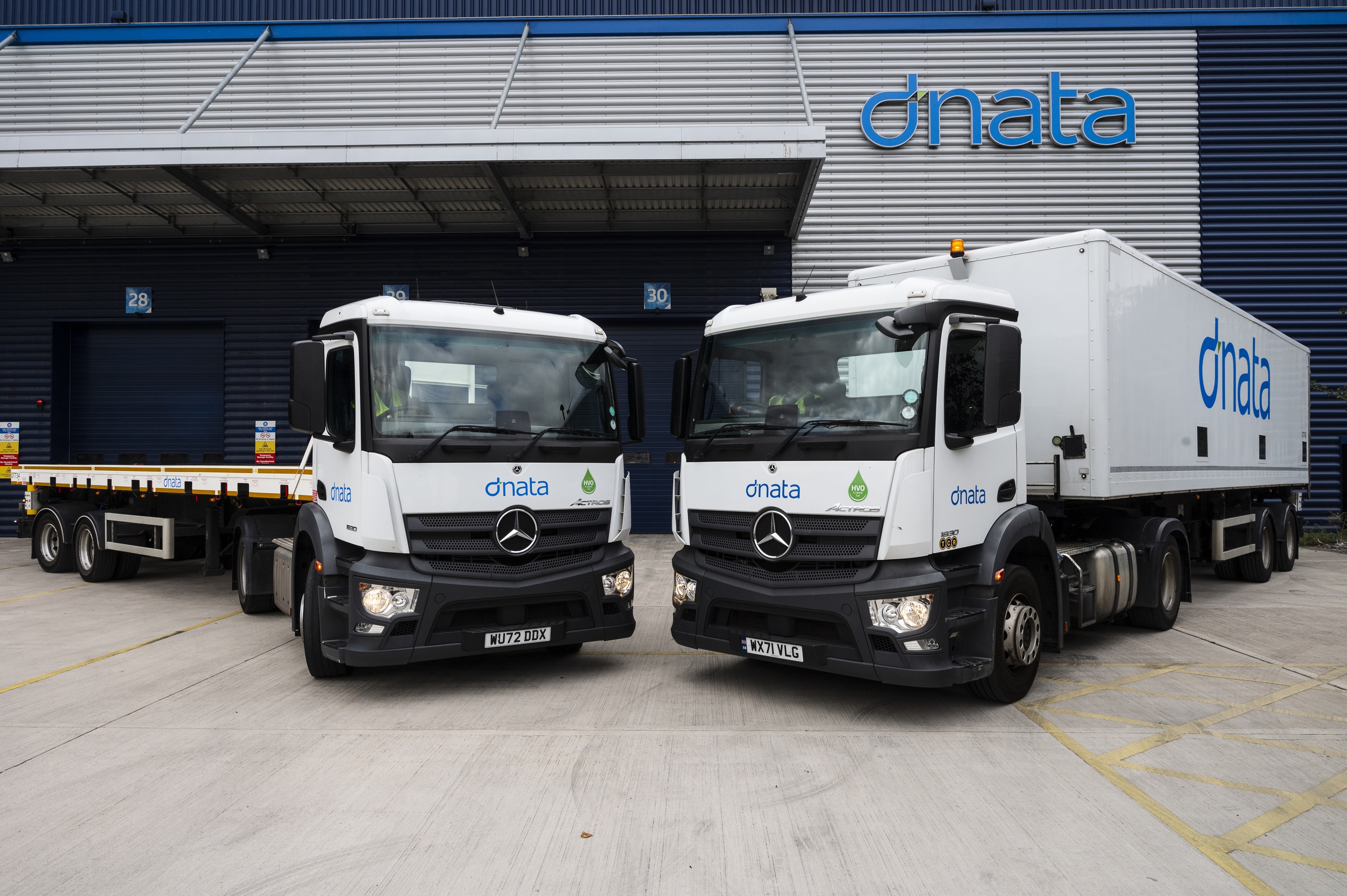
Image courtesy dnata
This strategic move is projected to reduce the carbon footprint of dnata’s HGV’s fleet by 77%, cutting carbon dioxide equivalent (CO2e) emissions by over 2,400 tonnes annually. This is comparable to the greenhouse gas emissions from over 530 average petrol-powered passenger vehicles for 12 months.

The initiative is part of the dnata Group’s continued efforts to reduce its carbon footprint by 50% by 2030 in line with its eight-year strategy.
Alex Doisneau, Managing Director of dnata UK, said: “We are committed to implementing meaningful initiatives to maximise environmental efficiency. The introduction of biofuel, such as HVO, into our UK operations is another important step in our ongoing journey to reduce our carbon footprint.
“We will continue to invest in infrastructure and equipment to contribute to dnata’s global sustainability targets.”
Dnata’s most recent initiative follows significant investment in advanced infrastructure in the UK. Its new, advanced cargo centres in Manchester (dnata City North) and London (dnata City East) both incorporate the latest carbon reduction initiatives in design and operation, including the use of solar PV panels, air-source heat pumps and electric vehicle charging.
Besides the UK, dnata currently utilises biofuel in Australia, The Netherlands and the UAE, while continually exploring opportunities to introduce it in further countries across its network. In the UAE, it has recently transitioned its entire non-electric fleet to biodiesel at the two Dubai airports, Dubai International (DXB) and Al Maktoum - Dubai World Central (DWC).
In the financial year 2023-24, dnata reduced Co2e emissions by 2,200 tonnes by using over 1.3 million litres of biofuels globally.
Dnata’s fleet strategy commits to phasing out diesel-operated engines and switching to hybrid, electric, or hydrogen wherever airports have provided the necessary infrastructure. As a result of its investments in recent years, 65% of dnata’s fleet is now electric in the Netherlands, 44% in Italy, 40% in the UK and 39% in Switzerland.
Dnata recently reported significant improvements across key environmental performance metrics for the financial year 2023-24. As a result of its consistent approach and initiatives, the company cut the carbon intensity of its operations by over 8%, 22% and 26% across its airport operations, travel and catering businesses, respectively. All data has been validated by Verifavia, an independent accredited environmental verification and auditing body.
Established in 1959, dnata provides safe ground handling, cargo, travel, catering and retail services in over 30 countries across six continents. In the financial year 2023-24, dnata’s customer-oriented teams handled over 778,000 aircraft turns, moved over 2.9 million tonnes of cargo, uplifted 123 million meals and recorded a total transaction value (TTV) of travel services of US$ 2.4 billion.