DSEI Japan: GCAP advanced electronics agreement signed
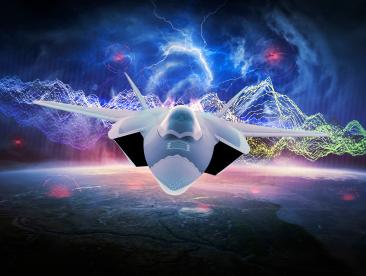
Image courtesy Leonardo
The companies: Mitsubishi Electric representing Japan, Leonardo UK representing the UK and both Leonardo and Elettronica representing Italy, have agreed to forge a closer business relationship and assess appropriate commercial and international operating models, readying the partners for the next stage of the GCAP programme. This will happen in parallel with ongoing research and development work by all partners.

As the defence electronics champions for each of the three GCAP nations, each partner brings a wealth of relevant expertise to the ISANKE & ICS domain. In Japan, Mitsubishi Electric has already been involved in development work for advanced electronics under the country’s next generation F-X programme. In Italy, Leonardo and Elettronica have been involved in maturing cutting-edge future combat multidomain technologies including sensors, communications and data/information fusion as part of the Italian Defence Technology Initiative. Leonardo UK is a founding member of the UK’s Tempest project, formed in 2018 to develop 6th generation combat air technologies.
Together, the three-nation team will collaborate to form the ISANKE & ICS domain, responsible for the advanced electronics on-board the GCAP platform. This will provide the aircrew with information advantage and advanced self-protection capabilities.
ISANKE will unlock the potential of sixth generation tactical sensing. It transitions from the traditional combat air model of individual airborne sensors to instead providing a fully integrated sensing, fusion and self-protection capability that draws on a spider’s web of sensing and effecting nodes across each platform. ICS will allow ISANKE to operate as a network across formations of crewed and uncrewed aircraft, as part of each nations’ wider, multi-domain system-of-systems. ISANKE & ICS will also ensure that the three GCAP nations can interoperate with allies in joint operations.
Integrated across the five domains: air, land, sea, space and cyber, the GCAP core platform will rapidly manage a large amount of data, providing aircrew with the information superiority they will need to succeed in complex and contested battlespaces, as well as contributing valuable intelligence to other operators. This makes the 6th generation ISANKE & ICS domain substantially more capable compared to previous generation operational capabilities.
To deliver this capability, the ISANKE & ICS domain partners recognise that legacy programme structures, infrastructure and performance metrics need to be reevaluated in order to set the pace required to meet the transformative programme’s 2035 target.
The new agreement includes joint recognition of fundamental principles of working which will unlock this pace, while meeting customer requirements for a spirit of equal partnership by the three nations and creating an approach that meets each nation’s ambitions in terms of integrated mission support, freedom of action and freedom of modification. As the parties work towards a permanent commercial construct to deliver the domain, national requirements for industrial capabilities and principles of shared intellectual property will be considered in the spirit of a fully integrated tri-national programme.
In this process, all of the companies involved are able to draw on experience and lessons learned from major international collaborations, in many cases having worked closely together previously. For example, Mitsubishi Electric has played a key role in Japan’s F-2 programme.
With Leonardo as a partner in the Eurofighter Typhoon programme, both UK and Italian teams at the company work on the E-scan radar for the aircraft as part of the EuroRADAR consortium, while Leonardo UK and Elettronica already collaborate to deliver the defensive aids sub system for the Typhoon as design authorities in the EuroDASS consortium.
These collaborations have developed critical capabilities for the Eurofighter Typhoon throughout the life of the programme and will continue to do so in the years to come. Leonardo UK and Mitsubishi Electric have also been working since 2018 on the UK-Japan JAGUAR radar technology programme and have developed a relationship that is highly workable, highly cooperative and which enjoys high levels of mutual trust.