Dstl and QinetiQ redefine wheeled armoured vehicle mobility
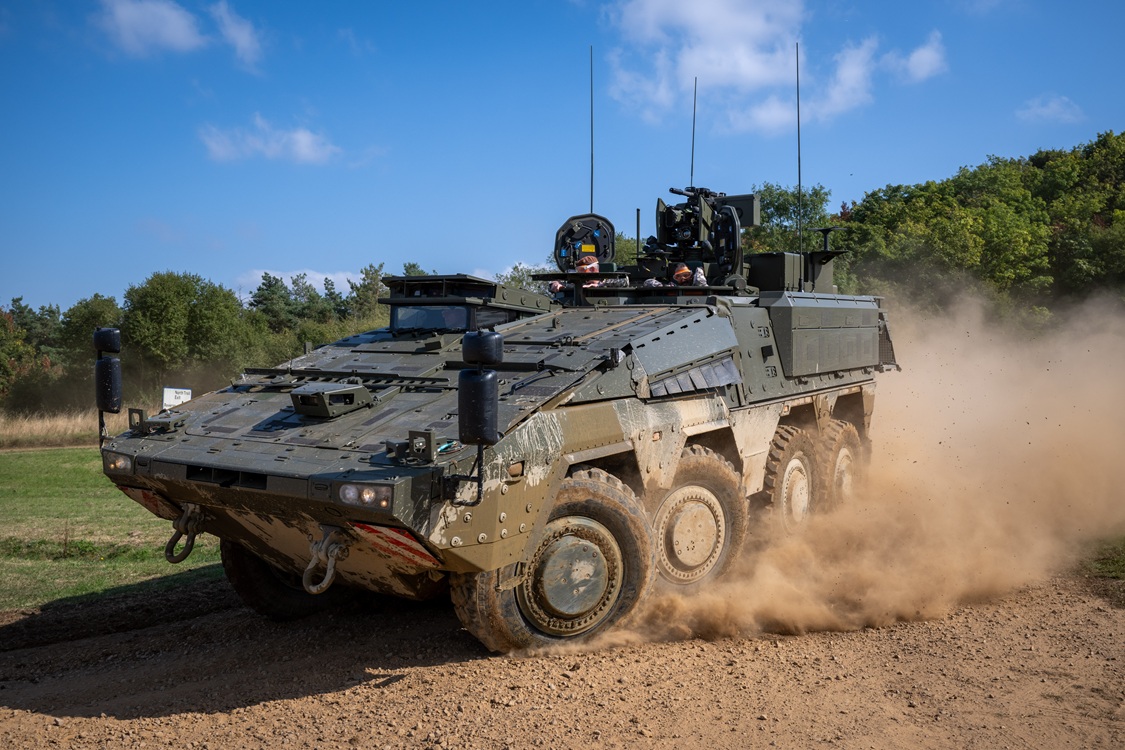
Imagine breaking away from the traditional picture of slow moving heavy tracked armoured vehicles to lighter, faster, more agile and highly fuel-efficient platforms; designed to operate at very high tempo, well within the enemy’s decision cycle and with increased survivability through agility, terrain access and tactical manoeuvrability.

This is the vision being realised as part of the Defence Science and Technology Laboratory (Dstl) and its Mounted Combat Systems research project. A key component of that research has been joint activity between Dstl and global integrated defence and security company, QinetiQ. Focused on research and risk reduction the programme aims to significantly enhance the mobility of wheeled military vehicles through introduction of a number of innovative technologies and design approaches.
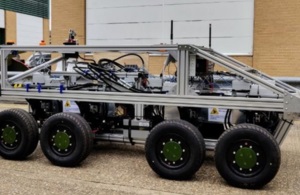
Image courtesy Dstl
Future armoured vehicles will need to operate at a much higher tempo if they are to be effective and survivable on the future battlefield, characterised by deep effects and short ‘sensor to shooter’ links. In this context the advantages of wheeled vehicles over tracks are well known; they provide improved ride, higher speeds, higher reliability and fuel efficiency; however traditionally they have lacked the terrain accessibility of tracked platforms which constrains freedom of movement.
One of the key technologies that enables this approach is electric drive. Dstl and QinetiQ are harnessing this capability, taking advantage of the flexibility it can provide to develop high performance active suspension solutions, which not only have long travel and variable ride height but a geometry that allows the wheel base and track to be altered. In addition the exploitation of individual wheel torque control; provided by QinetiQ’s hub drive technology and all wheel steering strategies further enhance stability and off road performance. The resulting technology solutions can provide vehicles with some enhanced and even unique capabilities, including:
- Provision of a compact configuration for transportation or operation in urban areas
- Good stability at high speeds or on side slopes
- Enhanced step climbing
- Enhanced gap crossing
- Improved soft soil mobility, especially when operating in convoys
- Stable and low vibration crew and weapon platform
- Ride height that can be optimised for low silhouette or mine stand-off
To demonstrate the potential functionality and capability of novel mobility solutions, Dstl and QinetiQ have built and are progressively upgrading a 1/3 scale 8x8 demonstrator platform – called the Mobility Test Rig (MTR). The aims of building the rig have been to address the key challenges of suspension and drive control software, sensor performance and maximising off road performance. It also provides a low risk route to demonstrating the military customer the capability benefits provided by the technologies.
The MTR in its current build standard was on display at QinetiQ’s stand at industry trade show, DSEI last week. It has fully articulating suspension, QinetiQ electric drive, advanced multi-wheel steer and wheel traction control. Following this showcase, the final stage of fitting sensors and implementing the full active suspension capability will take place.
The MTR has been presented to the British Army and the significant impact on the capability of future land platforms is recognised. Plans are being discussed to fully exploit the potential of the technology for near term platforms and in the longer for concepts that are starting to be explored as part of Project Mercury.
“We have been highlighting the importance of Mission-Led Innovation and this is a perfect example of that approach in practice,” explained Mike Sewart, CTO at QinetiQ. “Two years ago we announced this joint research programme. Through a highly focussed programme of innovation, implemented with a clear outcome in mind, in just 24 months we have, alongside a strong ecosystem of partners, designed this demonstrator to showcase how electric drive is a key enabler for future armoured wheeled vehicle success in land environments.”
William Suttie, the Dstl technical lead said: “This project is not just about improving the off road mobility of wheeled platforms but has the potential to transform how future armoured vehicles are designed and used. The ability to move quickly and safely across all types of terrain and provide a stable platform so the crew can operate effectively on the move will enhance tempo and operational freedoms and contribute significantly to survivability.”