Dstl establishes advanced materials centre of excellence
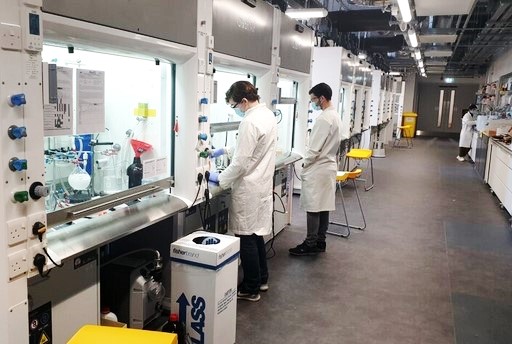
Above: Materials scientists at the Henry Royce Institute.
Courtesy Henry Royce Institute
The Defence Materials Centre of Excellence (DMEx) will bring together world-leading UK experts in a national effort to accelerate advances in defence material technology for extreme physical environments.
The DMEx will research, create and prototype new materials for the armed forces that can survive in the harshest conditions such as:

- temperatures of 1,000 °C
- polar to tropical operations
- high impact vibrations
- shock
- blasts
- extreme water depth
Advanced materials are vital to keeping the UK safe – ranging from body armour for our personnel, to the protection of sensitive electronics in satellites from radiation damage and corrosion-resistant submarine components.
The Henry Royce Institute for advanced materials, which operates its hub at the University of Manchester, will lead the centre of excellence with 23 other partners from academia, industry, and research organisations such as the Catapult Network.
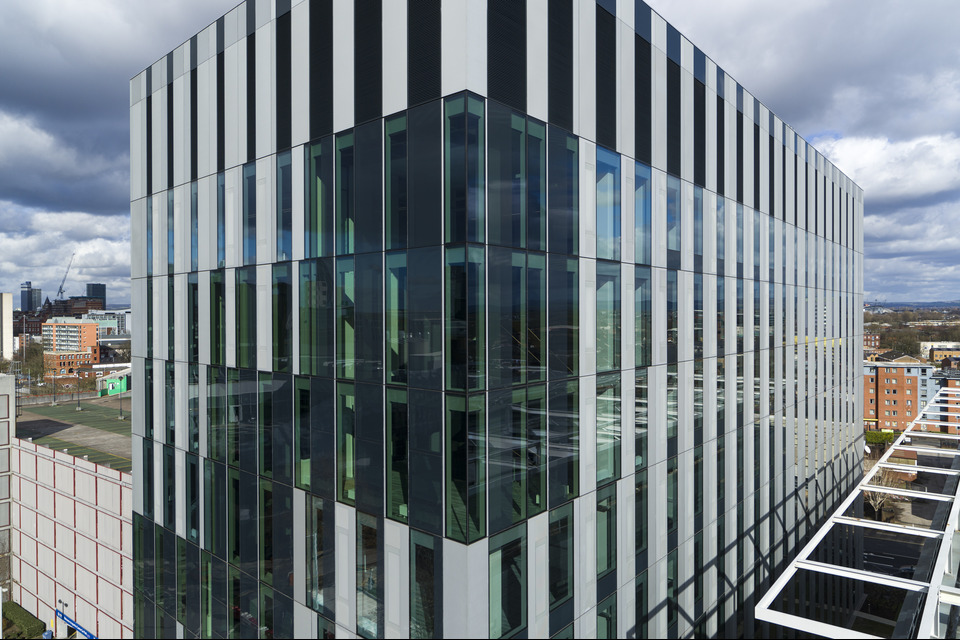
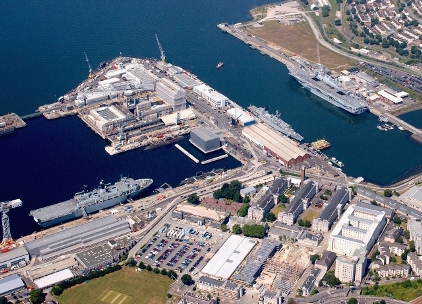
Above: The Henry Royce Institute in Manchester.
Courtesy Henry Royce Institute
Defence Minister James Cartlidge said: "These exciting new materials not only fortify the safety of our personnel and assets, but also symbolise our creativity and innovation in the face of defence challenges.
"The research and creation of these materials will secure highly skilled jobs and expertise across the country and cements the UK’s place as a global leader in advanced materials."
Dstl Chief Executive Dr Paul Hollinshead OBE MBA said: "Advanced materials are the building blocks of the future and an area of great international competition.
"Today we are putting the UK on path to maintain its strategic advantage by harnessing all the nation’s talents.
"This highly-collaborative partnership between Dstl, academia and industry will create operational advantage for our armed forces, while supporting UK growth and prosperity."
Defence research not only contributes directly to the prosperity of the UK but it also has a strong track record in developing innovations that have dual-use for the benefit of civilian applications. Funding in the Centre will also help the UK grow the vital skills needed in this important technology area.
A study commissioned by the UK Government showed advanced materials related activity contributes an estimated £14.4 billion in gross value added to the UK economy, equivalent to around £72,000 per employee.
The Centre is set to open later this year.
Centre Associate Director Laura Jones said: "This is a major milestone for Dstl and wider defence to explore and accelerate advanced materials innovation in the UK to help us stay ahead of future threats and challenges."
Dstl and Centre of Excellence Principal Scientist Matthew Lunt said: "Advanced materials are critical in so many areas and we are delighted to bring so much talent together to ensure we can create, sustain and develop these highly-specialised and skilled jobs for years to come."
Regius Professor Phil Withers FRENg FRS, Chief Scientist at the Henry Royce Institute and Regius Professor at the University of Manchester, said: "I am very excited about this opportunity for the Royce to team up with Catapults, industry, other universities and Dstl to bring many of the brightest minds and state of the art capabilities together to undertake materials research and development in support of the UK."
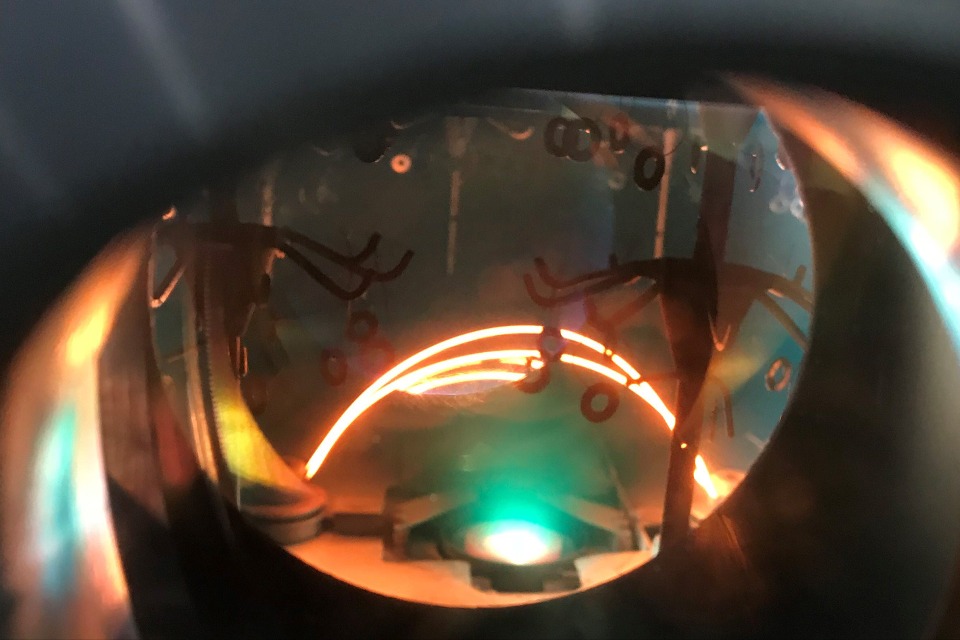
Above: A physical vapour deposited type coating being applied by an electron beam gun.
Courtesy Henry Royce Institute
Dstl has pioneered numerous advances in materials working with industry and academic partners. A recent example being revolutionising the production of titanium by reducing the 40 stage process down to just two stages with a resulting halving in costs.
Titanium alloys offer the potential for transforming defence equipment as they have a similar strength to steel but with approximately half the weight. However, the current cost of titanium is prohibitively expensive for non-aerospace defence uses.
This emerging technological breakthrough is driving the possibility of affordable lightweight, robust, corrosion-resistant components for defence.
Dstl is now working with Rheinmetall BAE Systems Land, the University of Sheffield, BAE Systems, MBDA, Transition International and the Advanced Forming Research Centre on creating more affordable titanium for defence with 30 to 40% weight reduction while maintaining survivability.
Find out more about Dstl’s Advanced Materials Programme here