Advancing UK Aerospace, Defence, Security & Space Solutions Worldwide
  • Home
  • /
  • Defence
  • /
  • Dstl research reveals how crowds react in an emergency or terrorist attack

Defence Security

Dstl research reveals how crowds react in an emergency or terrorist attack
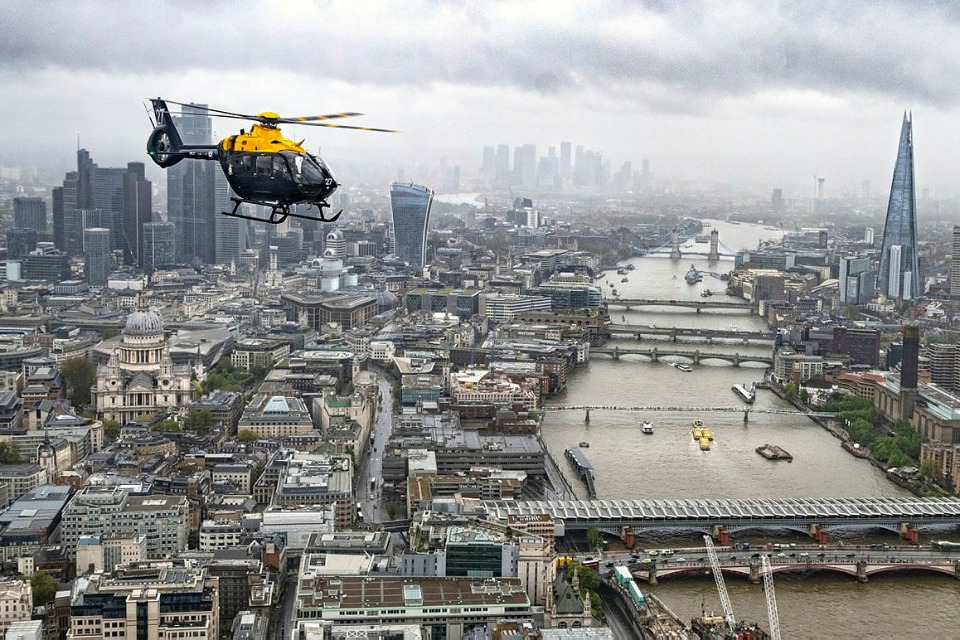
Research by the Defence Science and Technology Laboratory (Dstl) has shown that, contrary to popular belief, crowds actually behave in a cooperative and orderly manner during an emergency, such as a terror attack.

Image courtesy Dstl

The six year study found evidence that people are more likely to help each other rather than panic or act in an ‘every person for themselves’ manner.

Dstl behavioural scientists:

  • analysed CCTV footage, data from trials and simulations of emergency scenarios
  • conducted systematic literature reviews and table-top exercises

As part of this research, Dstl has developed the first-of-its-kind behavioural matrix to represent and categorise behaviours in terms of their likelihood of being displayed during an emergency.

Advertisement
ODU RT

Saving lives by informing the development of models and response plans
This work has generated a great deal of interest across government, industry and academia, with the research being used to inform the development of computational models that represent emergency scenarios.

The use of this research helps to ensure these models represent valid human behaviours and are informed by sound scientific evidence.

Advertisement
Leonardo animated rectangle

The evidence base generated by Dstl has proven pivotal in the development of operational plans which aim to optimise responses and minimise causalities during emergency incidents.

Dstl’s research is being used to inform government planning to help maximise public safety and security during such events. The late Dr Sarah Knight was made Order of the British Empire (OBE) by His Majesty the King in recognition of her leadership of this work at Dstl.


Advertisement
General Atomics LB
Autonomous submarine Excalibur delivered to Royal Navy

Defence

Autonomous submarine Excalibur delivered to Royal Navy

12 December 2025

Excalibur, a 12-metre experimental uncrewed underwater vessel, has now been officially handed over to the Royal Navy.

UK launches new Military Intelligence Services

Defence

UK launches new Military Intelligence Services

12 December 2025

Today, the Ministry of Defence (MoD) launched the new Military Intelligence Services (MIS), designed to ensure UK military intelligence is more efficient and better able to anticipate future threats.

BAE Systems awarded US Navy contract for APKWS laser-guidance kits

Defence

BAE Systems awarded US Navy contract for APKWS laser-guidance kits

11 December 2025

The US Navy has awarded BAE Systems a new five-year, indefinite delivery, indefinite quantity contract for APKWS laser-guidance kits to equip US armed forces with tens of thousands of additional low-cost precision munitions.

JFD Global to enhance Polish Navy

Defence Security

JFD Global to enhance Polish Navy's submarine rescue capability

11 December 2025

James Fisher (JFD Global) has secured a contract with PGZ Stocznia Wojenna, which will see JFD Global integrate a combined, hyperbaric and saturation diving system into the Polish Navy’s new salvage and rescue vessel, Ratownik.

Advertisement
ODU RT
Avon Protection receives European order for FM50 respirators

Defence Security

Avon Protection receives European order for FM50 respirators

11 December 2025

Avon Protection has received a new European order for FM50 respirators and FM61EU filters via the NATO Support and Procurement Agency (NSPA) contract vehicle.

BAE Systems to modernise USS Forrest Sherman

Defence

BAE Systems to modernise USS Forrest Sherman

10 December 2025

BAE Systems has received a $123 million contract from the US Navy to modernise the Arleigh Burke-class guided-missile destroyer USS Forrest Sherman (DDG 98).

Advertisement
Leonardo animated rectangle