

Dstl trials future of invisible war


Courtesy Dstl
Supremacy in the EM environment is as crucial to warfighting as any of the traditional domains. Overwhelming the adversary through degrading and defeating their command and control systems provides commanders with significant strategic advantage.

Dstl’s ‘Spectral Prophet’ trial was an ambitious demonstration of prototype EM activities that combined previously separate disciplines. It also demonstrated other emerging EM technology that could be integrated in future work, including deception and countermeasures, in both offensive and defensive capacities.
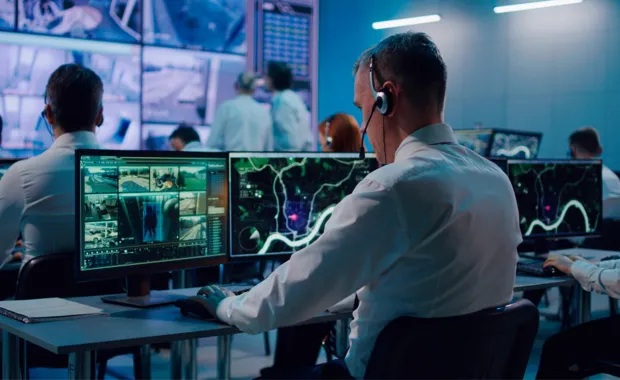
By sharing data, status and tasking across a distributed command and control (C2) infrastructure, existing and new radio frequency (RF) transceivers can be employed to better effect and allow new ways of working that are currently not possible.

Combining the data from multiple sensors and effectors provide a more automated process to give commanders greater strategic awareness and operational advantage.
Dstl technology lead, Chris, said: “We are building the technology that allows information to get to where it needs to in near real time whilst filtering out information that isn’t needed.”
Dstl Spectral Prophet technical lead, Jon, said: “The trial and supporting programme draws on years of Ministry of Defence Chief Scientific Adviser funded research. We have funded a lot of work, for example, our university-based EM Hub. We’re building UK skills which supports the government’s growth agenda.”
Spectral Prophet was supported by a range of suppliers from prime contractors, small and medium sized enterprises and academia. Defence funding in EM research helps develop and maintain highly skilled jobs across the UK.
The results of the trial will help inform decisions around the Strategic Defence and Security Review and demonstrate how new capability can be integrated more rapidly and better value for money achieved. Conceptual architectures and specific technologies have been developed to experiment with and de-risk this integration, as well as to identify lessons and requirements for subsequent procurements.
Sign up for our newsletter and get our latest content in your inbox.
Similar Reads



Sign up for our newsletter. Select all sectors relevant to you.
Related