EasyJet launches competition for kids to design zero-emission passenger plane
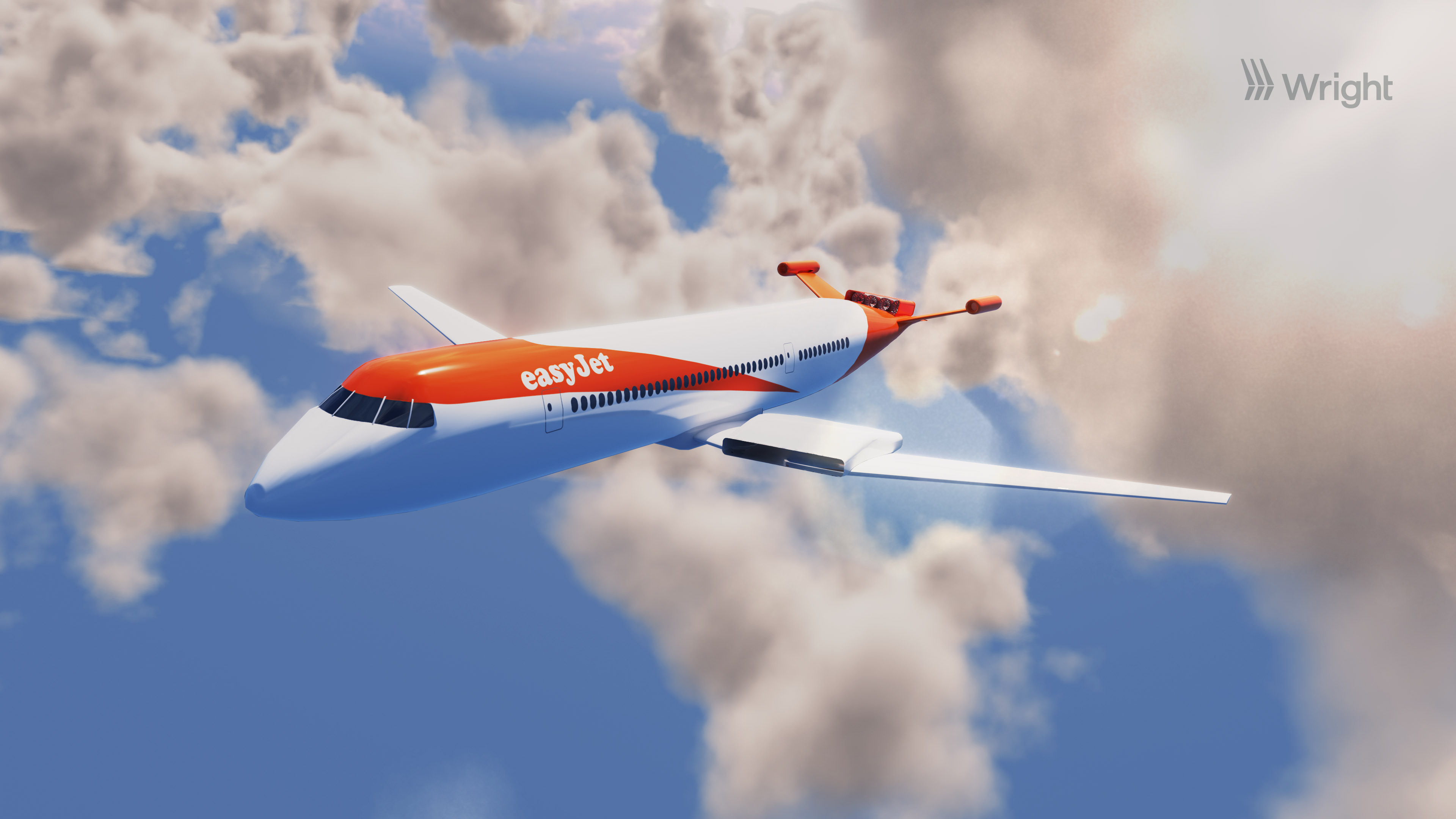
Image courtesy easyJet / Wright
The competition is calling on school children up and down the UK, aged from 7 – 16 to design a passenger plane for travelling across Europe, powered by a sustainable energy source.
The airline, which is helping to pave the way towards operating zero-emission flights, has launched the competition to engage younger generations and inspire them to become part of the revolution of future air travel as aircraft designers and engineers.

The competition has launched just in time for UK half-term. Families flying with easyJet over the holidays are encouraged to pack their pencil cases, for kids to take inspiration from their flight for their design and help parents keep them occupied on board.
All designs will be judged by an esteemed panel representing world class experts in flying, sustainability, design and zero-emission technology.
EasyJet’s First Officer Debbie Thomas, who is also an engineer and zero-emission aircraft modeller will be joined on the panel by easyJet’s Director of Sustainability Jane Ashton; Glenn Llewellyn from aircraft manufacturer Airbus who is currently leading their zero-emission aircraft programme; Jeff Engler, CEO of Wright Electric which is developing a zero-emission short-haul plane; and world-famous automotive transportation designer Frank Stephenson, best known for his iconic car designs for MINI and Fiat 500, as well as recent innovative work designing electric flying vehicles.
HOW TO ENTER
The competition is open from Monday 18th October 2021 until 23.59hrs on Friday 31st October 2021. Children aged 7 – 16 in the UK will be able to enter the competition by drawing their zero-emission aircraft design on paper or tablet, complete with notes and descriptions highlighting how their aircraft works and why they have chosen the elements of their design. Entries can be submitted via mediacentre.easyjet.com/competition
Entries will be judged and shortlisted in two age categories – age 7 – 11 years and age 12 - 16 years, where a winner and runner-up will be awarded in each category.
The winning entry will receive a money-can’t-buy prize in the form of a trip to the easyJet Training Centre in London Gatwick and an experience in a full-flight simulator, plus return easyJet flights to anywhere on the airline’s network for the winner’s immediate family, as well as a 3-D model and rendering of their design, produced and signed by Frank Stephenson.
In addition, the winner of the 12-16 year age category will also win a trip to Airbus and a chance to feature on Frank Stephenson’s YouTube podcast channel to discuss their design. Runners up will also be in with a chance to receive a signed rendering of their design.
ENTRY REQUIREMENTS
Successful designs must consider both technical and creative elements of aircraft and the reasons for including them, such as the materials used, patterns, shapes and colours of the plane, how it will take off and land and most importantly, what sustainable source will power it.
JUDGING CRITERIA
Entries will be judged on the quality of the design, interpretation of the theme, creativity, innovation, practicality and most of all, how the design has considered sustainability and the environment.
The judging panel will make a final decision on the winners and runners-up jointly.
EasyJet First Officer, Debbie Thomas, said: “At easyJet we are very clear about the imperative to reduce CO2 and to stimulate radical technologies, and zero-emissions flying is our ultimate destination. We know the environment is important to all of our customers, including our younger passengers, so we are really excited to launch our Aircraft of the Future competition to engage younger generations in the exciting possibilities of new zero-emission technology for air travel and inspire them to become designers and engineers of the future, who will play a vital role in the industry’s future.”
Frank Stephenson, world-renowned designer, said: “Design has the power to improve the world and it is important to allow the future custodians of the planet to have their say. It is an honour to be involved with easyJet’s aircraft design competition as we look to inspire the designers of the future to get involved with the development of zero-emission planes. I can’t wait to see what incredible designs they come up with.”
Championing the development of a zero-emission aircraft to de-carbonise aviation has long been a focus for easyJet. In 2016 the airline first unveiled plans for a revolutionary zero-emissions hydrogen fuel system for its aircraft as part of a competition with Cranfield University to develop ideas for the future of sustainable air travel, followed by partnerships with Wright Electric in 2017 and with Airbus in 2019, who are developing zero-emission technologies for passenger planes, powered by hydrogen-combustion and hydrogen-electric propulsion.
In 2019 easyJet became the world’s first major airline to offset 100% of the carbon emissions from the fuel used for all of their flights, supporting projects for renewable energy and protection against deforestation across the globe – and they remain the only major airline in Europe to do so. Carbon offsetting is an interim measure on easyJet’s journey to net-zero while new aviation technologies are developed, so the airline continues to support industry-leading technology partners, including Airbus and Wright Electric, on the advancement of new zero-emission technologies like hydrogen-powered engines to help try to make flying zero-emission aircraft possible from the mid-2030s.
As part of easyJet’s wider commitment to reduce their impact on the environment they are also committed to reducing waste on board, focusing on changes to inflight food and drink service by reducing plastics, moving to non-plastic alternatives and more sustainable materials. This year the airline introduced new uniforms for their pilots and crew made from recycled plastic bottles.