

Austrian ENPULSION moves to acquire UK space propulsion specialist Lift Me Off

Austrian space propulsion company ENPULSION has agreed to acquire 100% of UK-based Lift Me Off (LMO), adding British chemical propulsion and propellant tank technology to its growing spacecraft mobility business.
Financial terms have not been disclosed and the acquisition remains subject to UK Government approval under the National Security and Investment Act 2021, which allows the Government to scrutinise transactions involving strategically sensitive UK companies and technologies.
The deal would give ENPULSION a considerably broader propulsion portfolio. The Austrian company specialises in electric propulsion for satellites, while LMO develops chemical and cold-gas propulsion systems, propellant tanks and pointing mechanisms.
Bringing the two together would allow ENPULSION to offer hybrid propulsion systems capable of using different technologies during different phases of a spacecraft mission.
Lift Me Off brings UK and ESA propulsion expertise
Founded in the UK, LMO has developed propulsion technology with support from the UK Space Agency and European Space Agency and has worked from the UK’s Harwell space ecosystem.
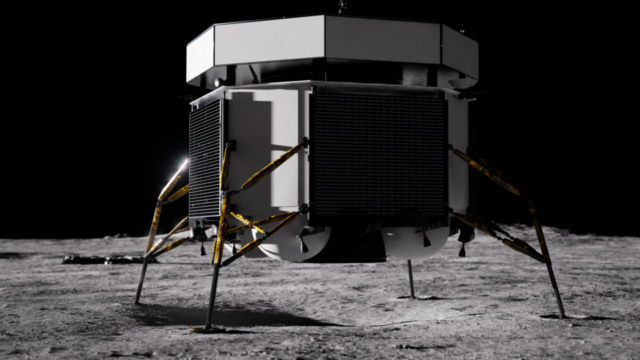
Its current programmes include the European Space Agency’s Lunar Meteoroid Impacts Observer (LUMIO) mission, a 12U CubeSat designed to travel to an Earth-Moon L2 halo orbit and observe meteoroid impacts on the far side of the Moon.
LMO is responsible for the mission’s miniaturised chemical propulsion and reaction control system, with the spacecraft currently progressing through Phase C development.
UK Government analysis published last year said LMO had received €1.07 million through ESA’s General Support Technology Programme, helping it develop a green chemical propulsion subsystem for the LUMIO mission. The same analysis credited that support with creating jobs and helping generate £1.5 million in revenue.
ENPULSION CEO Dr Alexander Reissner said the acquisition would help the company build what it describes as a complete “spacecraft mobility backbone”.
“LMO brings institutional design credentials, a talented team, and a complementary technology base in chemical propulsion and tank systems,” he said.
Combining those capabilities, he added, could deliver “highly efficient and agile in-space manoeuvring” while reducing the complexity of integrating propulsion into spacecraft.
ENPULSION expands beyond electric satellite propulsion
The acquisition comes five months after ENPULSION raised €22.5 million in growth funding, led by German investor Nordwind Growth, to expand its integrated space mobility business and increase its presence in the US market.
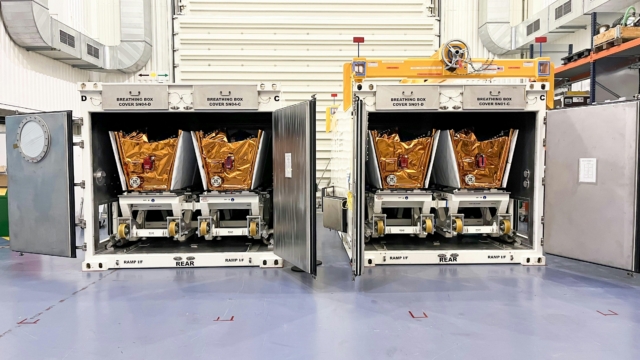
ENPULSION’s existing systems use Field Emission Electric Propulsion technology, which accelerates ionised indium to provide highly precise thrust. Its newest Nexus system is designed for spacecraft weighing up to 500kg.
Electric propulsion is highly efficient but produces relatively low thrust, making it well suited to activities such as station keeping and gradual orbit changes. Chemical propulsion can provide much greater thrust over shorter periods.
Putting both within the same product architecture would allow ENPULSION to target missions needing a mixture of efficiency and rapid manoeuvring rather than forcing spacecraft designers to choose one propulsion approach.
LMO also gives the Austrian company an established foothold in the UK space sector and relationships with UK and European institutional programmes.
The transaction will now have to clear the UK’s investment screening regime before it can complete. Space is one of the sectors covered by mandatory notification requirements under the National Security and Investment Act, including businesses involved in manufacturing spacecraft and their component parts.
For ENPULSION, the acquisition is a route into chemical propulsion without having to build the capability from scratch. For the UK, it puts another home-grown space technology business into foreign ownership, albeit one whose new parent intends to use its British expertise as part of a larger European propulsion offering.
Sign up for our newsletter and get our latest content in your inbox.
Similar Reads



Sign up for our newsletter. Select all sectors relevant to you.
Related