Flare Bright wins two UKRI Future Flight Phase 3 Projects
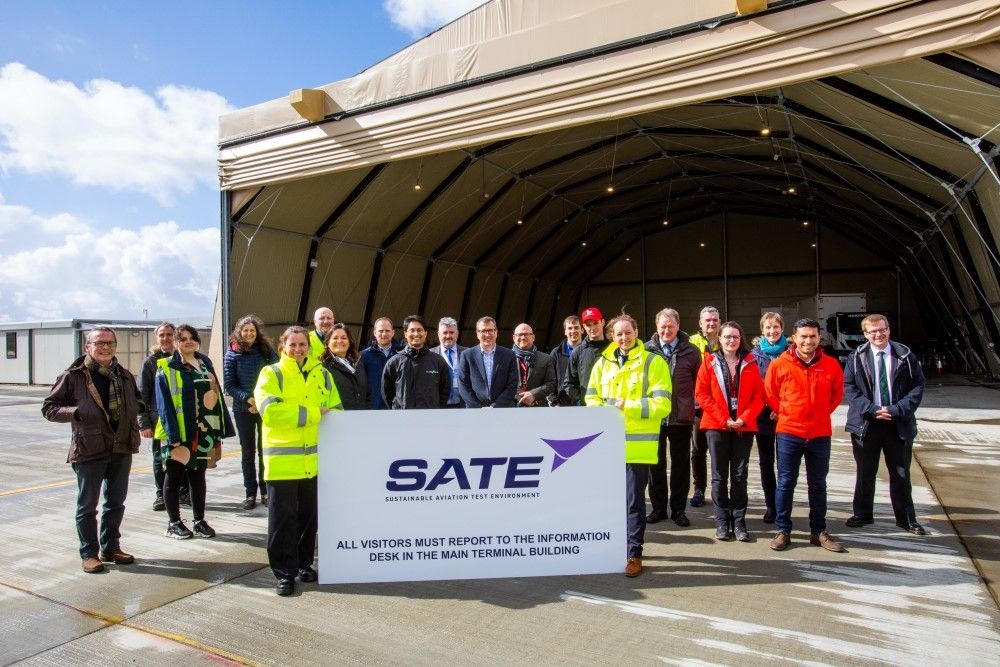
Image courtesy Flare Bright
The Phase 3 projects from the Future Flight Challenge share £73 million in funding to develop and demonstrate integrated aviation systems and new vehicle technologies.
Taking place in locations across the UK, including the Highlands and Islands of Scotland, the projects highlight the strength of UK aviation innovation.

Chris Daniels, Chief Commercial Officer of Flare Bright said: “The UKRI Future Flight group of organisations is a who’s who of the UK’s innovative aviation industry. Flare Bright is delighted to be part of this group and is punching above its weight with gaining these two awards.”
Gary Cutts, Future Flight Challenge Director said: “Phase 3 of the Future Flight challenge is all about moving innovative technologies forwards, making them ready for real world use cases in 2024. The UK has an excellent safety record when it comes to aviation and we’re determined to make sure these new autonomous technologies work as safely as possible. What Flare Bright is doing in project SATE and project SafeZone will help ensure we can bring these new technologies into service in the safest possible way.”
Sustainable Aviation Test Environment (SATE)
Phase 3 of SATE will enable the demonstration of novel aviation technologies with proven use cases to commercialise clean innovation in a real world environment. This test environment will accelerate technology developers’ ability to get to market and aid the progress of both the UK and Scottish government’s aviation aspirations.
In Phase 2 Flare Bright demonstrated precision flights of a parcel-sized gliding drone system as part of a novel remote delivery concept. In this next phase, Flare Bright will use their Machine Learning Digital Twin ecosystem to develop a dedicated test environment airspace to assure a safety case and the regulatory approvals required for any drone flight going forward.
The funding will allow for the SATE project, based at Kirkwall Airport in the Orkney Islands, to build on the success of Phase 2, which created the UK’s first low-carbon aviation test centre embedded at a commercial airport.
SafeZone
SafeZone is making drone flights safer by creating a data service that provides real-time information about aerodynamic hazards in urban environments.
The SafeZone team will generate and use localised aerodynamic meteorological data to allow unmanned aerial vehicles (UAVs) to adapt their route as they fly through wind changes and close to buildings for inspection purposes within an airport environment. The partnership plans to use these results to enable the delivery of a new live data service to provide real-time information about aerodynamic hazards in urbanised environments.
SafeZone draws on Flare Bright’s expertise in Machine Learning Digital Twins for drones, which has aided the design, build and flying of UAVs and the ground-breaking capabilities of their wind-measuring nano-drone. This tech is combined with Zenotech’s cutting-edge high-performance computing and flow simulation tools, capabilities and in-house expertise.
In Phase 3 Cardiff International Airport joins as a project partner and will host the flight testing. Cranfield University is also a partner on the project.