How Marshall kept the Dakotas flying above Normandy
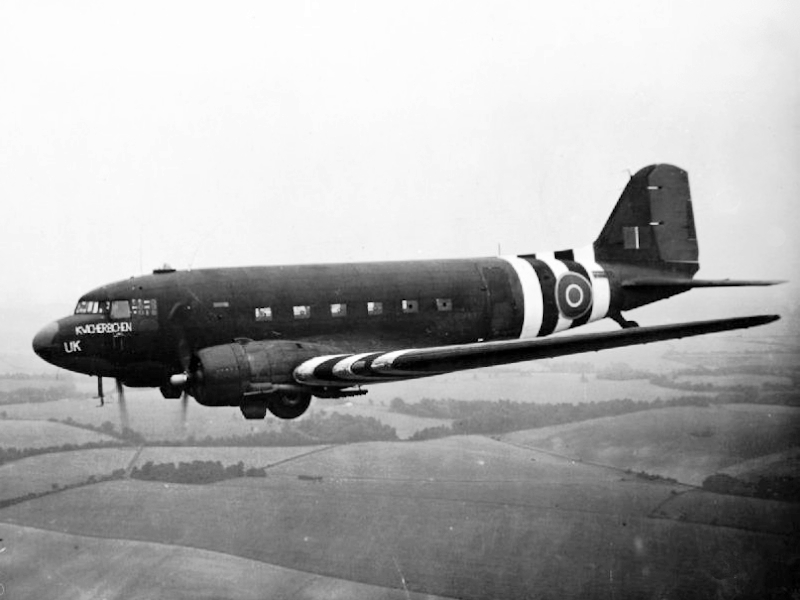
Above: A Douglas C-47 of RAF 233 Squadron based at Blakehill Farm returning from the Normandy battlefront.
Courtesy Australian Armed Forces
The damaged aircraft were Douglas C-47 'Dakota' transports, fresh from supporting the Allied invasion of Normandy which had begun two days prior on D-Day. With every passing hour, hundreds more lives were being lost on the ground and in the air.
Instantly grasping the urgency of the situation, Sir Arthur Marshall and his team sprang into action and achieved an almost unthinkable turn-around time.
Supporting D-Day from the sky
Produced by Douglas under the name 'Skytrain' (with 'Dakota' being the designation applied to RAF aircraft), the C-47 earned legendary status during World War II as a glider tug and troop transport.

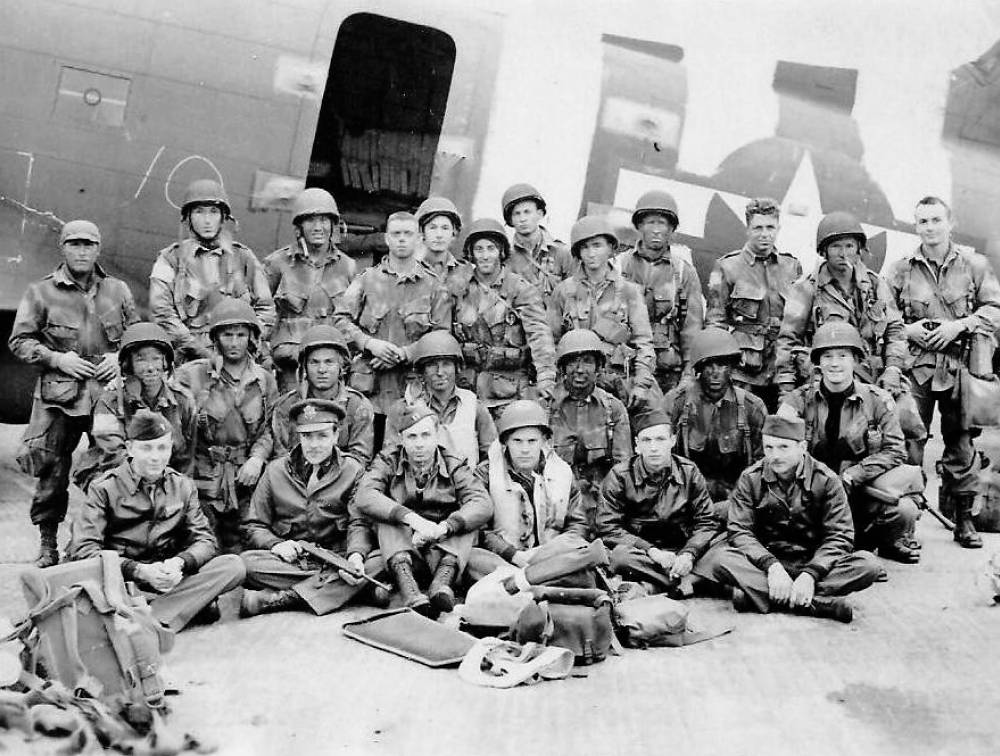
Above: US Army Pathfinders and USAAF flight crew prior to D-Day in front of a C-47 at RAF North Witham.
Courtesy United States Department of the Army
This role took on a new meaning and scale in the early hours of D-Day, which saw roughly 1,000 US and UK C-47 aircraft dropping airborne forces behind the Normandy beachhead, followed by extensive resupply runs as the Allies fought to liberate France and pressed on into Europe.

Above: Interior view of a C-47.
Courtesy Air Force Historical Research Agency
Marshall had been appointed in May 1944 to conduct fly-in repair and rapid turn-around of the RAF’s C-47 fleet, in anticipation of significant damage from ground fire once the Normandy campaign began. Sir Arthur Marshall and his team were keenly aware that having these aircraft out of service would deprive Allied troops of vital support at the most critical time possible.
This was not a straightforward assignment, however: Sir Arthur recalls that the UK’s relative lack of familiarity with the C-47 platform meant that the Marshall team had “no experience of Dakota aircraft... no special-to-type ground equipment... and only a few publications.” Acting on their own initiative, his team had started informally collecting information and gathering equipment from United States Air Force stations.
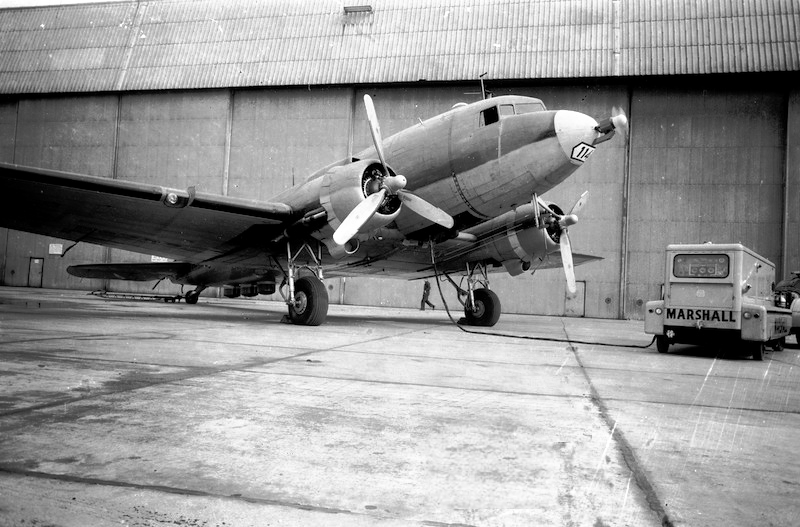
Above: C-47 testing at Marshall.
Courtesy Marshall
At 10pm, a few hours after the arrival of the damaged C-47 aircraft, Lofty Bayley, Marshall’s Chief Inspector, was leaving the cinema when he was met by Sir Arthur Marshall. Bayley explained that he had watched a report on the Normandy landings - to which Sir Arthur replied, “Now you had better come and see the Normandy shot-up Dakotas.”
Chauffeured by his boss, Bayley returned to the airport to survey the aircraft.
Sir Arthur had also instructed Fred Hornsby, Marshall’s Works Manager, that work on the C-47s could not wait until the following morning, telling him: “We must get these in work tonight. You move aircraft as necessary and get these Dakotas into the hangar.”
What followed was a classic example of Marshall problem-solving: fix what can be fixed straight away, while tackling the more complex problems in the background.
On one aircraft, the damage was limited to a badly shot-up port mainplane, which would require extensive repairs and manufacture of new parts. Instead, the team cannibalised the undamaged port mainplane from one of the other aircraft, ensuring that at least one C-47 could be returned to service immediately.
Repairs to the other two aircraft were more time-intensive, with gunfire having damaged various parts of their fuselages, tank bays, tug release cables and mainplanes - but even these had been largely tackled by the end of the weekend.
Special delivery
With repair of the first aircraft complete and work on the others well underway, Marshall faced a new set of hurdles: Sir Arthur and test pilot Leslie Scatchard could not conduct test flights as the UK lacked a certifying centre for the C-47 and the RAF’s shortage of pilots meant that no-one could pick up the aircraft, despite the urgency.
In a no-nonsense approach characteristic of wartime Marshall, Sir Arthur picked up the phone to the RAF, explained the problem and was told: “You and Scatchard are now approved Dakota test pilots.”
Sir Arthur resolved the second problem by personally flying the first C-47 to RAF Blakehill Farm near Swindon on 10th June. He arrived early in the afternoon - meaning the aircraft was ready for service well under 48 hours after first arriving in Cambridge.
The second and third aircraft were delivered on 12th and 13th June, respectively, achieving a remarkable turn-around time of under five days.
The aftermath of D-Day
The three C-47 Dakotas that arrived on 8th June were far from Marshall’s last repair jobs of World War II, in fact, they were the start of a stream of damaged aircraft to arrive during and after Operation Overlord, as the Second Front spread across northwest Europe.
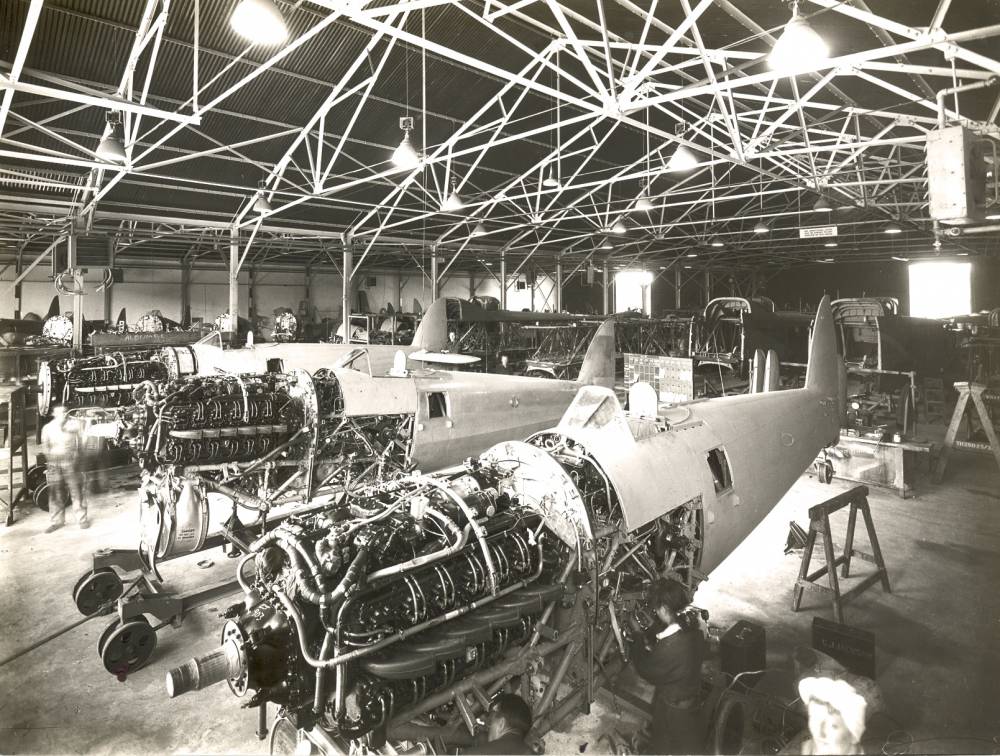
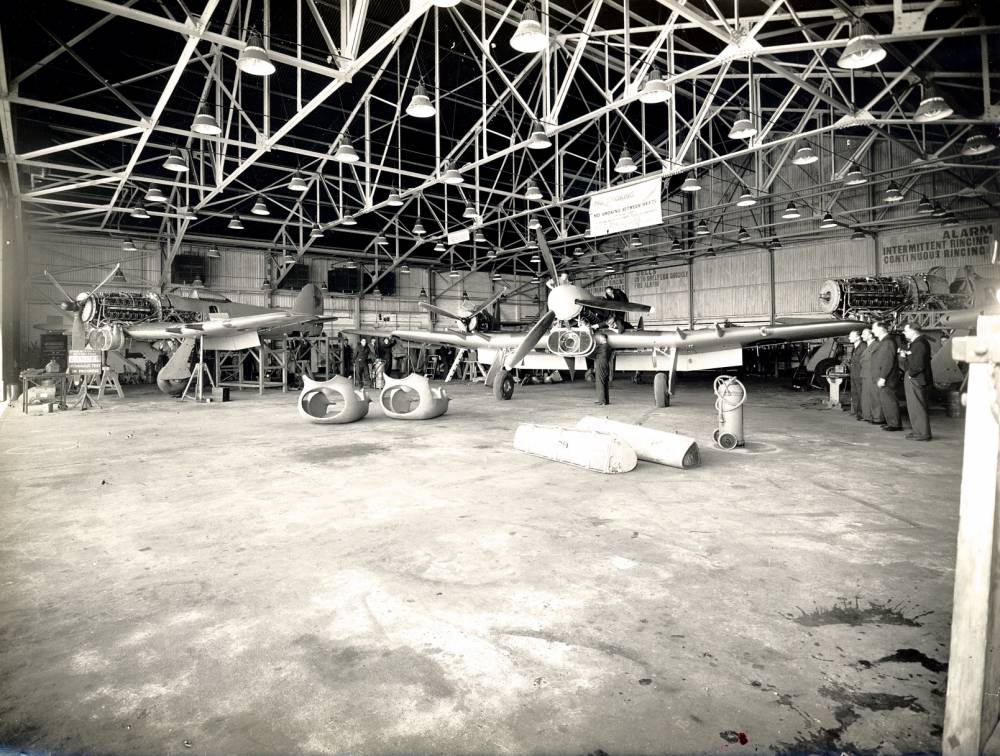
Above: Hawker Typhoons from the second front undergoing damage repair at Marshall.
Courtesy Marshall
Remembering the period immediately following D-Day, Sir Arthur recalls how “shot-up [Hawker] Typhoons were flying in for quick turn-around repairs and... Queen Mary low-loaders started to arrive with badly damaged aircraft.” In some cases, aircraft were transported to Cambridge on RAF tenders they had been loaded onto in Normandy.
Marshall also repaired a significant number of Armstrong Whitworth Albemarle transports, which started “coming in thick and fast” after D-Day. Teams worked around the clock to manufacture parts and perform repairs at the required volumes, with many individuals committing to working 80 to 90 hours a week - an undertaking described by Sir Arthur as “the most concentrated and best effort the company had made to date and... fully justified by the results achieved.”
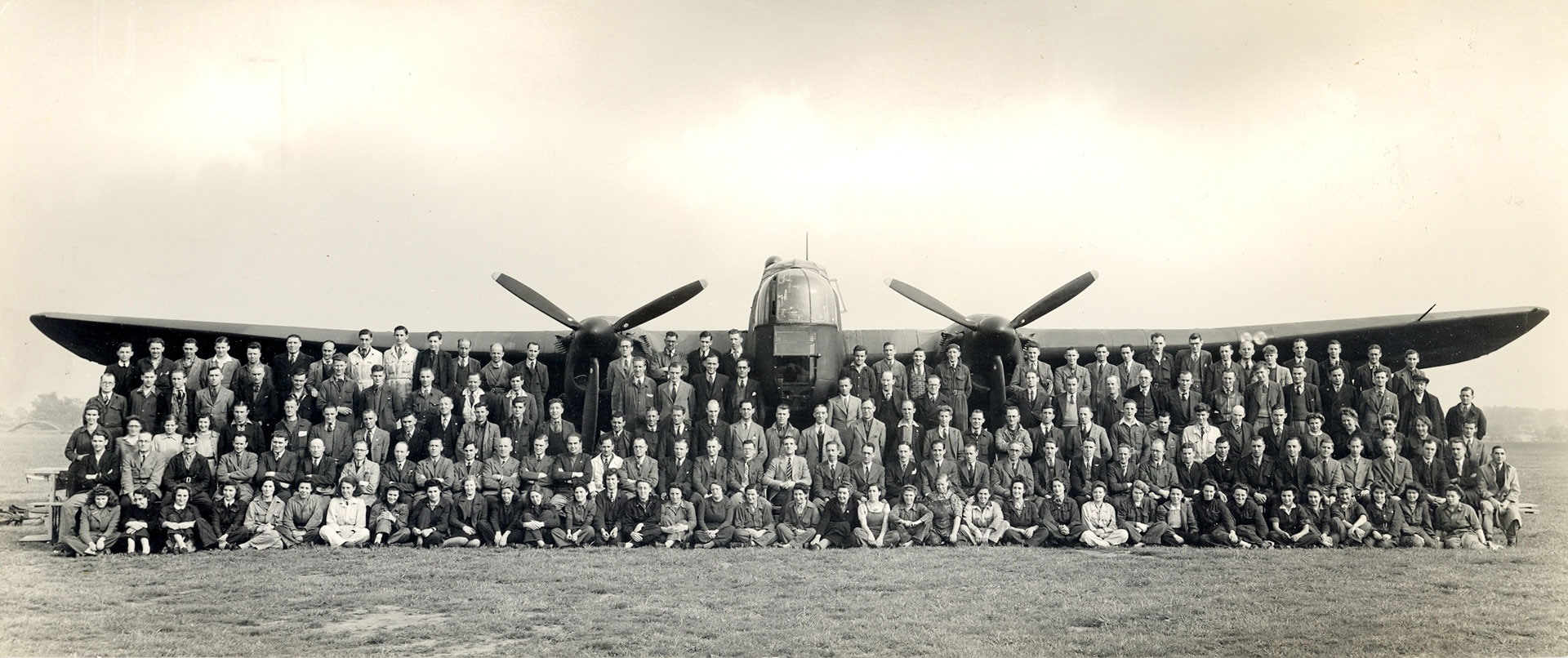
Above: Marshall’s Armstrong Whitworth Whitley bomber maintenance crew, 1944.
Courtesy Marshall
Even before the first C-47 arrived in Cambridge after D-Day, Marshall had been operating on a war footing for years, repairing and modifying numerous aircraft types while training thousands of pilots and air crew under a pioneering programme later adopted by the RAF.
Recalling Marshall’s wartime spirit, Sir Arthur explained: “Everybody, with few exceptions, was more responsive and self-energising than ever previously experienced. People acted on their own initiative and got on with the job.”
No-one exemplified this spirit more than Sir Arthur himself: an employee recalls in their account of Marshall’s wartime activities that “Mr Marshall was there night and day – he practically never went home to sleep – always full of energy and expected a lot from his employees and gave a lot himself.”
These and other stories from Marshall during World War II highlight the vital role of repair, maintenance and training organisations in supporting the frontline war effort - as well as underscoring the importance of acting quickly and taking initiative to protect those in critical situations.
All quotes attributed to Sir Arthur Marshall in this article have been taken from The Marshall Story: A Century of Wings and Wheels.