Advancing UK Aerospace, Defence, Security & Space Solutions Worldwide
  • Home
  • /
  • Space
  • /
  • ISS connected via SpaceDataHighway

Space

ISS connected via SpaceDataHighway
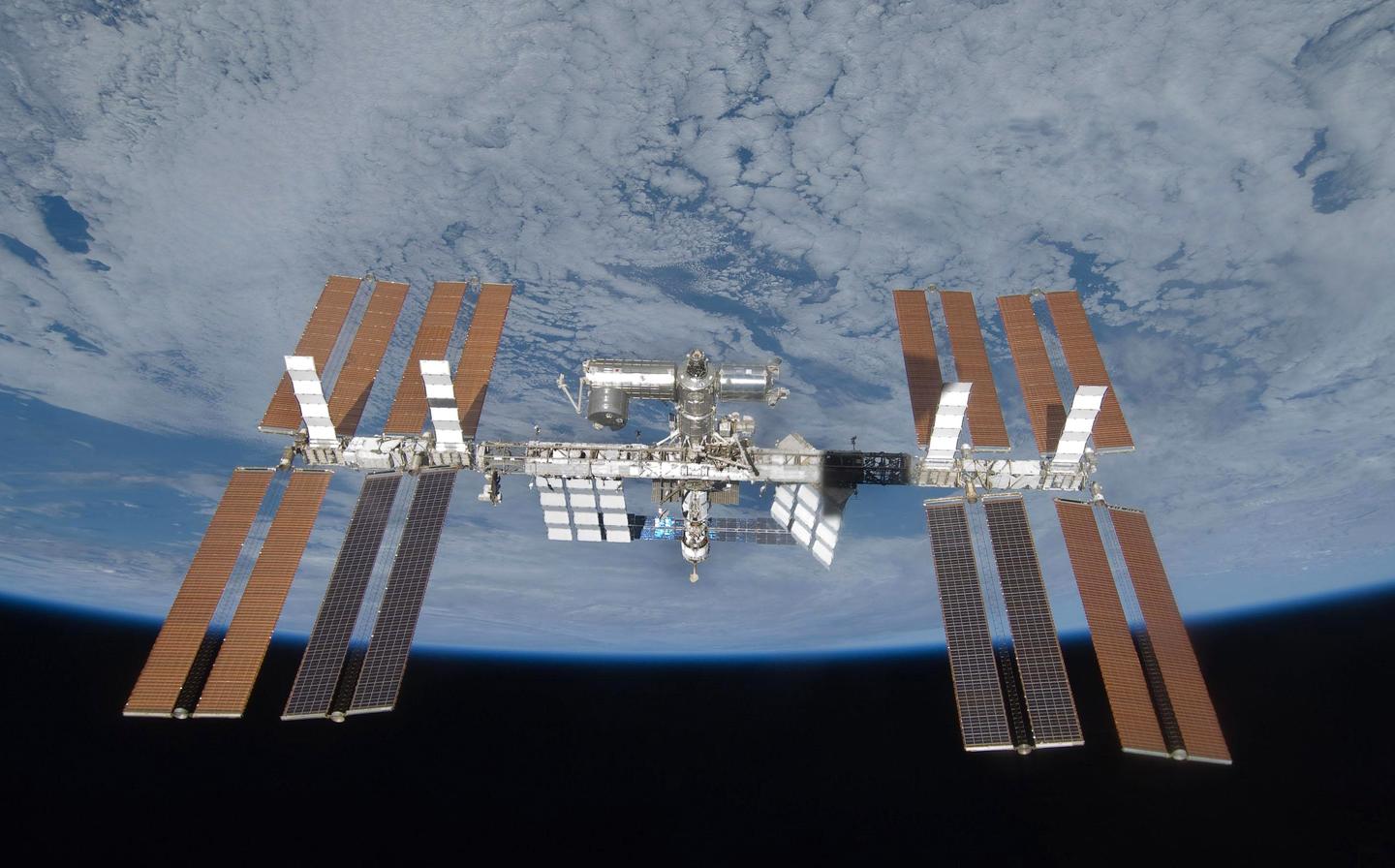
The Airbus’ SpaceDataHighway – developed with the support of ESA – is now ready to begin providing broadband connectivity services between the International Space Station and the Earth.

Above: The International Space Station (ISS).
Copyright NASA

With the Columbus Ka-band (ColKa) terminal now installed and fully tested on-board the ISS, a SpaceDataHighway satellite will start to relay data via a bi-directional link in real time between the ISS Columbus Laboratory and the Columbus Control Centre located at the German Aerospace Center DLR near Munich as well as research centres across Europe.

Advertisement
ODU RT

Thanks to the SpaceDataHighway and the ColKa terminal, ESA will benefit from a direct and sovereign access to the ISS, thus increasing the operational flexibility allowing more astronauts, scientists and researchers to benefit from a direct link with Europe. This will also enable ESA to create slots for ad-hoc experiment access and interaction with European astronauts.

The ColKa data service provision has been contracted between ESA and Airbus. As part of this new SpaceDataHighway service, Airbus has adapted its Ka-band inter-satellite link to ensure data will be channelled via the ground station at Harwell Campus, UK.

Besides this Ka-band service, the SpaceDataHighway is the world’s first laser communication geostationary constellation. It represents a game changer in the speed of space communications, using cutting-edge laser technology to deliver secure data transfer services in near-real time. The system has achieved more than 50,000 successful laser connections within the first five years of routine operations.

Advertisement
ODU RT

Its satellites can connect to ISS as well as low-orbiting observation satellites at a distance of up to 45,000 km. From its position in geostationary orbit, the SpaceDataHighway system relays in near real-time to Earth the collected data, a process that would normally take several hours. It therefore enables the quantity of image and video data transmitted by observation satellites to be greatly increased and their mission plan can be re-programmed at any time and in just a few minutes.

With its SpaceDataHighway, Airbus is already serving four Copernicus Sentinel satellites on a daily basis and continues to expand its services to more customers. Pleiades Neo, Airbus’s most advanced optical Earth Observation constellation with four 30cm resolution satellites are the next satellites to benefit from SpaceDataHighway’s infrastructure and will further optimise mission reactivity providing near real time data delivery and reactive tasking capabilities.

 

Advertisement
FIA2026 animated banner
BAE Systems introduces Ascent spacecraft

Defence Space

BAE Systems introduces Ascent spacecraft

15 April 2026

BAE Systems has introduced its Ascent spacecraft, a new addition to the company’s Elevation spacecraft line that supports superiority and exploration missions across the space domain.

Northumbria University researchers awarded £4m to solve space radiation mystery

Space

Northumbria University researchers awarded £4m to solve space radiation mystery

14 April 2026

Researchers at Northumbria University have been awarded £4 million to unlock the secrets of Earth's radiation belts and why they behave so unpredictably – information which is crucial for protecting satellites and forecasting space weather.

ALTEN opens office in Belfast

Aerospace Defence Security Space

ALTEN opens office in Belfast

14 April 2026

ALTEN has announced the opening of its newest UK office in Belfast, marking a significant strategic expansion into Northern Ireland.

Viasat AERA enters Boeing technical evaluation process

Aerospace Space Events

Viasat AERA enters Boeing technical evaluation process

14 April 2026

During the Aircraft Interior Expo (AIX) today, Viasat announced it has entered Boeing’s technical evaluation process to assess and qualify Viasat AERA, the company’s next-gen electronically steered antenna (ESA) terminal, across all current Boeing commercial airplane programmes.

Advertisement
ODU RT
Pulsar

Space

Pulsar's Sunbird set to reduce mission fuel requirements

14 April 2026

UK-based Pulsar Fusion, which is developing advanced propulsion technologies for satellite and deep-space markets, has revealed that its Sunbird fusion-powered space tug could reduce in-space propellant requirements for missions comparable to Artemis II by more than 90%, potentially reshaping the economics of deep-space exploration.

North East

Space

North East's landmark space centre reaches major construction milestone

9 April 2026

Topping out ceremony marks pivotal moment for centre backed by £50 million investment set to transform the region's space economy.

Advertisement
ODU RT
Advertisement
FIA2026 animated banner