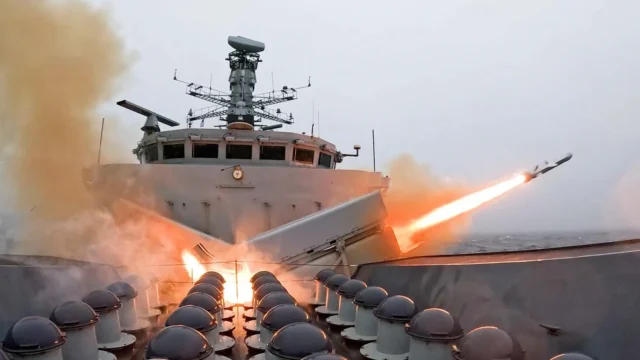
Jet pioneer Sir Frank Whittle honoured on new Royal Mail stamps


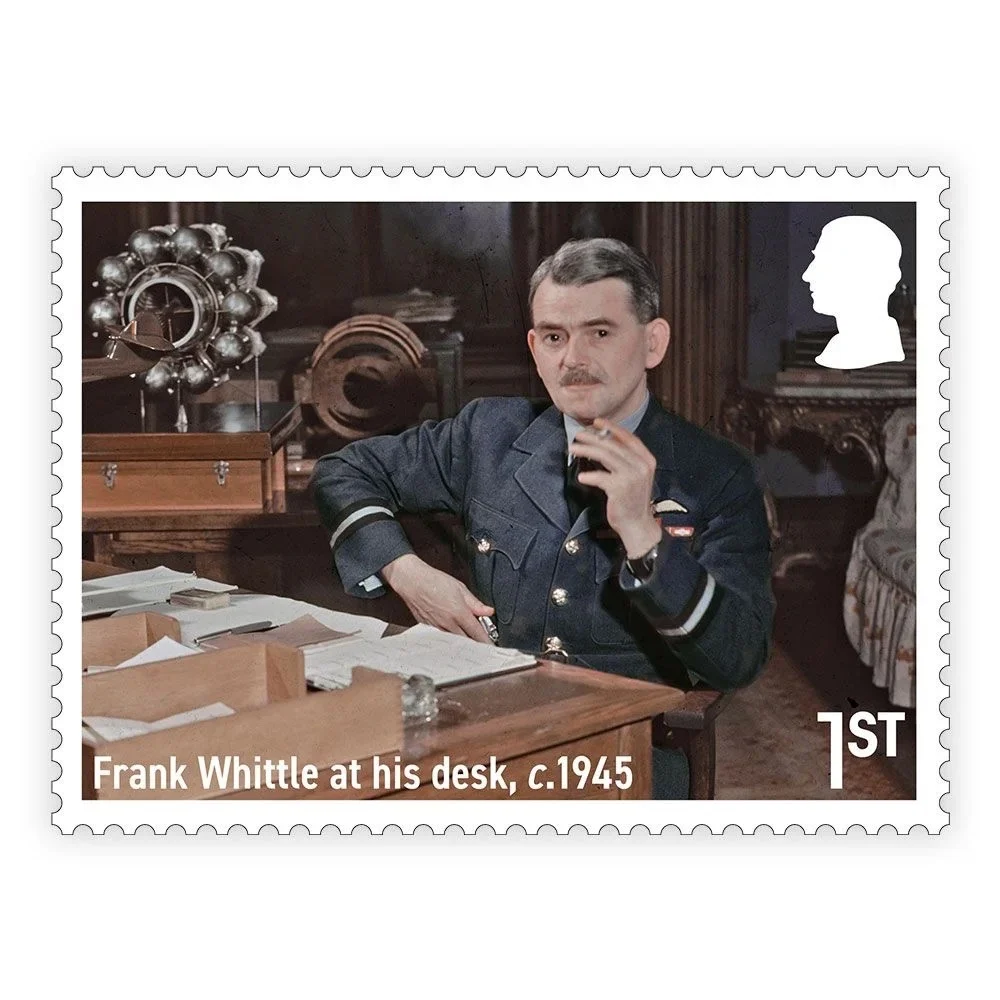
Royal Mail is celebrating the legacy of jet engine pioneer Sir Frank Whittle with a new set of commemorative stamps marking the 30th anniversary of his death, alongside a collection showcasing Britain’s most iconic military jet aircraft.
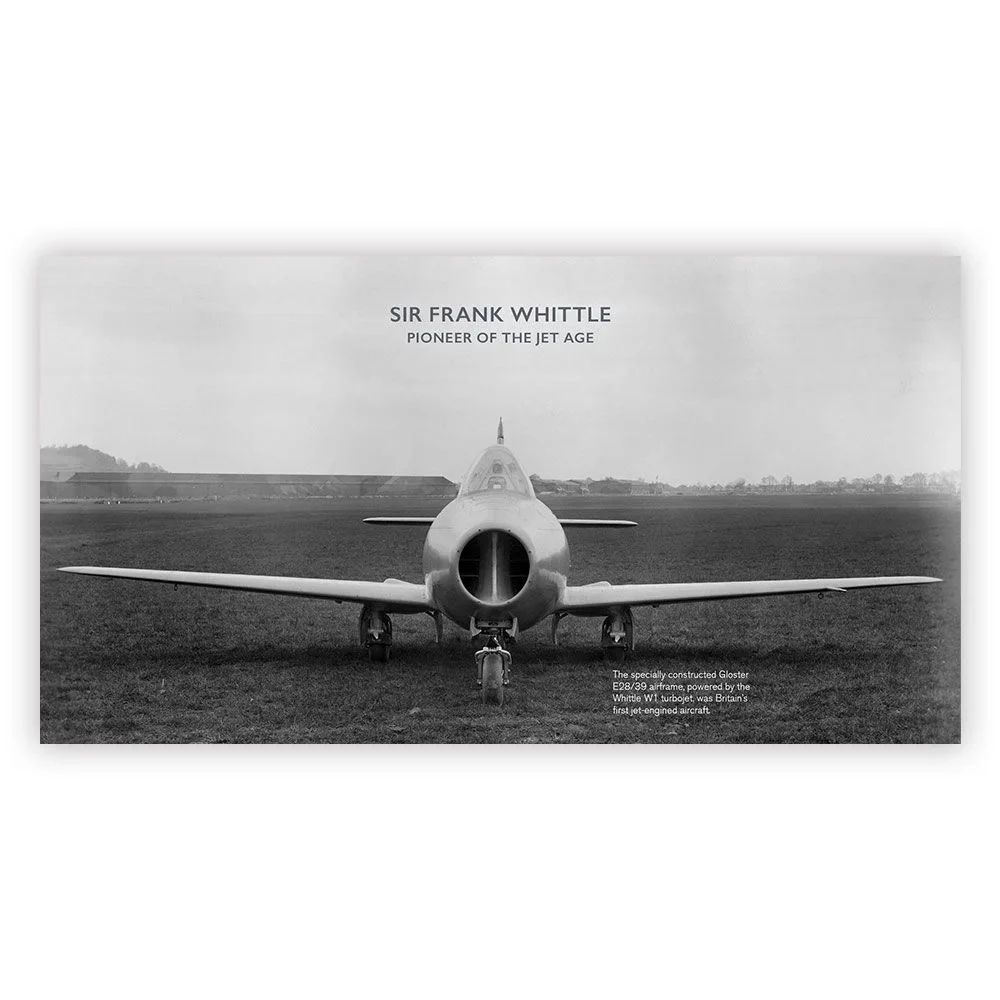
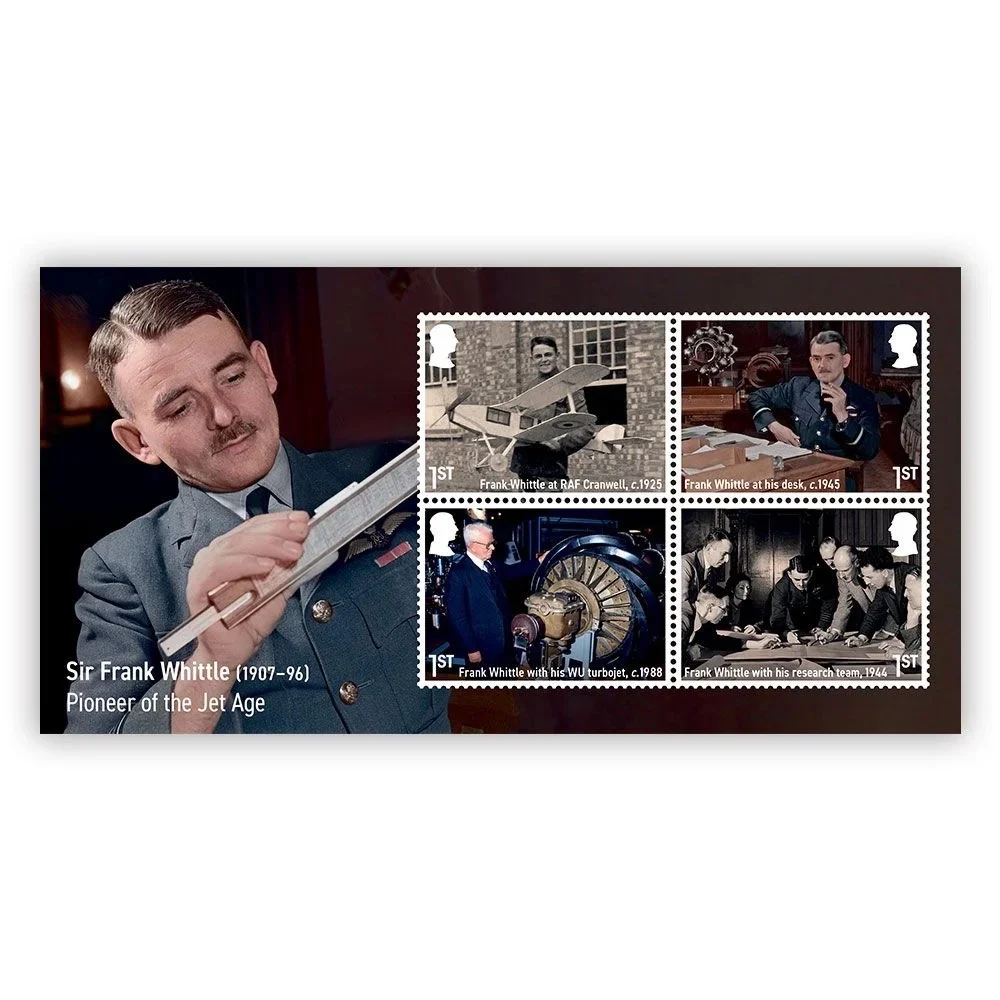
The special issue, announced on 23 July, features eight First Class stamps depicting landmark British military jets, plus a four-stamp miniature sheet dedicated to Whittle’s pioneering work that revolutionised aviation. The stamps are available to pre-order now on the Royal Mail’s online store and will go on general sale on 30 July.
Royal Mail honours the father of the jet age
The miniature sheet depicts Whittle’s journey from Royal Air Force cadet to inventor of the turbojet engine and the engineer whose work made modern military and commercial jet aviation possible. It includes photographs spanning his career.
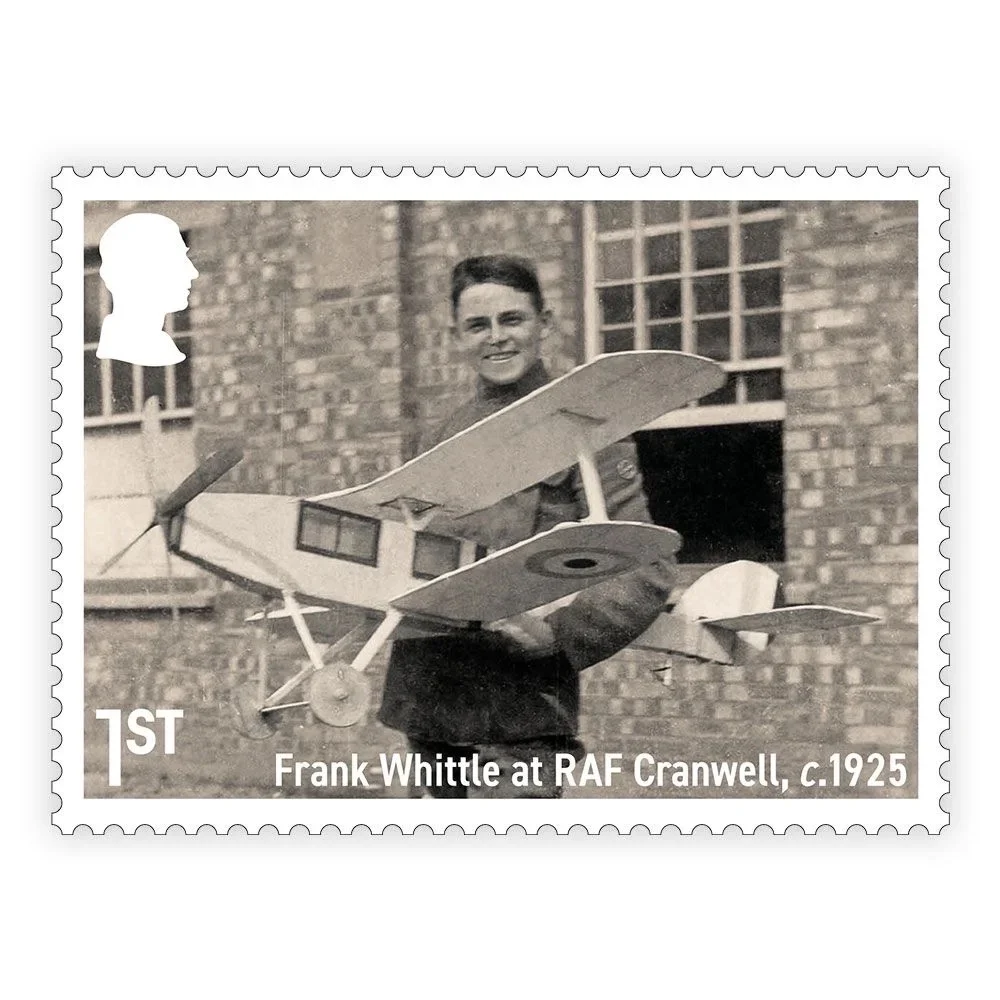
Sir Frank first conceived the idea of a gas turbine-powered jet engine while studying at RAF Cranwell in 1928. He patented the concept in 1930 and, through his company Power Jets Ltd, successfully ran the world’s first operational turbojet engine, the Whittle Unit, on 12 April 1937.
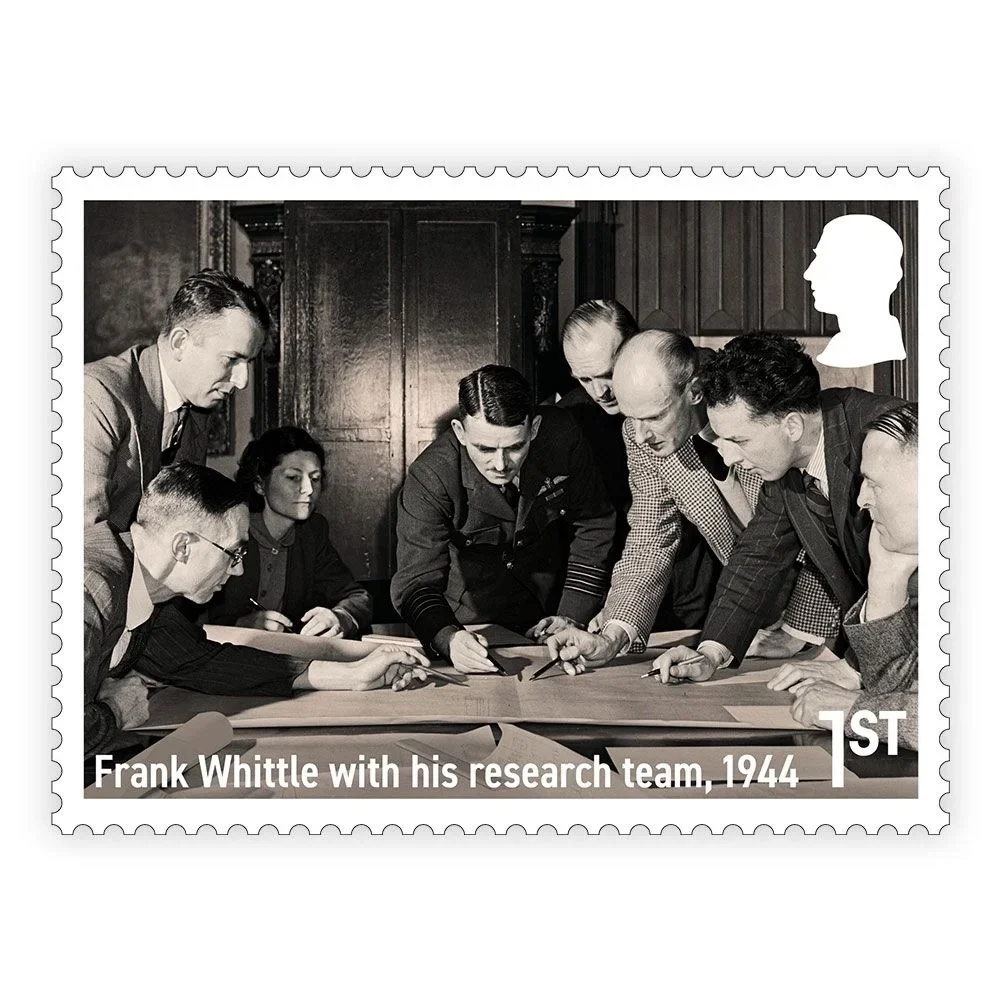
An improved version, the W1 turbojet, powered the Gloster E.28/39 during Britain’s first successful jet-powered flight in 1941.
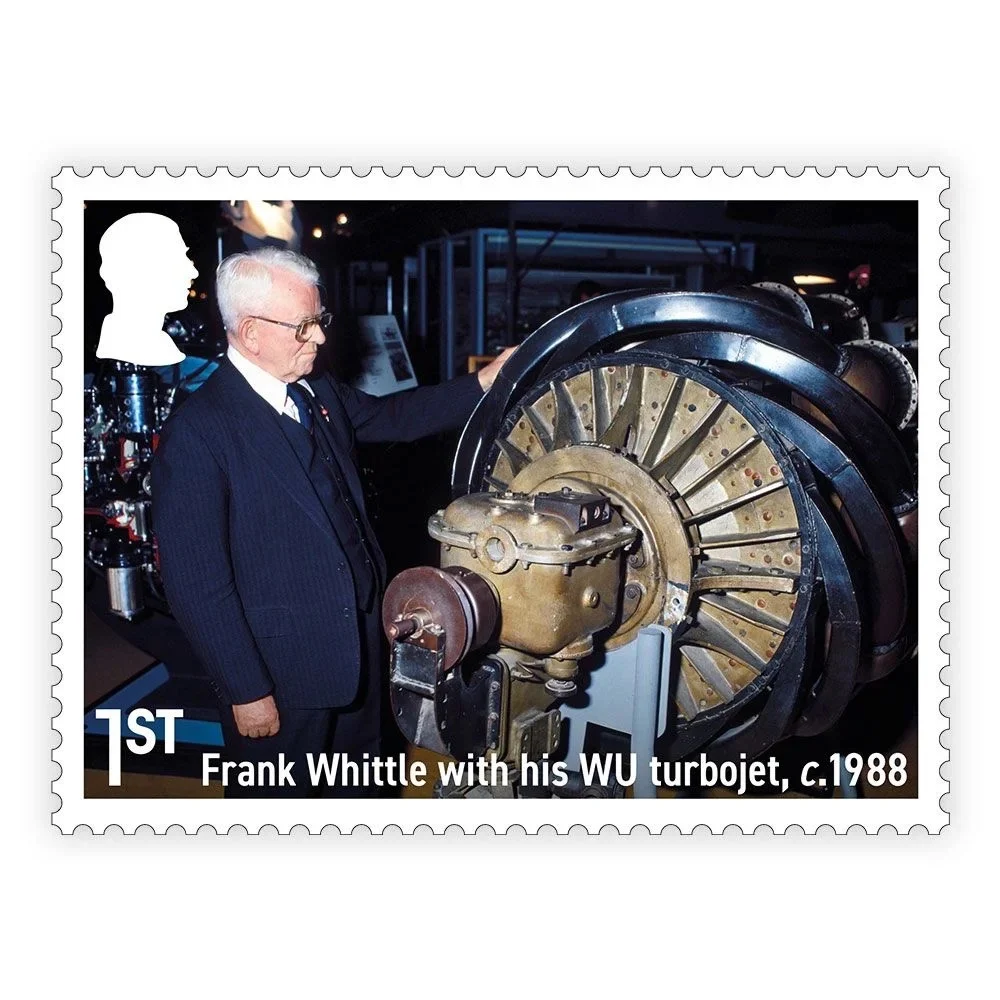
The technology was subsequently adopted by British engine manufacturers including Rolls-Royce, de Havilland and Bristol, paving the way for operational aircraft such as the Gloster Meteor and de Havilland Vampire.
Celebrating Britain’s +80 year military jet heritage
The stamp collection marks notable anniversaries in British aviation this year, including:
- 80 years since the de Havilland Vampire entered service
- 70 years since both the Gloster Javelin and Avro Vulcan entered service
- 50 years since the Hawker Siddeley Hawk entered RAF service
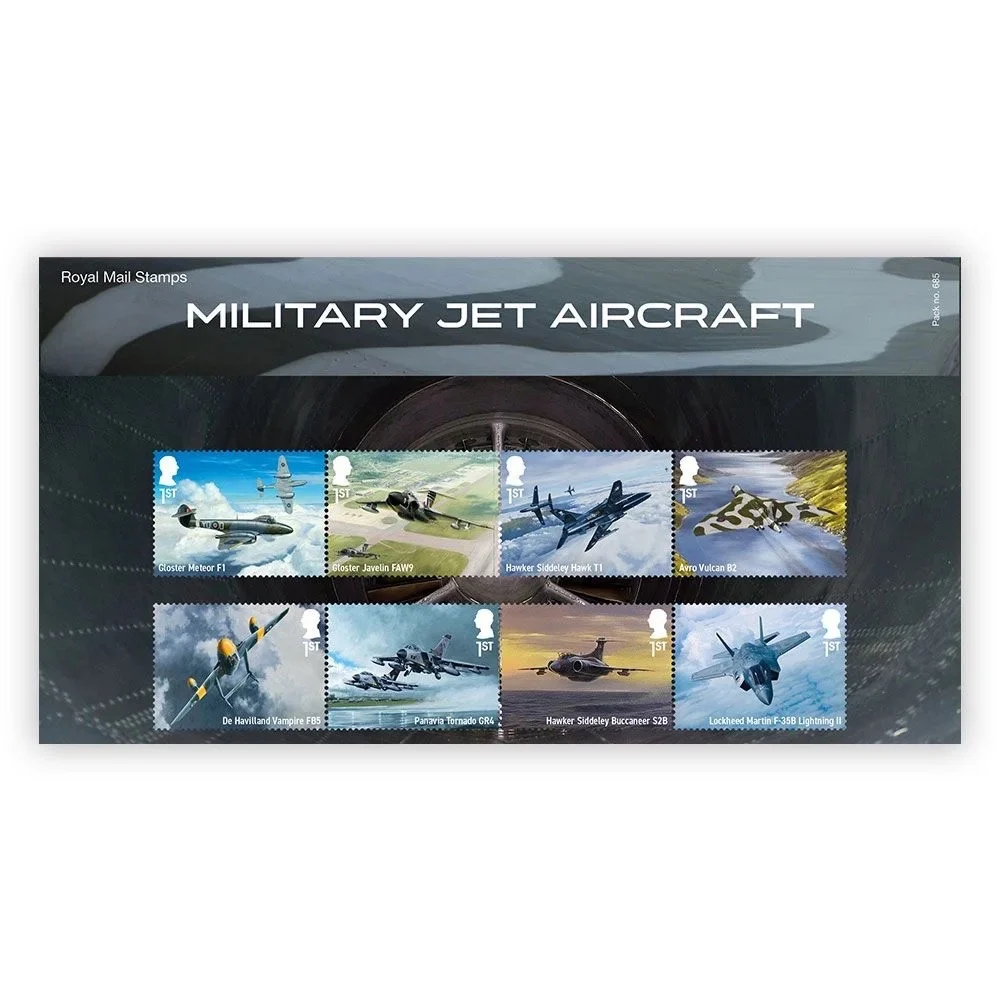
The eight aircraft featured are:
- Gloster Meteor F1
- de Havilland Vampire FB5
- Gloster Javelin FAW9
- Avro Vulcan B2
- Hawker Siddeley Buccaneer S2B
- Hawker Siddeley Hawk T1
- Panavia Tornado GR4
- Lockheed Martin F-35B Lightning II
Together, the collection spans more than 80 years of British military jet development, from the RAF’s first operational jet fighter, the Gloster Meteor, to today’s fifth-generation F-35B Lightning II.
Royal Mail and Whittle family pay tribute
David Gold, Royal Mail’s Director of External Affairs and Policy, said the unique stamp collection celebrates Britain’s history of aviation innovation.
“These stamps showcase some of the military jet aircraft that have played a significant role in that story,” Gold said. “From the pioneering Gloster Meteor, the first Allied jet fighter to enter service, to the Hawk, which has trained generations of military pilots, these aircraft represent decades of engineering excellence and technological achievement. We are also proud to recognise the contribution of Sir Frank Whittle, whose development of the jet propulsion engine transformed aviation and changed the course of history.”
Ian Whittle, Sir Frank’s son, expressed delight that Royal Mail would honour his father’s aviation legacy with the commemorative stamps.
“My father used to say, ‘Inventing it was easy. Making it work was the difficult bit.’ His determination to turn a revolutionary idea into a practical reality transformed aviation and changed the world forever,” he said. “It is a fitting tribute not only to my father’s pioneering achievements, but also to the generations of engineers, designers and aviators who helped shape Britain’s world-leading contribution to aviation.”
Sign up for our newsletter and get our latest content in your inbox.
Similar Reads





Sign up for our newsletter. Select all sectors relevant to you.
Related