Jet Zero Council underpinned by PM's commitment to fuel green recovery
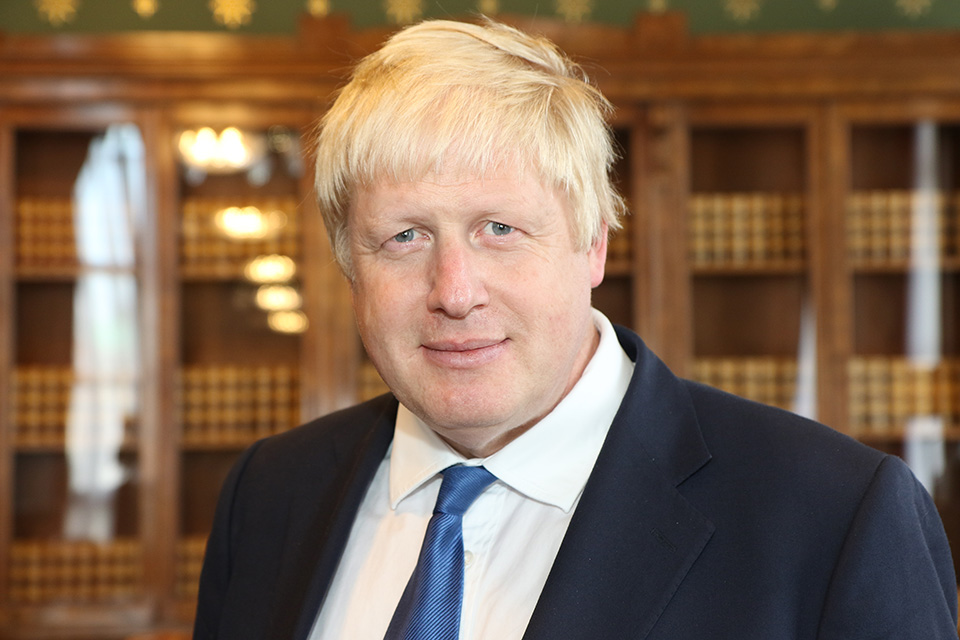
Above:
UK Prime Minister Boris Johnson.
Courtesy gov.uk
The multimillion pound investment package will build on the PM’s work throughout his first year in office to drive forward progress on the UK’s target to reach net zero by 2050, by helping businesses to decarbonise across the heavy industry, construction, space and transport sectors and to secure the UK’s place at the forefront of green innovation.

The investment came just ahead of the PM launching the first meeting of the Jet Zero Council, which will bring together government, representatives from the environmental sector and the aviation and aerospace industry to tackle aviation emissions in line with the government’s ambition to achieve the first ever zero emission long haul passenger plane.
Prime Minister Boris Johnson said: "We’ve made great strides towards our net zero target over the last year, but it’s more important than ever that we keep up the pace of change to fuel a green, sustainable recovery as we rebuild from the pandemic.
"The UK now has a huge opportunity to cement its place at the vanguard of green innovation, setting an example worldwide while growing the economy and creating new jobs.
"That’s why we’re backing cutting edge research to cut costs and carbon across our great British industries, and even paving the way for the first ever zero emission long haul passenger flight – so that our green ambitions remain sky high as we build back better for both our people and our planet."
Business and Energy Secretary, Alok Sharma, said: "Climate change is among the greatest challenges of our age. To tackle it we need to unleash innovation in businesses across the country.
"This funding will reduce emissions, create green collar jobs and fuel a strong, clean economic recovery – all essential to achieving net zero emissions by 2050."
Transport Secretary Grant Shapps said: "Climate change is one of the greatest challenges we face today, and tackling it will require action from everybody. This is why we’re bringing together Government, businesses and investors in a ground breaking new partnership.
"The Jet Zero Council is a huge step forward in making change – as we push forward with innovative technologies such as sustainable fuels and eventually fully electric planes, we will achieve guilt-free flying and boost sustainability for years to come."
The projects set to receive funding will work on developing new technologies that could help companies switch to more energy-efficient means of production, use data more effectively to tackle the impacts of climate change, and help support the creation of new green jobs by driving innovation and growth in UK industries.
The package includes:
- £139 million to cut emissions in heavy industry by supporting the transition from natural gas to clean hydrogen power, and scaling up carbon capture and storage (CCS) technology which can stop over 90% of emissions being released from industrial plants into the air by storing carbon permanently underground
- £149 million to drive the use of innovative materials in heavy industry; the 13 initial projects will include proposals to reuse waste ash in the glass and ceramics industry, and the development of recyclable steel
- £26 million to support advanced new building techniques in order to reduce build costs and carbon emissions in the construction industry
- A £10 million boost for state of the art construction tech which will go towards 19 projects focused on improving productivity and building quality, for example, re-usable roofs and walls and “digital clones” of buildings that analyse data in real time
- Launching a New National Space Innovation Programme backed by £15 million initial funding from the UK Space Agency, which will see the first £10million go towards projects that will monitor climate change across the globe, which could protect local areas from the impacts of extreme weather by identifying changes in the environment
- Opening up bids for a further £10million for R&D in the automotive sector, to help companies take cutting edge ideas from prototype to market, including more efficient electric motors or more powerful batteries
Chaired by the Transport and Business Secretaries, last Wednesday's first ever Jet Zero council meeting discussed how to decarbonise the aviation sector while supporting its growth and strengthening the UK’s position as a world leader in the sector.
The members looked at how to work across their sectors to achieve these goals, including through brand new aircraft and engine technologies. These could include using new synthetic and sustainable aviation fuels as a clean substitute for fossil jet fuel and eventually the development of electric planes.
One year on from taking office, the initiatives form part of the PM’s wider efforts to ensure the UK meets its legally binding target to reach net zero emissions by 2050, whilst also driving forward a green recovery from the pandemic.
So far this year, this includes committing to consult on ending the sale of new petrol, diesel or hybrid cars by 2035 or earlier; launching the Transport Decarbonisation Plan to cut emissions across the sector; providing over £1 billion at Budget to support the rollout of ultra-low emission vehicles in the UK via support for a super-fast charging network for electric vehicles; and committing up to £100 million of new funding for research to develop a brand new clean technology, Direct Air Capture.
Over the past decade, the UK has cut carbon emissions by more than any similar developed country. In 2019, UK emissions were 42% lower than in 1990, while the UK economy over the same period grew by 72%.
Professor Iain Gray, Director of Aerospace at Cranfield University, Convenor of the UK Aerospace Research Consortium and Jet Zero Council member, said: “At Cranfield University, through our global research airport, we are playing our part in making aviation more environmentally sustainable. We are excited about working with our partners in industry, academia and Government on the Jet Zero Council to deliver on the UK’s ambitious priorities.
“All of us across the industry are committed to doing our bit to cut emissions in order to tackle the threat of climate change. We do not know yet what is fully possible in terms of transitioning all aviation to zero-emission flight but we do know that short-haul, particularly island hopping, looks achievable quickly.
“In order to achieve zero emission across all aviation, we are going to need the same commitment, resource and dedication that the US showed when President Kennedy committed their nation to landing a person on the moon within a decade.
“Will we get there? I think we will. Zero emission flight has the backing of Government, industry and academia, who are all coming together in a way I have not seen before. The question should be not whether we will do it but how long will it take? And at Cranfield we will do all we can to make sure it happens.”
Charlie Cornish, Group CEO of MAG (Manchester Airports Group)*, said: “Today’s first meeting of the Jet Zero Council is a real and important milestone on the road to the UK aviation industry becoming net zero carbon by 2050. It demonstrated the progress that is being made in developing new technologies and new sustainable fuels and the potential for Government and industry to work together to make the UK a world leader in this area. For our part, MAG has been a leader in making air travel more sustainable and we were the first airport operator in the UK to achieve carbon neutral status across all our operations.
“Through the Jet Zero Council, Government and the aviation industry will produce a framework which will set out how we can decarbonise aviation. This comes following the industry’s own commitment and road map to reaching full net zero carbon by 2050, which was published earlier in the year. We all know that this is a challenging target but one we can achieve by working collaboratively with Government”