
General Atomics

Leonardo’s PRS receiver certified for defence and emergencies across Europe

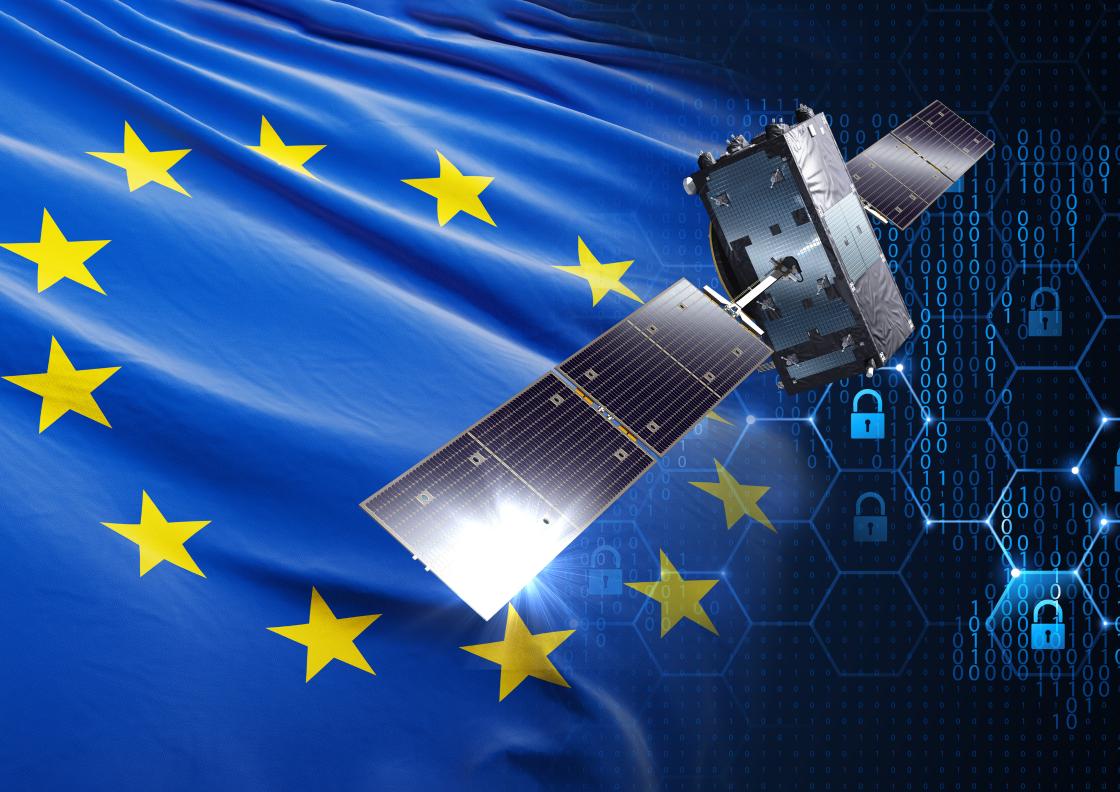
Leonardo has designed, developed and built the only receiver specifically conceived for the ultra-secure Public Regulated Service (PRS) - provided by the Galileo satellite navigation service - which is currently accredited for use throughout Europe.


Image courtesy Leonardo

It is the first and only device to be accredited for use throughout the continent. Thanks to this accreditation, civil and military bodies will have access to Galileo’s PRS service for secure and accurate positioning and navigation information essential for public security.

The device – produced at the Leonardo plants for the Italian Space Agency and under the coordination of Italy’s Competent PRS Authority, expressed by the Department of Information Security – Central Secrecy Office – has won the approval of the Council of the European Union for IT (Information Technology) security products after successfully completing the process that requires double cryptographic evaluation.

In fact, in line with the directives of the Council of the EU, the receiver was first nationally certified and then tested by a second Authority (Appropriately Qualified Authority – AQUA), chosen from those recognised by the Council for the European certification of cryptographic products.

A series of rigorous tests has demonstrated the device’s high level of security under various aspects:
Computer operations (computer security)
Encryption for the protection of information (communications security)
The prevention of information leaks caused by electromagnetic emissions from terminals (emission security).

With its recently awarded certification, the Leonardo receiver will enable all authorised bodies, both civil and military, to access the PRS service of the European Galileo satellite programme, the most accurate worldwide. This encrypted, secure and resilient service is accessible only to EU Member State government authorised users and provides positioning, navigation and synchronisation data for sensitive applications, including defence, fire services, health services, search and rescue, police, coastguards and civil protection. The Leonardo receiver is installed on board the vehicles of bodies that use the PRS service to provide reliable, accurate and cyber-protected information.

The Leonardo receivers are now ready to be sent to Prague, where the EU Agency for the Space Programme (EUSPA) has its headquarters, for tests on the PRS signal in various European countries. This is a preparatory step before the service becomes fully operational. The first device was installed and is now operational at the Galileo security centre in Paris.

A flagship programme of the EU, Galileo is managed and funded by the European Commission. Since its inception, ESA leads the design, development and qualification of the space and ground systems, as well as procuring launches. ESA is also entrusted with research and development activities for the future of Galileo within the EU programme Horizon Europe. The EU Agency for the Space Programme (EUSPA) acts as the service provider, overseeing the market and application needs and closing the loop with users.

Galileo is the most accurate satellite navigation system in the world, serving more than four billion people and devices globally. All smartphones sold in the European Single Market are now guaranteed Galileo-enabled. In addition, Galileo is making a difference across the fields of rail, maritime, agriculture, financial timing services and rescue operations. Galileo provides positioning and navigation services that are accessible free of charge to the public, as well as ad hoc services for specific applications and an encrypted service, the PRS (Public Regulated Service), which is accessible only to users authorised by governments of the EU Member States. Galileo’s precision and accuracy is also made possible through the technological contribution of the Leonardo Group, which plays a leading role in both the land and the space-based components of the programme.

Related

RAF Air Command becomes Air and Space Command as Britain elevates military space operations
An RAF-operated Typhoon FGR4 is displayed alongside two Storm Shadow ALCMs during an event at RAF Marham, Norfolk, on 1 September 2019. Image: MOD Crown Copyright/SAC Simon Armstrong
RAF Air Command becomes Air and Space Command as Britain elevates military space operations
With the growing importance of military space operations, the new name reflects the widening remit of the RAF’s primary operational division.
Aerospace Defence

1 Sep 2026

TEKEVER acquires Edinburgh-based Flowcopter
FIA 2026
TEKEVER acquires Edinburgh-based Flowcopter
The move is designed to expand TEKEVER's autonomous capabilities with advanced propulsion technology.
Global aircraft order backlog tops 17,000 for the first time as demand outpaces production
Boeing 737 factory in Renton
Global aircraft order backlog tops 17,000 for the first time as demand outpaces production
New ADS figures show the global commercial aircraft backlog reached a record 17,037 jets in July, with strong airline demand continuing to outstrip manufacturers' delivery capacity.
Aerospace

1 Sep 2026

UK pushes Navantia to accelerate delivery of Royal Navy support ships
Three Fleet Solid Support vessels being delivered for the Royal Fleet Auxiliary through a partnership between Navantia UK, BMT and Harland & Wolff.
UK pushes Navantia to accelerate delivery of Royal Navy support ships
The UK Ministry of Defence is pushing Navantia for earlier delivery of three Fleet Solid Support ships as construction of the first vessel advances at Appledore.
Defence Security

1 Sep 2026

RAF Air Command becomes Air and Space Command as Britain elevates military space operations
An RAF-operated Typhoon FGR4 is displayed alongside two Storm Shadow ALCMs during an event at RAF Marham, Norfolk, on 1 September 2019. Image: MOD Crown Copyright/SAC Simon Armstrong
RAF Air Command becomes Air and Space Command as Britain elevates military space operations
With the growing importance of military space operations, the new name reflects the widening remit of the RAF’s primary operational division.
Aerospace Defence

1 Sep 2026

TEKEVER acquires Edinburgh-based Flowcopter
FIA 2026
TEKEVER acquires Edinburgh-based Flowcopter
The move is designed to expand TEKEVER's autonomous capabilities with advanced propulsion technology.
Teledyne passes 1,000 sensors in orbit with NASA Roman Telescope launch
The infrared focal plane with H4RG-10 detector
Teledyne passes 1,000 sensors in orbit with NASA Roman Telescope launch
The launch of NASA's Nancy Grace Roman Space Telescope marks a major milestone for Teledyne, whose detector technology will enable the mission to investigate dark energy, hunt for exoplanets and survey billions of galaxies.
Member News Space

1 Sep 2026

ADS cyclists battle crashes, climbs and forest fires to raise over £5,000
ADS Charity Cycle
ADS cyclists battle crashes, climbs and forest fires to raise over £5,000
Industry riders covered 334 miles from Belfast to Bristol in support of Combat Stress, O2e and Air Ambulance Northern Ireland.
Scottish space tech to power self-consuming rocket engine
Alpha Impulsion
Scottish space tech to power self-consuming rocket engine
Aurora Avionics is to supply crucial electronic systems that will deliver key electrical power functions for a pioneering new rocket engine, that aims to cut propulsion costs and support next-generation spacecraft.
Space

27 Aug 2026

UK pushes Navantia to accelerate delivery of Royal Navy support ships
Three Fleet Solid Support vessels being delivered for the Royal Fleet Auxiliary through a partnership between Navantia UK, BMT and Harland & Wolff.
UK pushes Navantia to accelerate delivery of Royal Navy support ships
The UK Ministry of Defence is pushing Navantia for earlier delivery of three Fleet Solid Support ships as construction of the first vessel advances at Appledore.
Defence Security

1 Sep 2026

TEKEVER acquires Edinburgh-based Flowcopter
FIA 2026
TEKEVER acquires Edinburgh-based Flowcopter
The move is designed to expand TEKEVER's autonomous capabilities with advanced propulsion technology.
Metropolitan Police Force expands its fleet of crime-fighting e-bikes
Met Sur-Ron eBikes at New Scotland Yard
Metropolitan Police Force expands its fleet of crime-fighting e-bikes
As it continues to address the challenge posed by criminals using e-bikes and mopeds to commit crime and evade the law, the Metropolitan Police Force has substantially increased its own fleet of Sur-Ron e-bikes, to tackle the perpetrators.
Security

31 Aug 2026