NATS issues revised AUP process
Courtesy NATS
The suspension was announced earlier this month in response to the impact felt by the COVID-19 outbreak and subsequent restrictions.
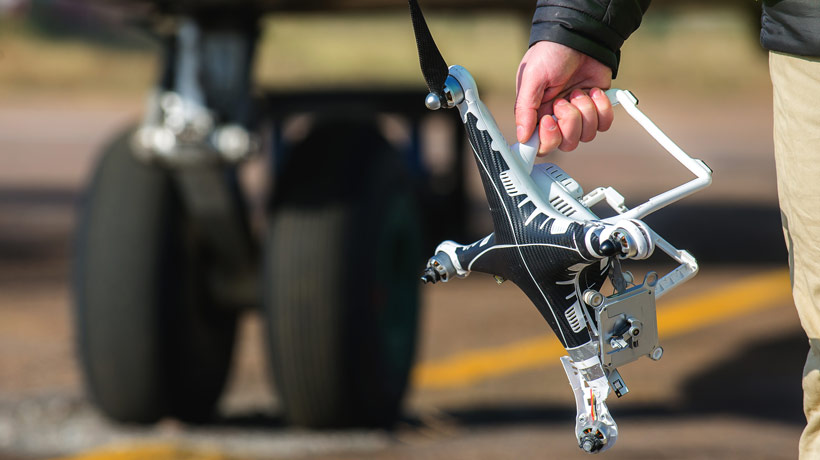
From today, users requesting new Non-Standard Flights (NSFs) in Controlled Airspace, parachute drops, Class D transits and drone flights (at airfields listed below) should revert to instructions contained within AIP ENR 1.1 section 4.1 and found on www.nats.co.uk/nsf.

If a request has been submitted prior to 30 April and received an Approval in principle, there is no need to file an additional submission on the new website, but copies must be downloaded as there will be no access to the AUP after 30 April. However, if a response has not yet been received, then a new request must be made via www.nats.co.uk/nsf.
From 1 May, www.nats.co.uk/nsf will enable users to submit requests to NATS, which will be approved or rejected as soon as possible; applications in Restricted Areas R157, R158 and R159 may take up to 28 days. Advance approval does not constitute an approval to fly; the user must activate the advance approval and still obtain further approval from air traffic control on the day of flight.
Operators and pilots will also be able use the website to request drone flights in the following Flight Restriction Zones (FRZ):
- Heathrow Airport
- London City Airport
- London Luton Airport
- London Stansted Airport
- Aberdeen Airport
- Glasgow Airport
- Belfast International Airport
- Belfast City Airport
- Manchester Airport
- Cardiff Airport
- St. Athan Airport
- Bristol Airport
- Southampton Airport
- Farnborough Airport
- Woodvale Airport
- Middle Wallop Airport
- Barkston Heath Airport
- London Heliport Battersea
For drone requests at an airport other than those listed, operators must contact the appropriate airport or air traffic control provider, details of which can be found in the UK AIP that can be accessed via the Drone Safe website - https://dronesafe.uk/.
Any questions related to NSF operations, including drone requests at the airports listed above and Class D Transits should be sent via the ‘Contact Us’ form on the revised website www.nats.co.uk/nsf.
For drone related questions or requests for access to any other UK airport’s Flight Restriction Zone, please see https://dronesafe.uk/ or visit the airport’s website for more details.
For transit of Class D controlled airspace, please:
- Freecall the appropriate frequency to request transit
- Remain outside controlled airspace
- Only enter controlled airspace after a clearance has been issued
- Plan an alternative route that can be flown in the event that a clearance cannot be issued
Andy Sage, Head of UTM, NATS, said: “Despite the current circumstances, we remain committed to enabling fair and equitable access to the airspace and in a way that protects the safety of all our customers. We are therefore pleased to roll out the new process for submitting Non-Standard Flight Applications and we hope that this meets expectations for all users’ – including drone operators.”