Navantia UK christens Seahorse barge in Methil
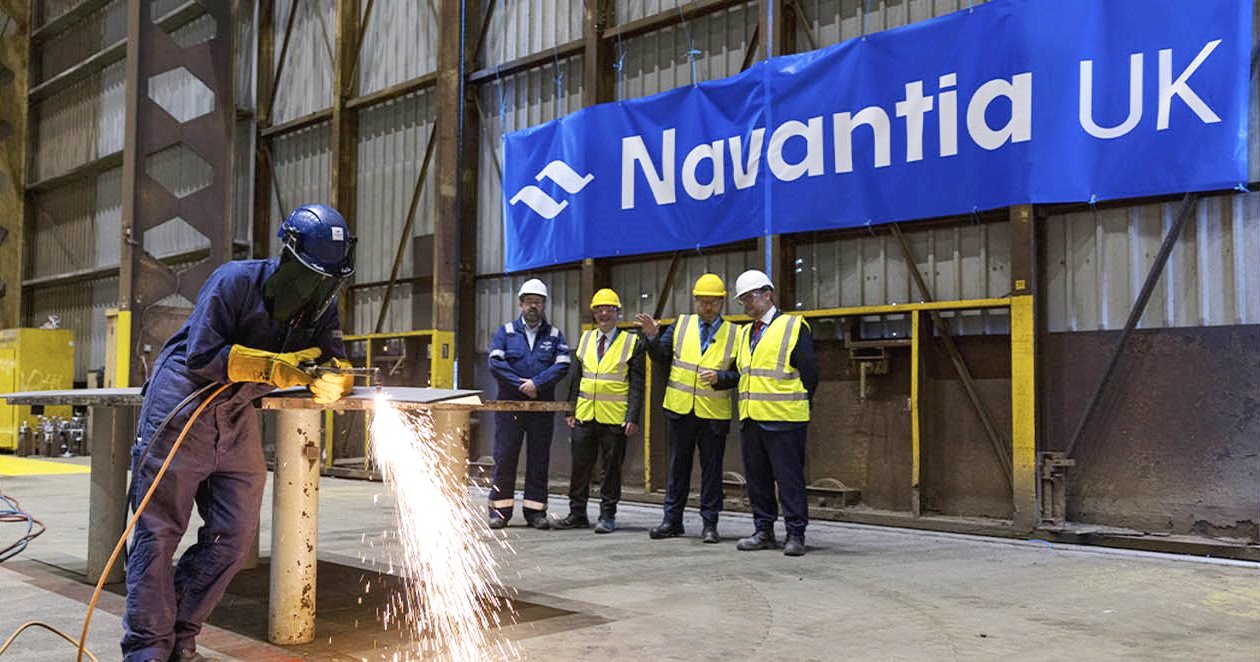
Above: Scottish Secretary, Ian Murray, took part in a steel cutting ceremony to begin construction of the £8 million transport barge in August last year.
Courtesy Navantia UK
The £8 million purpose-built vessel will be loaded out in the coming days as it begins operations. The milestone underscores the progress being made at Methil and highlights Navantia UK’s continued investment in UK shipbuilding capability.

The Navantia UK Seahorse will play a critical role in enabling the construction of the Royal Navy’s three FSS ships, transporting ship blocks between Navantia UK’s Appledore and Belfast facilities.
At 85 metres long and 25 metres wide, and weighing approximately 1,400 tonnes, the vessel has been designed for long-term use across future defence programmes. It reflects a modern, distributed shipbuilding model that strengthens UK sovereign industrial capability and resilience.
The project forms part of Navantia UK’s wider activity across Scotland, Northern Ireland and England, delivering the FSS programme through a UK-wide industrial network. This approach supports the UK Government’s ambition to position defence as an engine for growth, driving investment, skills and economic opportunity across the country.
Since acquiring Methil last January, the headcount has grown from 180 to 260, and Navantia UK is on a recruitment drive to fill a further 110 roles. Included in this is recruitment of 15 apprentices, to join the existing class of 54 apprentices at Methil.
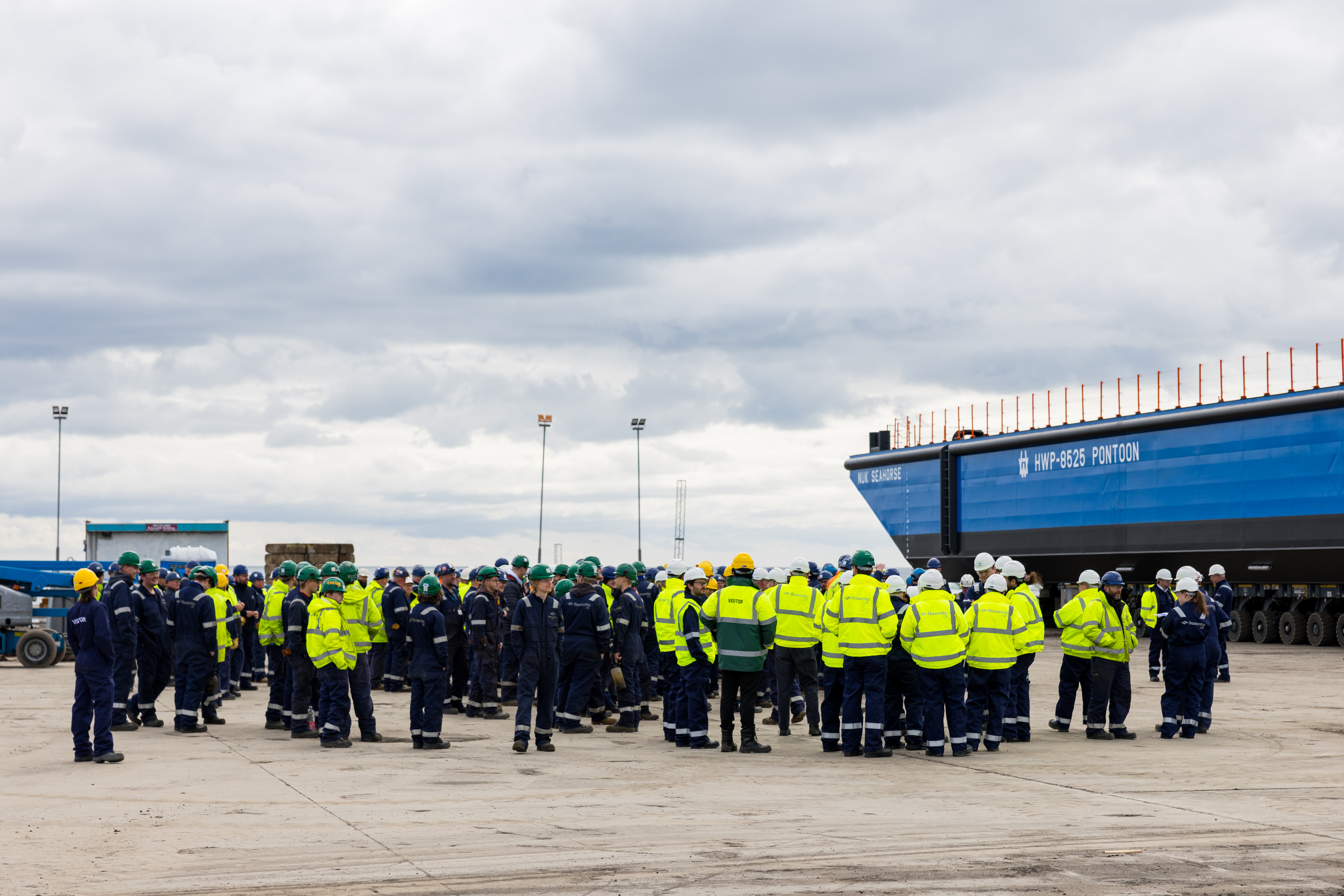
Navantia UK has invested £26.7 million in upgrading the yard – part of an overall investment of £157 million across the group’s four UK facilities. Improvements include new plasma cutting equipment and machinery, lifting systems and transporters, welfare and office improvements and other site upgrades.
The company has brought in additional senior management for Methil to oversee project delivery and commercial functions – including leaders with experience in delivering complex maritime and defence infrastructure projects for the Ministry of Defence.
Donato Martínez, CEO of Navantia UK, said: “This is a proud moment for our team in Methil and across Navantia UK. The christening of Navantia UK Seahorse is a clear demonstration of how we are delivering the Fleet Solid Support programme across the UK, investing in facilities, people and capability. This barge is central to our distributed build model, connecting our yards in Appledore, Belfast and Methil, and ensuring we deliver efficiently for the Royal Navy. Just as importantly, it shows how defence can act as a powerful engine for growth, creating skilled jobs and positioning yards like Methil for a long-term future at the heart of UK shipbuilding.”
Richard Baker, MP for Glenrothes and Mid Fife, said: “Seeing the Navantia UK Seahorse christened here in Methil is a proud moment for our community and a clear sign of the yard’s revival. This project is creating skilled jobs, supporting apprentices, and giving local people confidence in a long-term future for shipbuilding in Fife. The success of Seahorse also amply illustrates how the yard and its workers have attained the readiness and capability required to secure major new projects, including defence contracts such as Programme Euston, which would create floating dry docks for Faslane. Navantia UK’s investment is already making a real difference on the ground, and it is exactly the kind of commitment we need to secure Methil’s place at the heart of the UK’s defence industrial base for years to come.”
The Methil barge project builds on Navantia UK’s investment following its acquisition of Harland & Wolff’s four UK sites. Since then, the company has been upgrading facilities, introducing new technologies, and strengthening the UK’s industrial base in defence, maritime and energy.
The Fleet Solid Support ships will provide vital logistical support to the Royal Navy’s Carrier Strike Group, supplying stores and ammunition at sea and ensuring operational readiness. As prime contractor, Navantia UK is delivering the programme through a UK-wide network, with final integration taking place in Belfast.