New Apache makes its UK field debut
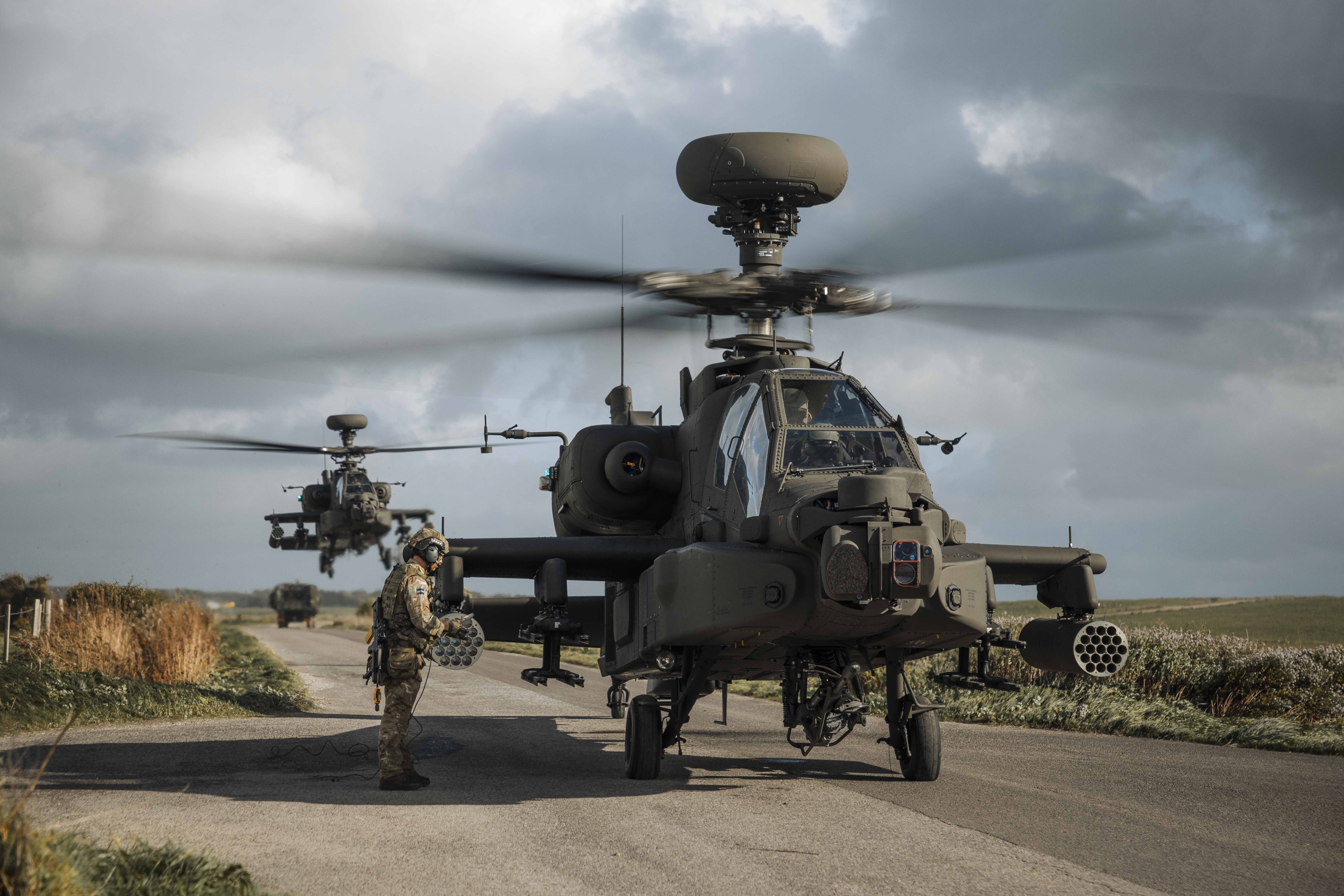
Image courtesy British Army
Exercise Talon Guardian has seen 3 Regiment Army Air Corps take a 1,500km road trip over two weeks, establishing itself at three separate locations to plan and execute attack missions and maintain the state-of-the-art helicopters.
The Army Air Corps 3 Regt's commanding officer Lieutenant Colonel Simon Wilsey said: “Exercise Talon Guardian is a really significant step forward for the British Army’s AH-64E, which is the most advanced attack helicopter in the world. We’ve been working hard to learn how to fly and maintain the AH-64E; now we’re getting the aircraft out into the field, tackling the additional complexities of living, planning, maintaining and operating in an austere environment and developing how we fight with it.

“As befits a new aircraft with vastly improved capabilities, we’re not just going back to what we did before. We’re beginning to use all the new systems and capabilities, and looking at the lessons of current conflicts, adapting to ensure our relevance and survivability. It is all about the basic field craft in the air and on the ground. So, for how we operate on the ground, it’s dispersing and camouflaging our positions to prevent observation by drones and communicating by data and over long range and aircrew must fly using natural cover and all the aircraft’s sensors to counter air defence systems and low-tech threats.
“We’ve learnt a lot and we’ll continue to learn as we look to exploit the full capabilities of this awesome aircraft.”
The exercise saw 3 Regt AAC preparing for its core role, providing an aviation deep attack battlegroup, as part of 1st Aviation Brigade Combat Team, to 3rd (UK) Division, the British Army’s warfighting division. In this role, the AH-64E will be a key element of how the Army fights in the coming decades, as set out in the Future Soldier programme.
The training started with the unit deploying from its base at Wattisham Flying Station in Suffolk to the rugged Otterburn Ranges in Northumberland. Amid the area’s trademark fog, rain and wind, aircrew tested themselves on the air defence ranges of RAF Spadeadam and hunted for artillery and armoured vehicles.
Staging through RAF Wittering in Cambridgeshire, the unit then moved to Bramley in Hampshire for the AH-64Es to hunt on Salisbury Plain for Challenger 2 tanks protected by air defence systems.
Apache pilot Captain ‘H’ said the switch to the AH-64E from the Apache Mk.1 it replaces was “like changing your mobile phone from a Nokia 3310 to an iPhone 14”.
“The aircraft may look the same from the outside but everything’s changed inside to bring improved capabilities in sensors, flying performance, weaponry and communications,” he said.
“We’re able to do our job so much better because the new aircraft means an expansion of the area over which we can deliver effect - whether that’s detecting and engaging threats or sharing information with other aircraft or ground callsigns.”

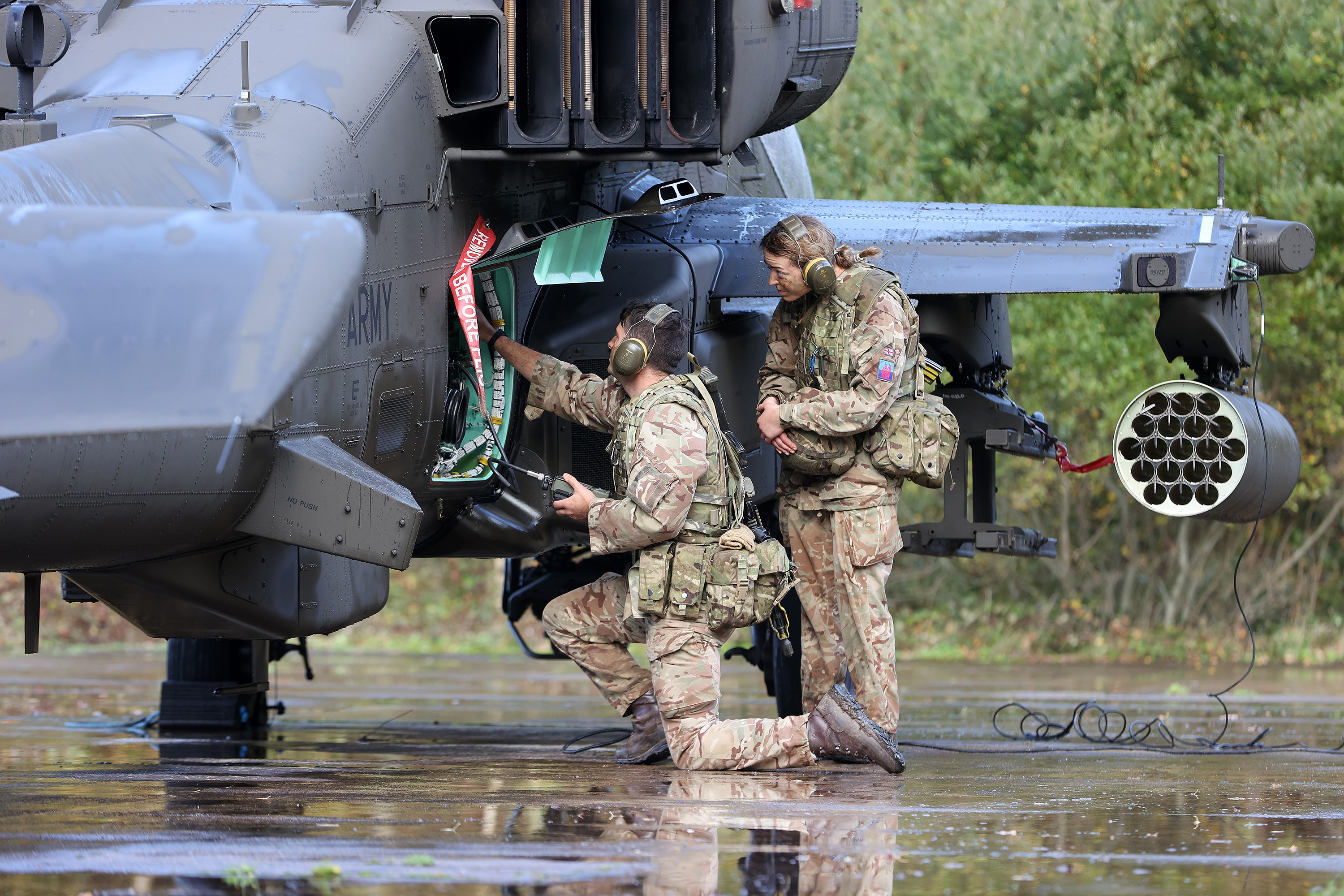
Throughout the exercise, Royal Electrical and Mechanical Engineers technicians kept the aircraft in working order, while ground crew ran isolated Forward Arming and Refuelling Points - the military equivalent of a Formula 1 pit stop - to keep the aircraft’s fuel tanks and weapons pylons full.
REME aircraft technician Lance Corporal Chris Voller said: “We’ve learnt in the hangars how to maintain the AH-64E for day-to-day flying, bringing it out into the field is the next step. We've had to deal with working in all weathers and keeping our tools clean while moving between locations, which means a lot of packing and unpacking kit. But the Apache is a battlefield aircraft, and this is where it’s designed to be - it’s been good to get out to train as we would fight.”
Fifty Apache AH-64E Version 6 aircraft have been purchased from Boeing in the United States to provide a state-of-the-art attack aviation capability that will be a key element in how the Army fights in the coming decades, as set out in the Future Soldier programme. Boeing is also providing long-term training, support and sustainment for the new aircraft.