Turning carbon into cleaner jet fuel: OXCCU reaches major milestone

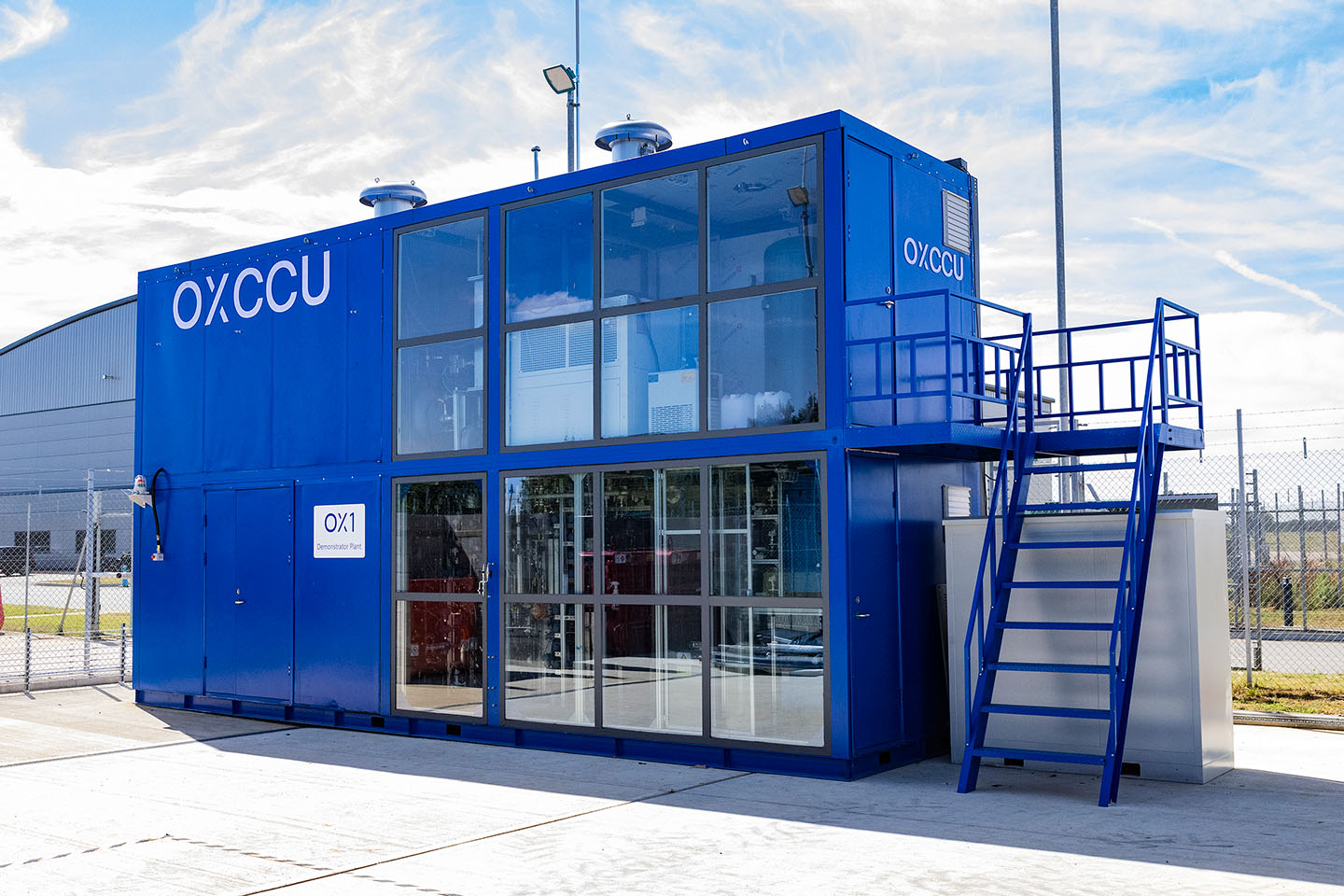
OXCCU, which converts waste carbon into sustainable aviation fuel (SAF), has produced its first samples of a finished synthetic blend component for SAF blending.
The fuel was tested to international standards by trusted chemical and fuel analysis partner Intertek, marking another key milestone in OXCCU’s journey to commercialising cost-effective, scalable SAF.
The successful testing demonstrates that OXCCU’s synthetic blend component, made using its proprietary catalyst and one-step CO₂-to-fuel process, meets ASTM D7566 Annex A4 specifications for Fischer-Tropsch Synthesized Kerosine with Aromatics (FT-SPK/A), an internationally recognised synthetic blending component specification which mirrors conventional Jet A/A-1 closely.
Intertek’s analysis confirms that OXCCU’s fuel possesses physical and chemical properties required for FT-SPK/A.
While further testing and optimisation are ongoing, this early validation reinforces the potential of OXCCU’s technology to produce a 100% drop in SAF blendstock as well as significantly reduce capital and operating costs.
How simplifying the production process addresses both cost and versatility
Andrew Symes, CEO of OXCCU said: “We have demonstrated our ability to make all four of the components which make up jet fuel using OXCCU’s iron FT technology: paraffins, isoparaffins, cycloparaffins and aromatics.
“This means it is a truly drop-in sustainable aviation fuel. Other technologies such as cobalt FT or methanol to jet will only make two of the components, paraffins and isoparaffins. This milestone strengthens confidence in our SAF product.”
Liam Mills, Sustainable Hydrocarbon Specialist at Intertek, said: “Current paraffinic SAF pathways face blending limitations because key fuel properties can fall outside specification. While 50% HEFA-SPK blends are achievable using conventional fuels with favourable properties, future blending will likely involve a broader range of jet fuels, reducing blending flexibility.
“FT/SPK-A offers properties closer to conventional aviation fuel, providing an alternative pathway that can support higher overall SAF utilisation where paraffinic blends are constrained.”
By both simplifying the production process and making a fully formed jet fuel with all four components, OXCCU’s approach addresses both cost and versatility. The company’s syncrude fuel is produced either from captured CO₂ and green hydrogen, or biogas.
As aviation works towards its 10% SAF target by 2030 in the UK and Europe, innovations like OXCCU’s are vital to scaling production without compromising quality, performance, or sustainability.
This latest achievement follows the successful operation of OXCCU’s OX1 demonstration plant at London Oxford Airport and sets the stage for increased volumes and broader testing from its upcoming OX2 facility, expected to be fully operational in early 2027.
Sign up for our newsletter and get our latest content in your inbox.
Similar Reads



Sign up for our newsletter. Select all sectors relevant to you.
Related