Advancing UK Aerospace, Defence, Security & Space Solutions Worldwide
  • Home
  • /
  • Aerospace
  • /
  • Peli contributes to the fight against COVID-19

Aerospace Defence Security

Peli contributes to the fight against COVID-19
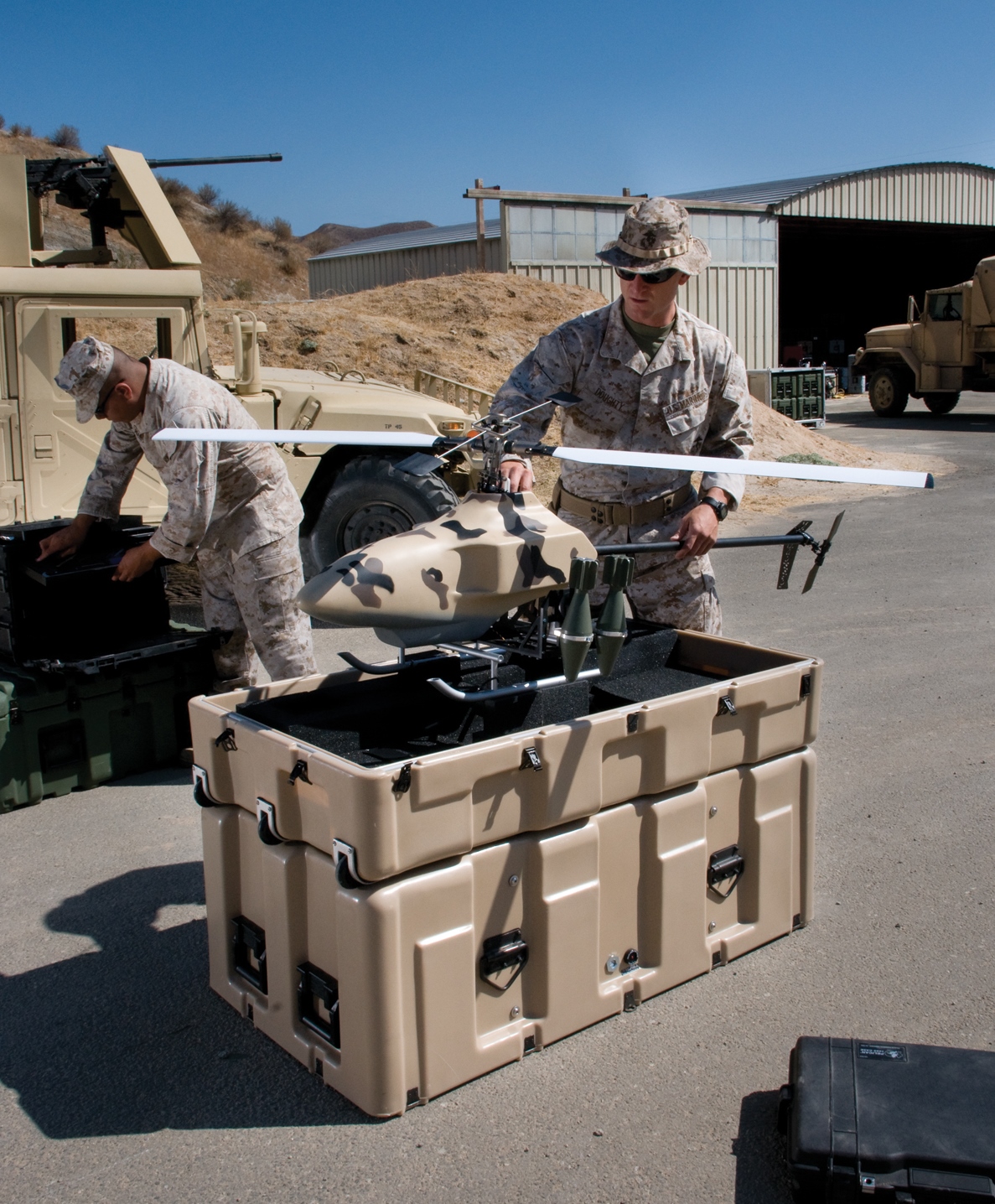
Designer and manufacturer of high-performance protective cases and advanced lighting systems, Peli Products, is helping in the fight against COVID-19 by supplying virtually indestructible drone cases to authorities and organisations using drones in response to the global pandemic.

Image courtesy Peli

Since its beginning, there have been wide-spread reported attempts to utilize drone technology in different scenarios to combat COVID-19. There have been three key uses of drones for this purpose:

Drones Delivering Lab Tests and Medical Supplies
Drones are used to deliver lab tests and samples, vital medical supplies and personal protective equipment (PPE) between hospitals or to remote areas not easily accessible by traditional transportation. Those, such as rail, ocean, road and air freight, causes bottle necks in delivery. The use of drones significantly reduces the issue by reducing lead time, and ensures that vital supplies arrive when needed. Drones used for delivery in this manner also present advantages by limiting physical contact and reducing the risk of transmission during delivery.

Advertisement
ODU RT

Drones used for disinfection of public areas
Another widely used application of drones is to disinfect open public spaces such as streets, parks and plazas. This use for drones has been employed in countries such as China, the UAE, South Korea an Spain, among others.

Public space monitoring and guidance
In Spain, Italy, France and the UK, as well as countries in Africa, Asia and North America, public safety and law enforcement agencies have employed the use of drones to surveil the public during periods of government mandated shelter-in-place ordinances. Drones have been flown through city streets to make public service announcements (PSA) over loudspeaker or to supervise inhabitants’ behaviour as a flying observer. The logic with this example of drone use is to reduce the risk of direct contact between possibly infected people, thus reducing the spread of COVID-19.

Symptom tracing has also been experimented within public safety capacity with thermal imagery to monitor body temperature. Through this type of symptom tracing, hot spots can easily be detected by drones to allow authorities to deal with them swiftly in an effort to save lives.

Ensuring drone functionality 
Drone equipment demands perfection and with a crush, dust and water proof Peli Protector Case case and a number of DIY custom foam solutions it will be safely nested from the outside world. Peli case interior foam is sturdy, resilient and can absorb shock from internal drone movement. That will preserve its functionality to perform at crucial times, when most needed.

Since 1976, military, fire and law enforcement professionals have used Peli to protect their equipment. The watertight O-ring seal and double-throw latches keeps the lid shut, water out and easy to open on the job. Plus, tough polymer structure is engineered for extreme drops and impacts. Peli is engineered for life and so it comes with a Lifetime Guarantee (where permitted by Law).


Advertisement
Security & Policing Rectangle


Advertisement
ECS leaderboard banner
Birmingham Airport publishes new sustainability strategy

Aerospace

Birmingham Airport publishes new sustainability strategy

19 February 2026

Birmingham Airport (BHX) has published its new sustainability strategy for 2026 to 2030, outlining the next strategic steps on its journey to becoming a more sustainable and socially responsible business.

UK hydrogen airport trial sets out roadmap for further studies

Aerospace

UK hydrogen airport trial sets out roadmap for further studies

18 February 2026

A new report into the UK’s first airside trial of multiple hydrogen-powered ground support equipment (GSE) has confirmed that hydrogen can be safely and effectively integrated into airport ground operations, whilst setting out a series of essential next steps needed to accelerate hydrogen adoption and decarbonisation across the aviation sector.

Kent collaborates on Pre-FEED study for Eq.flight SAF demo plant

Aerospace

Kent collaborates on Pre-FEED study for Eq.flight SAF demo plant

18 February 2026

Integrated energy services partner, Kent, has collaborated with Equilibrion during a successful bid for funding from the UK Department for Transport’s Advanced Fuels Fund (AFF) and with that funding for Equilibrion and its partners, Kent is delivering the Pre-Front-End Engineering Design (Pre-FEED) for Eq.flight, an advanced power-to-liquids ...

TEKEVER launches UAS Training School at West Wales Airport

Aerospace

TEKEVER launches UAS Training School at West Wales Airport

18 February 2026

Today, provider of AI-centred uncrewed aerial systems, TEKEVER, has announced the official opening of its new Training School at West Wales Airport.

Advertisement
PTC rectangle
UK

Aerospace

UK's January air traffic soars into 2026

17 February 2026

January’s UK air traffic increased by 1,725 flights in 2026 versus the previous year, equivalent to a 1% uptick in flights flying in UK airspace.

Responsive Engineering unveils apprentice-built Welding Academy

Aerospace

Responsive Engineering unveils apprentice-built Welding Academy

17 February 2026

Responsive Engineering, the daughter company of Pearson Engineering, marked National Apprenticeship Week with the unveiling of its new Welding Academy, a unique training space built almost entirely by its apprentices using repurposed and recycled materials.

Advertisement
PTC rectangle
Advertisement
Babcock LB Babcock LB