Police Industry Charter launched
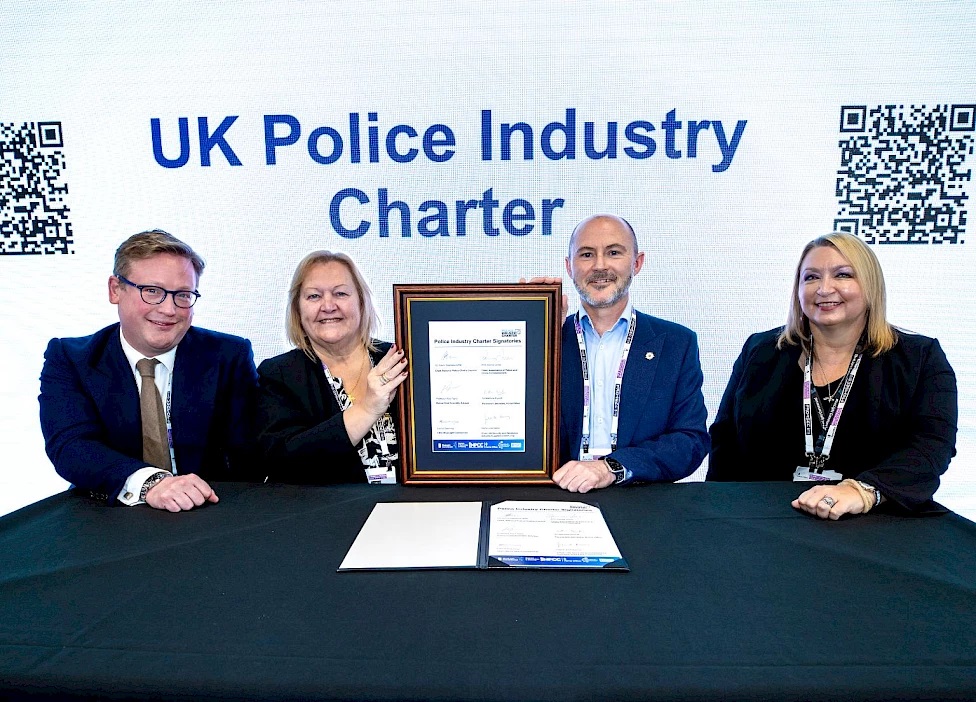
Above: (left to right) Professor Paul Taylor, Dame Julie Kenny, Chief Constable Gavin Stephens and Lianne Deeming.
Courtesy OPCSA
The Police Industry Charter was launched to set the foundational principles upon which industry partners, whatever their product or services, together with UK policing, can collectively adhere to.

The key signatories of the Charter are:
Chief Constable Gavin Stephens – Chair, National Police Chiefs’ Council
Sir Matthew Rycroft – Permanent Secretary, Home Office
PCC Donna Jones – Chair, Association of Police and Crime Commissioners
Lianne Deeming – CEO, BlueLight Commercial
Professor Paul Taylor - Police Chief Scientific Adviser
Dame Julie Kenny – Chair, UK Security and Resilience Industry Suppliers Community
BlueLight Commercial in conjunction with NPCC, APCC, the Home Office, RISC and the Office of the Police Chief Scientific Adviser (OPCSA) have agreed to manage and monitor the Police Industry Charter. They now invite suppliers to policing of all sizes, regardless of their product or service, to sign the Charter.
Lianne Deeming, CEO, BlueLight Commercial explained: “The launch of the Charter is an exciting time, bringing policing and industry together in strategic partnership. We work closely with local and national suppliers of all sizes to blue light organisations, with relationships built on trust and collaboration ensuring the highest level of innovation and quality is delivered in the most commercially viable and sustainable way.
“The Charter is a voluntary commitment and is not a prerequisite to working with policing. However, it will signal that suppliers are committed to working in partnership with policing and embracing the foundational principles.”
NPCC Chair, Chief Constable Gavin Stephens said: “Technology presents tremendous opportunities for policing and we owe it to our communities to explore them.
“Policing must adapt and embrace technology or risk being left behind. New technology will help us tackle a broad range of crime, re-allocate officers and staff to the frontlines and ultimately give the public a better service.
“But to do this, we must use the right tools effectively, ethically and with support from industry partners.
“By creating and fostering these mutually beneficial relationships, we are ensuring Forces will have access to the right suppliers, products and technical support, so they can deliver the excellent service the public deserves for generations to come.
“The Charter sets out clear foundational principles for these collaborative relationships and we look forward to seeing what the future brings.”
Permanent Secretary, Sir Matthew Rycroft said: “I am proud that the Home Office is supporting the development of new technologies in the UK to help reduce crime and keep our streets safe.
“The principles in this charter will promote the safe and swift development, testing and implementation of those technologies, delivering value for money for the British public.”
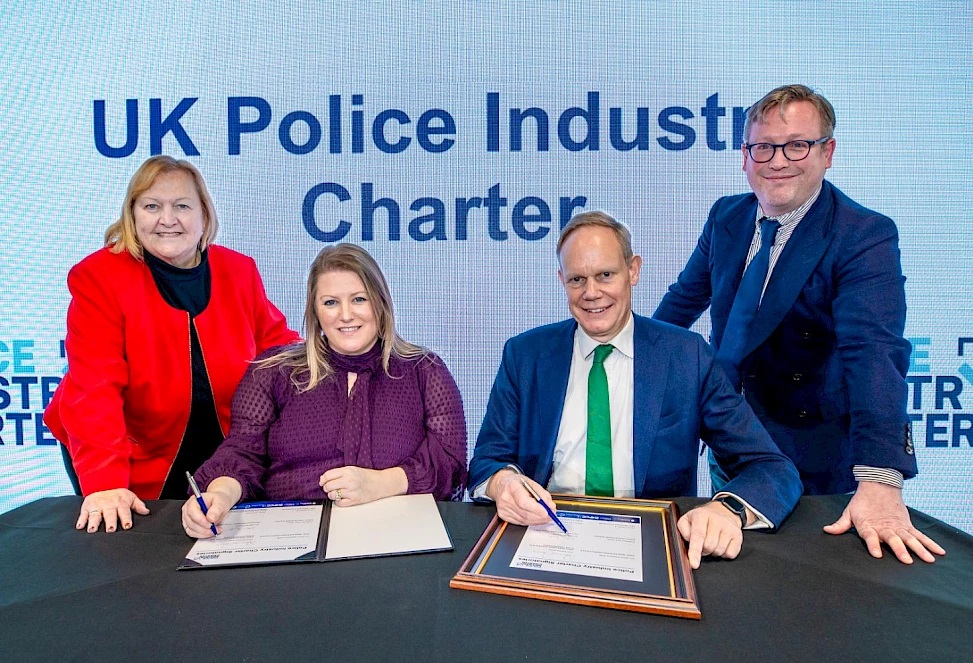
Above: (left to right) Dame Julie Kenny, PCC Donna Jones, Sir Matthew Rycroft and Professor Paul Taylor.
Courtesy OPCSA
The Charter purpose is to:
- Bring all of policing and industry closer together in strategic partnership.
- Promote open dialogue on evolving challenges and opportunities.
- Expand opportunities for reciprocal leadership development.
- Increase Return On Investment for products and services developed.
- Increase opportunities for policing to develop critical skills in collaboration with industry subject matter experts.
- Adopt the principle of system and product interoperability in core design principles.
- Support policing in harnessing science and technology to create efficiency and capacity.
- Create transparency in the police and industry relationship.
- Support a local and national approach.
- Encourage reciprocity to principle adherence.
Principles
By signing the Charter the respective industry partner and policing, agree to work to these principles and promote greater partnership working in their collective mission to deliver the highest standard of service to the public and commit to:
- Designing products, services and systems on the principle of interoperability first.
- Adopting a Maximum Transparency by Default (MTBD) position for products and services.
- Supporting the professional development of practitioners and senior leaders.
- Supporting UK policing in delivering sustainability.
- Collaboration and partnership.
BlueLight Commercial in conjunction with NPCC, APCC, the Home Office, RISC and the Office of the Police Chief Scientific Adviser (OPCSA) now invite suppliers to policing of all sizes, regardless of their product or service, to sign the Charter.

For more information - including FAQs, a list of suppliers who have signed the Police Industry Charter, supplier registration and to download the Charter - go to:
https://bluelightcommercial.police.uk/industry-charter