General Atomics

Pulsar’s Sunbird set to reduce mission fuel requirements

UK-based Pulsar Fusion, which is developing advanced propulsion technologies for satellite and deep-space markets, has revealed that its Sunbird fusion-powered space tug could reduce in-space propellant requirements for missions comparable to Artemis II by more than 90%, potentially reshaping the economics of deep-space exploration.


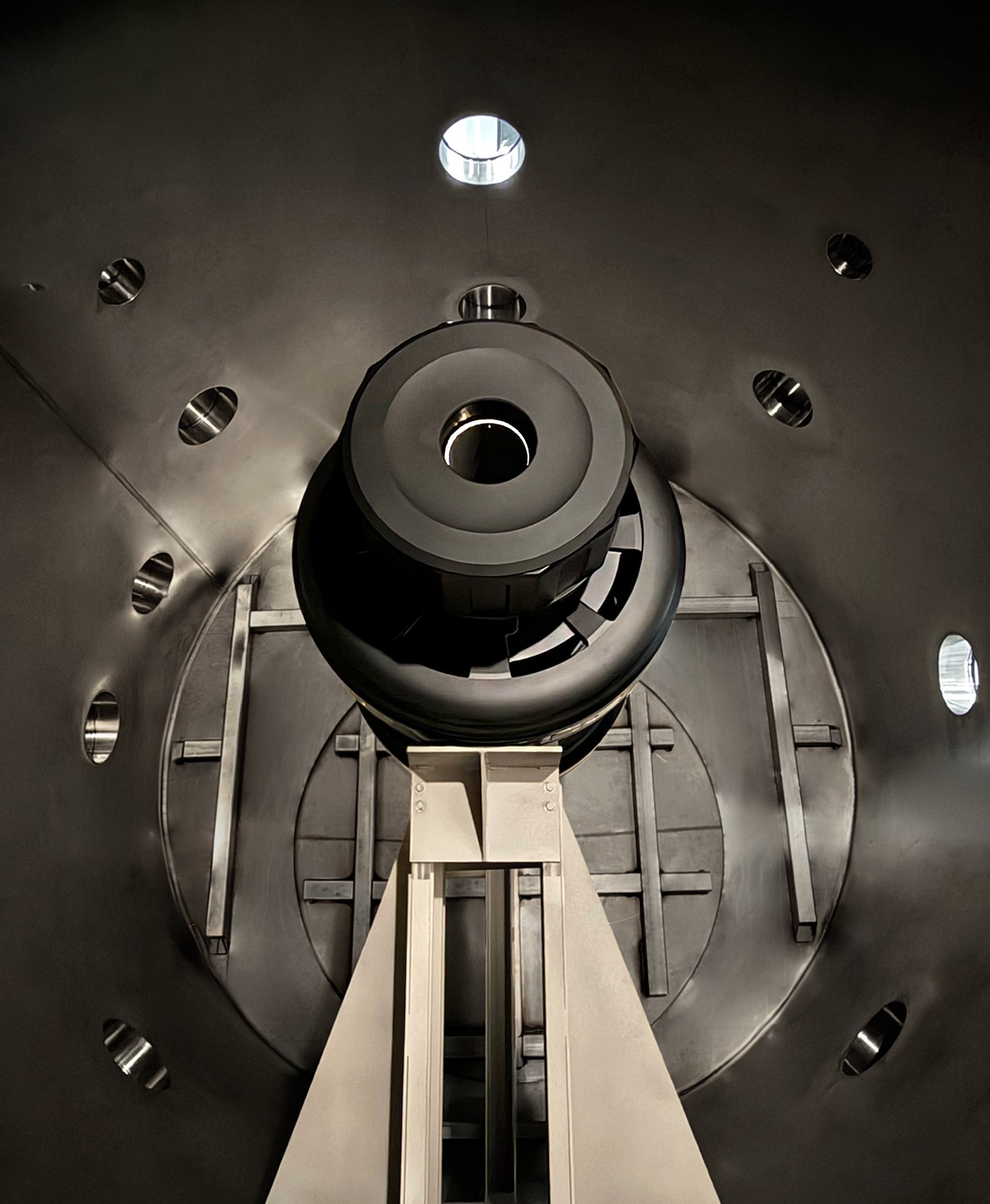
Above: Sunbird front view in Chamber.
Courtesy Pulsar Fusion


Rather than relying on heavy chemical propulsion systems launched from Earth, Pulsar’s approach stations a reusable tug in low Earth orbit. A crewed spacecraft launches lighter aboard a commercial rocket, docks with Sunbird and receives the full ~4.1 km/s delta-v needed for lunar transit, delivered by ultra-efficient fusion propulsion with a specific impulse of 10,000–15,000 seconds.

Key performance metrics
~900 kg of fusion fuel replaces approximately 8,600 kg of chemical propellant
Greater than 90% reduction in in-space propellant mass
~55% lower total launch propellant requirements (based on Pulsar modelling)

Sunbird offers additional advantages that extend well beyond propellant efficiency:

  • Reusability – The tug remains in orbit for repeated missions
  • Megawatt-scale onboard power – Enabling new operational capabilities
  • Increased payload capacity – Freed mass budget for crew systems or cargo

However, these benefits come with a trade-off, namely low-thrust transit times measured in weeks rather than days.

Technical milestone
Pulsar Fusion achieved first plasma in its Sunbird test system in March 2026, marking a significant step toward operational fusion propulsion. This test marks an early step in development, demonstrating plasma confinement within the exhaust architecture of the Sunbird system. The experiment uses a combination of electric and magnetic fields to guide and accelerate charged particles through the exhaust channel.

The next phase of development will see Pulsar gather detailed performance data, including thrust and exhaust velocity, using a thrust balance, E×B probes and RPA measurements. This data will enable Pulsar to plan the first Sunbird mission.

The concept of in-orbit tugs could decouple launch operations from deep-space travel, cutting mission costs, enabling smaller launch vehicles and accelerating the transition to a commercial cislunar economy.

Related

UK Finance Minister signals support for London Heathrow Airport’s £33 billion runway expansion
London Heathrow
UK Finance Minister signals support for London Heathrow Airport’s £33 billion runway expansion
In contrast to the cautious response of the UK Prime Minister, Chancellor John Healey has backed Heathrow's expansion plans.
Aerospace

17 Oct 2026

Marshall Aerospace outlines its next chapter following AURELIUS acquisition
Marshall Aerospace
Marshall Aerospace outlines its next chapter following AURELIUS acquisition
Speaking exclusively to Advance, Marshall Aerospace discusses its military aircraft contracts, manufacturing priorities and search for a new home following the takeover.
Aerospace Insights

17 Oct 2026

17,000 aircraft on order: How does the industry actually clear the backlog?
Boeing 737 factory in Renton
17,000 aircraft on order: How does the industry actually clear the backlog?
Aircraft manufacturers are under pressure to deliver faster, but supply-chain constraints continue to hold production back. What will it take to turn growing orderbooks into aircraft ready to fly?
Aerospace

17 Oct 2026

UK defence is moving faster. Can its legal frameworks keep pace?
As UK defence procurement accelerates, legal experts at Crowell & Moring explore how businesses can seize opportunities while managing legal risk.
Defence Insights

17 Oct 2026

From trials to frontline capability: Accelerating AI adoption in UK defence
Jack Maxton headshot
From trials to frontline capability: Accelerating AI adoption in UK defence
Jack Maxton, CEO of DIGI2AL, argues that faster experimentation, closer industry collaboration and a shift in mindset can help the MOD turn AI ambitions into operational advantage.
BAE Systems to design satellite comms terminals for US Space Force
Satellite
BAE Systems to design satellite comms terminals for US Space Force
Building on its space-hardened family of software-defined radios, BAE Systems will develop resilient ultra-compact radio-frequency (RF) terminals for the US Space Force.
Defence Member News

16 Oct 2026

Viasat orders ALL.​SPACE Hydra MAX Terminals for Ka-band networks
ALL.SPACE Hydra
Viasat orders ALL.​SPACE Hydra MAX Terminals for Ka-band networks
Viasat has placed an order for multiple ALL.​SPACE Hydra MAX terminals approved to operate on Viasat's global NextGen Ka-band network, providing resilient SATCOM connectivity for defence and government users.
Defence Member News Space

15 Oct 2026

Cornwall Space Cluster launches £15k legal support programme for space SMEs
Goonhilly satellite near Cornwall Space Cluster
Cornwall Space Cluster launches £15k legal support programme for space SMEs
Cornwall Space Cluster has partnered with Stephens Scown to offer specialist legal advice to space businesses, helping them protect intellectual property, prepare for investment and support future growth.
Space

15 Oct 2026

ClearSpace selected to deliver UK’s first active debris removal mission
ClearSpace removing space debris
ClearSpace selected to deliver UK’s first active debris removal mission
The UK-led programme will remove two defunct satellites while creating specialist jobs, supporting supply chains and building capability in the growing in-orbit services sector.
Space

15 Oct 2026

Police officers risk accidental AI misconduct, watchdog warns
National Police Chiefs Council photo of police on duty
Police officers risk accidental AI misconduct, watchdog warns
The Independent Office for Police Conduct has warned that officers and staff risk misconduct investigations for inappropriate AI use.
Security

16 Oct 2026

NAD and CDS want accelerated capability as DSEI UK 27 launched
NAD and CDS launch DSEI UK 27
NAD and CDS want accelerated capability as DSEI UK 27 launched
As the National Armaments Director (NAD) and the Chief of the Defence Staff (CDS) launched DSEI UK 2027 yesterday, they said faster capability delivery, greater innovation and improved readiness are required to ensure the UK and its allies are suitably prepared for any future conflict.
Warwickshire Police turns to AI to review the quality of investigations
Chat with AI or Artificial Intelligence technology. Man touching chatting virtual with an intelligent artificial intelligence asks for the answers he wants. Smart assistant futuristic, Chatbot,
Warwickshire Police turns to AI to review the quality of investigations
An eight-agent system checks investigation records against policing standards, with officers retaining responsibility for decisions.
Security

14 Oct 2026