Qantas orders 20 Airbus A321XLR aircraft
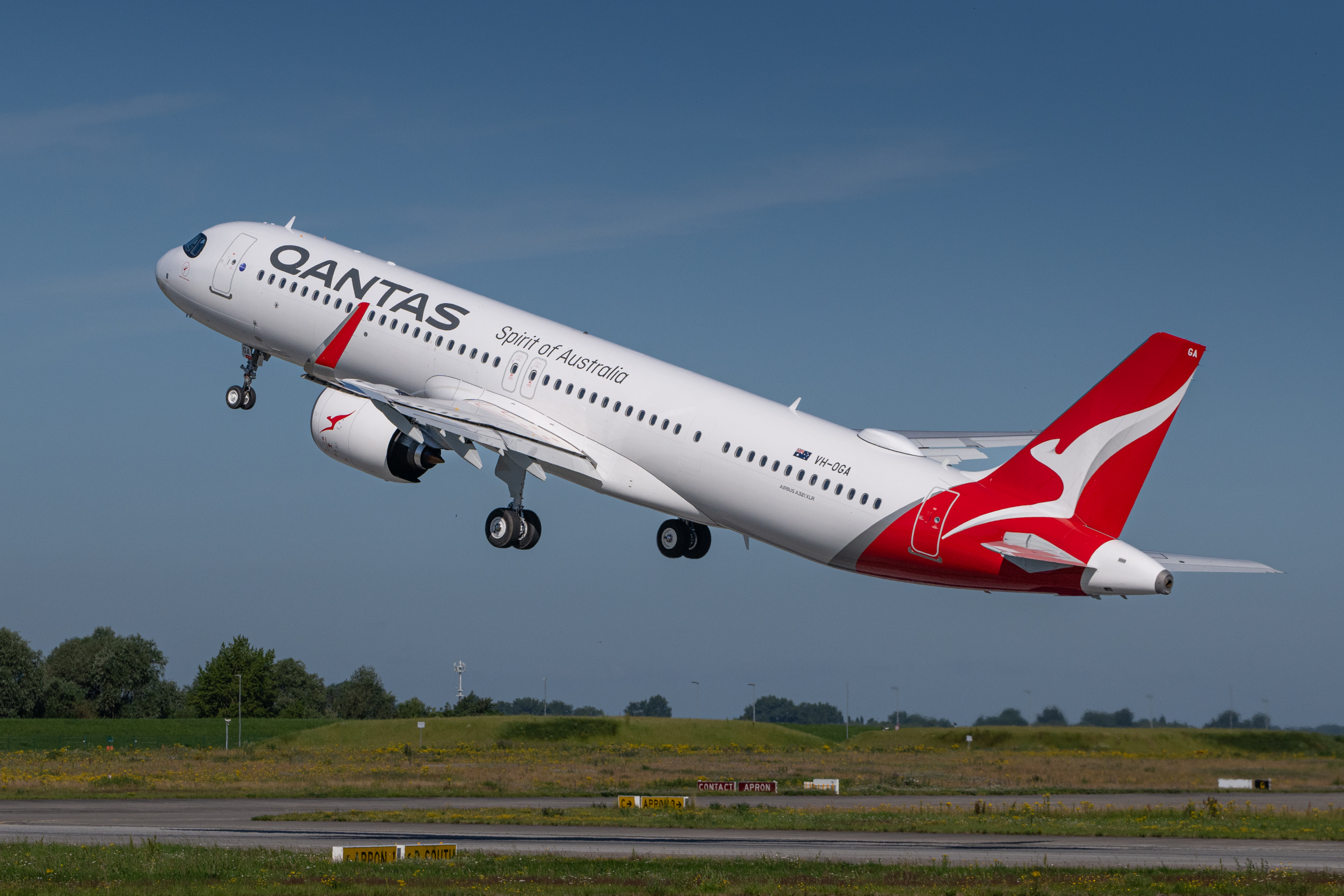
Above: Ferry Flight of first A321XLR to Qantas, taking off from Airbus Hamburg.
Copyright Airbus
The expansion of the Qantas Group’s largest ever fleet renewal programme will see 16 of the 20 additional A321XLRs configured with lie-flat Business seats and seat back entertainment screens to serve longer routes, including transcontinental services to and from Perth and short and medium haul international routes.

The new configuration A321XLRs will begin arriving in calendar year 2028, taking the airline’s total order for the next generation A321XLR to 48 aircraft.
The extended range of up to 8,700 kilometres is more than 3,000 kilometres further than the Boeing 737 it replaces and will enable Qantas to launch direct flights to destinations across South East Asia and the Pacific Islands that are not currently viable.
Qantas’ first two A321XLRs, which are configured for domestic and short haul international flying, are expected to start operating commercial flights in mid-September, making Qantas the first airline in the Asia Pacific to operate the aircraft type. The aircraft will initially operate on Sydney-Melbourne and Sydney-Perth and be progressively rolled out on other routes. By the end of this financial year Qantas will have seven of the aircraft type.
Jetstar’s A321XLRs will begin to arrive from calendar year 2027 and will be fitted with a two-class cabin to suit international travel.
Qantas Group CEO Vanessa Hudson said the expansion of the A321XLR fleet represented a significant step in the Group’s fleet renewal programme: “Investing in new aircraft is one of the most significant ways that we can provide our customers with a better flying experience and these billion-dollar investments are possible because of our continued strong financial performance.
“These additional A321XLRs will accelerate the retirement of our 737 fleet and open up new opportunities for domestic and international travel, allowing us to reach destinations that aren’t possible with our current narrowbody fleet.
“Not only will the A321XLRs help us serve the corporate market travelling between Perth and the east coast of Australia, they will also allow us to expand flying on existing routes into South East Asia and open up new possibilities like Perth-India and Adelaide-Singapore.
“The lie-flat Business seats, seat back screens and fast and free Wi-Fi will provide a consistent premium experience for our customers who fly domestically with Qantas and connect onto our long haul services.
“All of the next generation aircraft joining our fleet benefit from longer range, more comfort, less noise, better economics and will improve how people travel around Australia and overseas. It also means we’re recruiting and training more pilots, cabin crew and engineers, creating opportunities for our people.”
Fleet Overview
The Group’s total firm aircraft order now stands at 214 aircraft, with 32 delivered as at 30th June, representing a multibillion dollar investment in renewing and growing Qantas and Jetstar’s fleet. In addition to these firm orders, the Group has additional purchase right options with Airbus and Boeing which provide flexibility for future growth.
The airline took delivery of 17 new aircraft in FY25. This increases to 20 new aircraft arriving this financial year and 29 in FY27, including 36 for Qantas, 10 for Jetstar and three for Qantas Freight.
The first Project Sunrise A350-1000ULR will move to Airbus’ final assembly line in October this year, with deliveries commencing from October 2026.
The introduction of new aircraft is already delivering significant improvements in customer satisfaction, as well as financial and fuel benefits for the Group.
As with all Airbus aircraft, the A321XLR aircraft is already able to operate with up to 50% Sustainable Aviation Fuel (SAF). Airbus is targeting to have its aircraft capable of flying with up to 100% SAF by 2030.