QinetiQ’s CONTACT enhances British Army's evaluation of urban combat ops
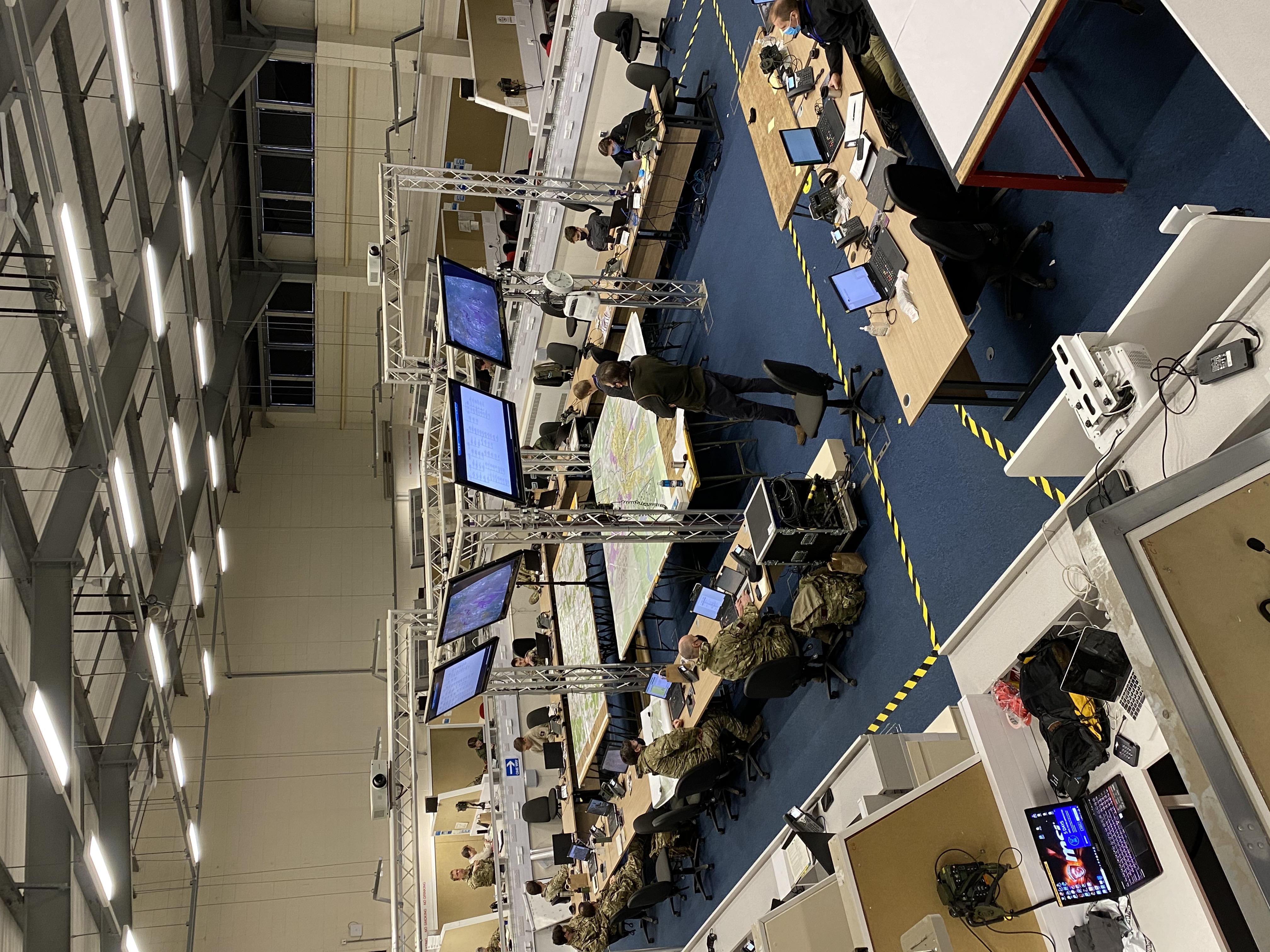
Image courtesy QinetiQ
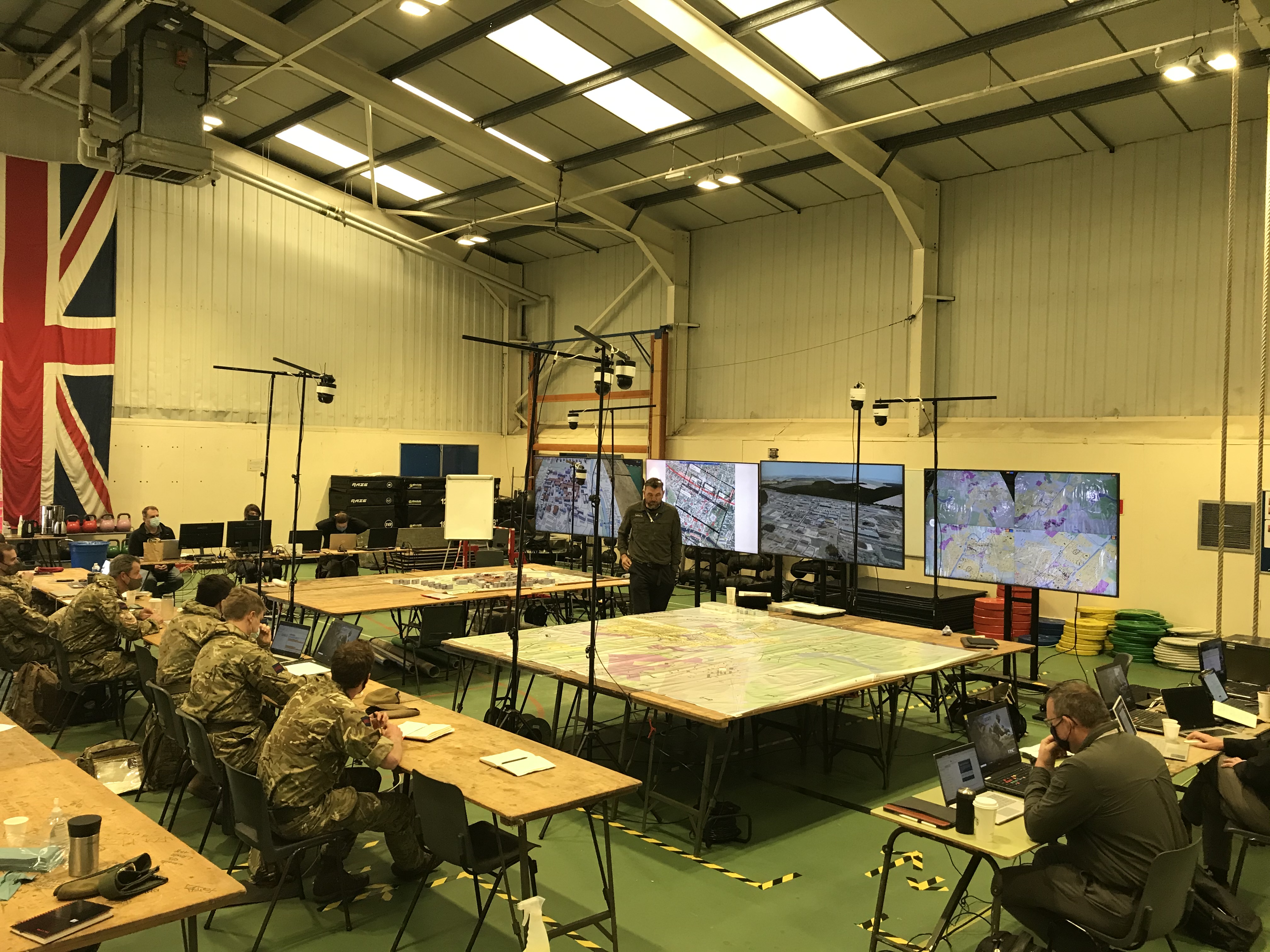
Headquarters staff from 1st Battalion, The Royal Welsh in Tidworth were among the latest troops to plan and wargame urban-focused missions using a QinetiQ-supplied cache of computer-based collective training tools.
The four-day digital deployment was part of Exercise Urban Lion – a two-year series of experiments held on behalf of the Land Warfare Centre delivered by QinetiQ and Soteria Defence and Security Limited – and saw QinetiQ’s constructive simulation, CONTACT, integrated with the company’s Unit Based Virtual Training (UBVT) system.

Delivered as a managed service, the hi-tech suite provided 1 R Welsh personnel with a common operating picture and shared working environment throughout the experiment, which will help further the Army’s understanding of the implications of operating in the urban landscapes of the future and inform the Service’s Force Development agenda.
UBVT, which entered core military service in 2017, has recently been used similarly by The Irish Guards and HQ 3rd Division’s Offensive Support and Engineer Groups.
The all-arms asset is, however, more commonly called upon to immerse troops in tailored high-fidelity synthetic environments at a commander’s point of need and has helped to train Servicemen and women at locations across the UK, Germany, Cyprus and Brunei.
Run on a network of laptop computers with exercising troops communicating via headsets, UBVT has previously been used to support a broad range of collective training and experimentation, including helping artillery units master the difficult discipline of de-conflicting joint fire missions in complex battlespaces; assisting mechanised rifle companies to hone their patrolling skills before deploying to Afghanistan; enabling rifle and fire support companies to work alongside a reconnaissance platoon and practise Combined Arms manoeuvre in a European-style battlespace; and allowing a tank squadron to conduct force-on-force training and test new doctrine before deploying on an overseas exercise in an OPFOR role.
The collective training tool also provided a key component to Exercise Virtual Eagle – the largest virtual warfighting experiment in the British Army’s history – when it put soldiers at the controls of incoming Ajax and upgraded Warrior and Challenger platforms months ahead of the next-generation vehicles’ tracks getting muddy on manoeuvres for the first time.
Commenting on UBVT’s novel application as part of Urban Lion and QinetiQ’s wider supporting role to the exercise, project manager Nick Brown said: “Our collective training delivery teams are accustomed to being flexible and responsive to the Army’s needs and circumstances and repurposing the technology to complement such a wargame was the latest example of this.
“We were quick to adjust the system early last year to make it Covid secure and UBVT has been demonstrating its persistence ever since; continuously evolving to meet new and nuanced requests from commanders.
“Technologically agnostic, we are also familiar with blending our training tools with those of military and industry partners – as well as commercially-available solutions – to deliver the best training effect.
“Our current experience of leading phase two of the Army’s Virtual Reality In-Land Training pilot and supporting Dstl’s research of next-generation simulation and synthetic environments under the SERAPIS framework has kept our eyes firmly fixed on what advantages existing and emerging technologies can, and cannot, afford the UK military.”