Radio wave weapon being developed for UK armed forces
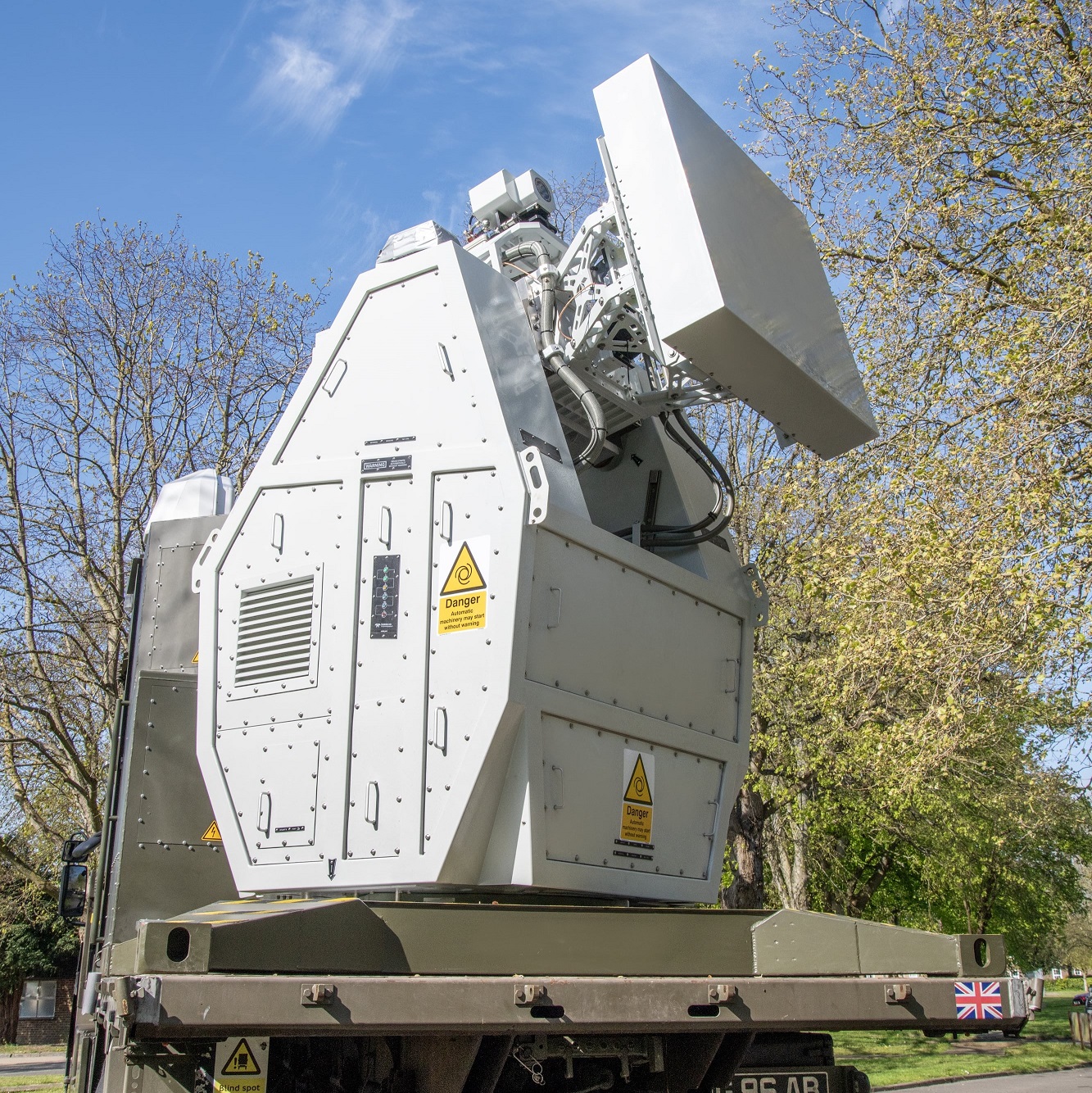
Image courtesy Team Hersa
A new game-changing weapon that uses radio waves to disable enemy electronics and take down multiple drones at once is under development for the UK’s armed forces.
This forms part of work to put the UK’s defence industry on a war footing following the Prime Minister’s announcement last month of an increase to the defence budget to 2.5% of GDP by 2030.

Delivered by Team Hersa, a joint Defence Equipment & Support (DE&S) and Defence Science and Technology Laboratory (Dstl) enterprise, the Radio Frequency Directed Energy Weapon (RFDEW) system can detect, track and engage a range of threats across land, air and sea. The system will be able to effect targets up to 1km away, with further development in extending the range ongoing. It beams radio waves to disrupt or damage the critical electronic components of enemy vehicles causing them to stop in their tracks or fall out of the sky.
At only 10p per shot fired, the RFDEW beam is a significant cost-effective alternative to traditional missile-based, air defence systems, capable of downing dangerous drone swarms with instant effect. The high level of automation also means the system itself can be operated by a single person. This technology can offer a solution to protection and defence of critical assets and bases.
Minister for Defence Procurement, James Cartlidge said: "We are already a force to be reckoned with on science and technology, and developments like RFDEW not only make our personnel more lethal and better protected on the battlefield, but also keep the UK a world leader on innovative military kit.
"The war in Ukraine has shown us the importance of deploying uncrewed systems, but we must be able to defend against them too. As we ramp up our defence spending in the coming years, our Defence Drone Strategy will ensure we are at the forefront of this warfighting evolution."
RFDEW technology can be mounted on a variety of military vehicles and uses a mobile power source to produce pulses of Radio Frequency energy in a beam that can rapidly fire sequenced shots at individual targets or be broadened to simultaneously engage all threats within that beam.
Dstl Chief Executive, Paul Hollinshead said: "These game changing systems will deliver decisive operational advantage to the UK armed forces, saving lives and defeating deadly threats.
"World class capabilities such as this are only possible because of decades of research, expertise and investment in science and technology at Dstl and our partners in UK industry."
The advanced technology is being developed by a joint team from Dstl and DE&S, working with UK industry under Team Hersa. The next steps for RFDEW is undergoing extensive field testing with British soldiers over the summer.
DE&S’ Adam McCullough, RFDEW Chief Engineer for Team Hersa, said: “Working collaboratively with Dstl as part of Team Hersa, DE&S is providing engineering, commercial and project management expertise to deliver directed energy weapons into service and provide the edge for our UK armed Forces against current and future threats.”