RAF Air Command becomes Air and Space Command as Britain elevates military space operations


The Royal Air Force (RAF) has strengthened its role in Britain’s growing military space operations with the redesignation of its Air Command division as Air and Space Command. The change reflects the RAF’s responsibility as the Lead Command for space across UK Defence, and recognises the increasing importance of space to national security and military operations.
The Air Command division was originally established in 2007 following the merger of Strike Command and Personnel and Training Command. Its purpose was to provide a single headquarters for the RAF and oversee the generation and employment of air power.
Nearly two decades later, its redesignation as Air and Space Command reflects the RAF’s expanding responsibilities across both air and space domains. Led by the Chief of the Air Staff, Air & Space Command will continue to oversee UK Space Command. Established in 2021, UK Space Command is responsible for protecting Britain’s national and military interests in space, supporting allied interests and enabling UK forces to operate effectively around the world.
New HQ to lead delivery of space power
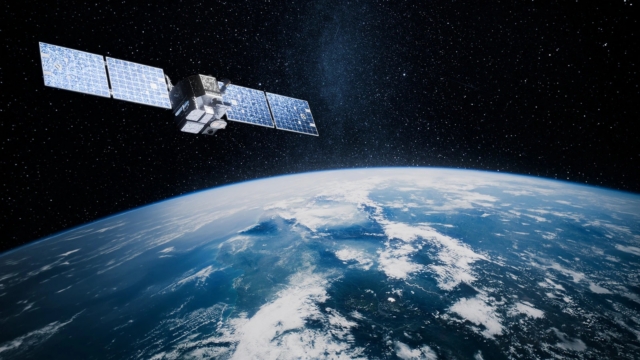
The RAF’s appointment as the Lead Command for space is also rooted in a long history of involvement in the domain. Britain’s military interest in space dates back decades, including the establishment of the UK’s ballistic missile early warning system at RAF Fylingdales in 1963. The RAF also played a role in Britain’s early satellite operations, including the launch of the SKYNET 1A communications satellite in 1969.
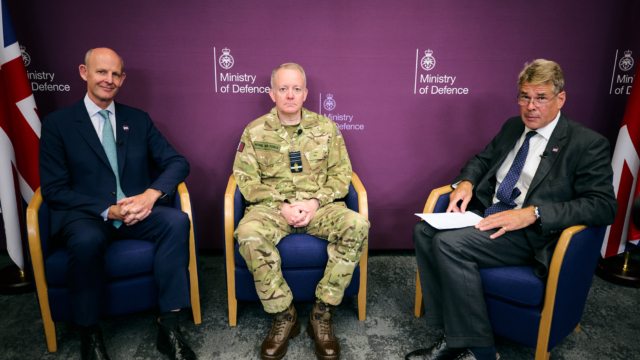
“Space is essential to defence, security, prosperity, and our modern way of life,” said Air Chief Marshal Sir Harv Smyth, Chief of the Air Staff. “But it is also a domain of growing strategic competition. It has fast become an operational domain in its own right and is vital to our ambition to develop and mature the integrated force. The RAF’s core mission of gaining and maintaining control of the air is fundamentally dependent on our freedom of action in and through the space domain.”
“It is now more important than ever for space power to be planned and delivered through the highest levels of military leadership, like all other domains. Our new HQ Air and Space Command will lead the delivery of space power with the same dedication that it leads for the air domain,” Smyth added.
RAF Air Command transforms for the modern age
The transformation of Air Command also marks another chapter in the long history of RAF High Wycombe, which has served as a key headquarters for British air operations for almost a century.
Bomber Command was established in 1936 to control the RAF’s growing pre-war bomber force. Initially based at RAF Uxbridge in West London, it was moved to RAF High Wycombe in 1938 as tensions in Europe increased. The wooded location in the Chiltern Hills provided a more secure headquarters while remaining within reach of London.
RAF High Wycombe remained the home of Bomber Command for approximately 30 years. In 1968, Bomber Command merged with Fighter Command to create Strike Command, which was also based at High Wycombe.
Strike Command controlled the RAF’s combat aircraft, including its bomber and fighter forces. The headquarters continued its role as the RAF’s senior operational centre when Strike Command merged with Personnel and Training Command in 2007 to create Air Command.
The creation of UK Space Command in 2021 represented another significant development in the RAF’s responsibilities. As space became increasingly important to everyday life, communications, navigation and military operations, the UK recognised the need to strengthen its ability to protect and operate in the space domain.
RAF Air Command redesignated as Air and Space Command
The redesignation of Air Command as Air & Space Command in 2026 therefore represents both an organisational change and a recognition of the evolving nature of modern defence.
From commanding Lancaster bombers during the Second World War to supporting satellite communications and military space operations, RAF High Wycombe’s history demonstrates how Britain’s air and space capabilities have developed together.
The new command structure highlights the RAF’s continuing responsibility for generating and employing air and space power to defend the United Kingdom and support its allies.
Sign up for our newsletter and get our latest content in your inbox.
Similar Reads


Sign up for our newsletter. Select all sectors relevant to you.
Related